
Flex Sensors Explained: Bend Detection to Fingerprint Tech
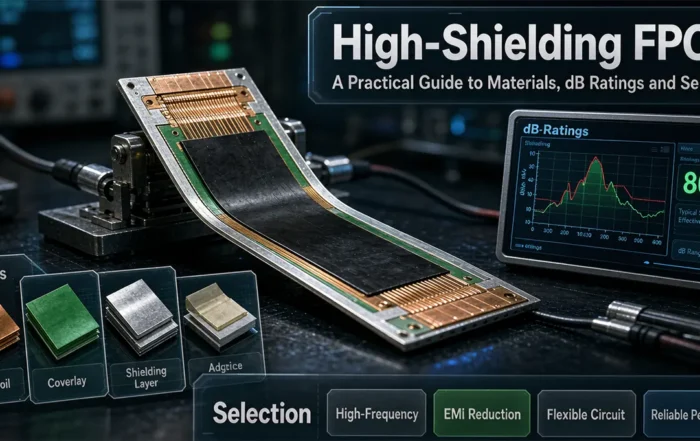
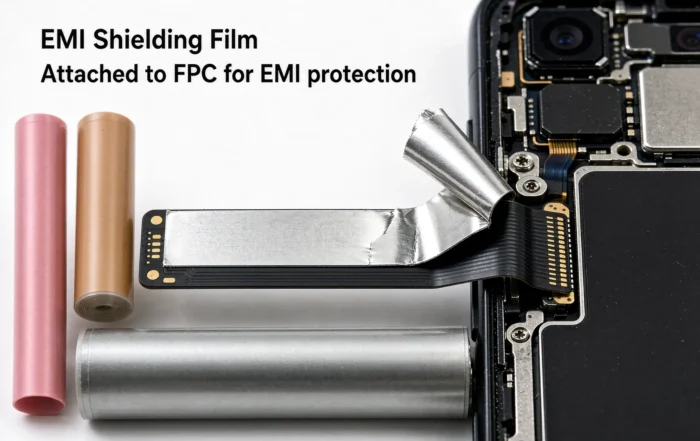

Flex sensors are increasingly paired with AI to analyze movement, predict health risks, and enable advanced robotic sensing. Emerging technologies like electronic skin, smart biometric cards, and ultra-thin foldable devices rely on flex-sensor innovation. As the market grows toward billions, hybrid modules combining FPC fingerprint sensors and flex sensors will drive next-gen security and wearable tech.
Flex Sensors Explained gives the short answer first: a flex sensor is a thin, resistive device that changes resistance when it bends. That shift turns physical motion into an electrical signal. Engineers use it for bend detection, angle tracking, and motion sensing in wearables, robotics, and medical devices.
Flex Sensors Demystified: 10 Must-Know Facts From Fingerprint Tech to Bend Detection Magic!
🔍 Intro: Why Your Next Innovation Needs Flex Sensors
Ever wondered how smart gloves track finger movements or how foldable phones measure bend angles? Meet flex sensors – paper-thin tech changing healthcare, gaming, and security! Often mixed up with fingerprint sensors, this guide will show you their special features. The system will also answer questions like “What are flex sensors?” and “Where are they used?” Let’s dive in!
What Are Flex Sensors?
Flex sensors are thin, flexible devices that vary their resistance when bent. Conductive particles inside the sensor spread apart as it curves. Resistance rises, and the circuit reads that rise as movement. Because the output is analog, a simple voltage divider is often enough.
This behavior registers physical motion, angle change, or pressure. Therefore, the sensor suits wearables, robotics, and medical equipment. Think of it as a digital joint that feels a bend and sends a signal. Most commercial resistive bend sensors sit in the 10 kΩ to 30 kΩ flat-resistance range and rise to roughly 2× to 3× that value near a 90° bend.
Why the resistance changes
The sensor acts like a resistor that changes shape. Bending stretches the conductive material, so resistance increases. Measure the change, and you get an angle estimate. Calibration maps resistance to angle for each model, so accuracy stays predictable.
How a Bend Detection Flex Sensor Works
A bend detection flex sensor follows a short signal chain.
1. Mount the sensor on the surface that flexes.
2. Bend the surface; the conductive layer stretches and resistance climbs.
3. A driver circuit converts resistance into a readable voltage.
4. Firmware maps voltage to an angle or a motion event.
The sensor is passive, so it draws almost no current until read. In addition, it can be laminated onto thin carriers. That makes it a natural fit for a Flexible PCB where space and weight are tight.
On the bench, a 10 kΩ fixed resistor in a voltage divider and a 10-bit ADC are common starting values. Calibrate at 0°, 30°, 60°, and 90° to build the resistance-to-angle curve. Sample each channel at 100 Hz or less for most wearable gesture work; higher rates add little once the mechanical response is slower than the electronics.
Types of Flex Sensors
Most designs fall into two practical groups.
- Resistive bend sensors: conductive ink or film layers change resistance with bend angle. These are the common choice for angle and gesture sensing.
- Flexible printed circuit (FPC) sensor assemblies: the sensing element sits on a flexible circuit, so traces, connectors, and shielding arrive as one part. Sensor FPC builds often pair a bend element with a capacitive fingerprint sensor in the same stack.
Hybrid designs combine both approaches. For example, a high-security card can pair a capacitive fingerprint sensor for identity checks with a flex sensor that detects tampering.
Where Are Flex Sensors Used?
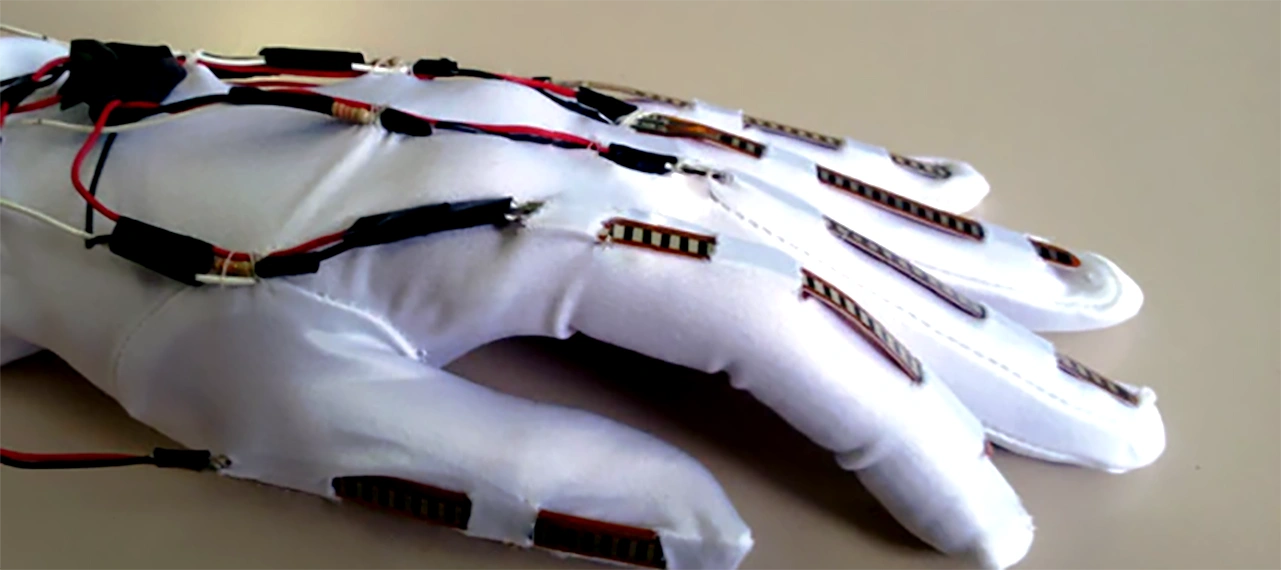
flex-bend-sensor
They are widely adopted in many industries. Here’s a quick look:
| Application | Use Case |
|---|---|
| Wearable Tech | Fitness bands, posture monitors |
| Robotics | Joint movement detection in robotic arms |
| Gaming Controllers | Enhanced motion sensitivity |
| Prosthetics & Biomechanics | Track limb movements in real time |
| Automotive (e.g., GM flex fuel sensor) | Monitor ethanol/gasoline blend ratios |
| Medical Devices | Glove-based health monitors, rehab tracking |
| Security Devices | FPC fingerprint sensors in access systems |
The list keeps growing as Flexible Electronics Applications move into foldable and wearable products. Also, medical and industrial programs often need High-Reliability Flexible Circuits for High-End Applications, where bend cycles and shielding matter as much as the sensing layer
Flex Sensor vs PCB Sensor vs Fingerprint Tech
| Tech | Flex Sensor | PCB Sensor | FPC Fingerprint Sensor |
|---|---|---|---|
| Purpose | Bend angle detection | Environmental sensing | Biometric authentication |
| Key Use Case | Robotics/Healthcare | Industrial IoT | Phones/Smart locks |
| Complexity | Simple analog circuit | Custom PCB layouts | Needs an FPC sensor controller driver |
>
✅ Industry hack: High-security fingerprint cards combine FPC1020 sensors (for ID checks) with flex sensors (to detect tampering).
Design Mistakes to Avoid
Three issues cause most flex sensor failures.
1. Ignoring calibration. Always map resistance-to-angle curves for your model.
2. Over-bending. Exceeding 90° can permanently damage conductive ink layers.
3. Wrong wiring. Use shielded cables to limit EMI on sensor flexible circuits.
Also, lock the mechanical stops early. A hard stop at 80–85° is common for parts rated to 90°, and it protects the ink layer across the product life. Our PCB Manufacturing FAQ covers related stack-up and assembly questions.
The Future: AI + Bend Sensors
Cutting-edge bending sensors now predict motion instead of only reporting it. Combined with small models, they can classify gestures from a few bend samples. Therefore, the next wave of wearables may read intent, not just angle. Designers who pair a reliable flex sensor with clean firmware will ship those features first. For material and finish questions, see our notes on pcb surface finish and Rigid-Flex PCB Technology.
Other knowledge to note
👉3 Deadly Flex Sensor Mistakes to Avoid
1️⃣ Ignoring calibration: Always map resistance-to-angle curves for your model.
2️⃣ Over-bending: Exceeding 90° can permanently damage conductive ink layers.
3️⃣ Wrong wiring: Use shielded cables to prevent EMI interference on sensor flexible circuits.
🔮 The Future: AI + Bend Sensors = ?
Cutting-edge bending sensors now predict arthritis risks by analyzing movement patterns. Meanwhile, MIT’s robotic “electronic skin” uses flex sensors + AI to sense pressure and pain. With the market hitting $8.7B by 2024, this tech is bending the rules of innovation!
🔌 Bonus: Flex Sensors + Fingerprint Technology?
Conclusion
FAQ:
1. What is a flex sensor and how does it work?
A flex sensor is a thin, bendable device whose electrical resistance changes when it flexes. When the sensor bends, the conductive particles inside it spread apart, increasing resistance. This resistance change is measured and converted into motion, angle, or pressure data—making it ideal for wearables, robotics, and medical devices.
2. What are the most common applications of flex sensors?
Flex sensors are used in wearable tech, robotic joints, gaming controllers, prosthetics, rehabilitation devices, automotive fuel-blend monitoring, and even biometric systems. Smart gloves, rehab trackers, and robotic arms all rely on flex sensors for precise movement detection.
3. How are flex sensors different from PCB sensors and fingerprint sensors?
Flex Sensors: Measure bend angles and motion; simple analog designs; used in robotics and healthcare.
PCB Sensors: Mounted directly on rigid PCBs; used for temperature, gas, vibration, and environmental sensing.
FPC Fingerprint Sensors: Capture biometric patterns for authentication; require specialized controller drivers.
Some modern devices combine flex sensors with fingerprint modules to enhance security and reduce space.
4. What is a PCB sensor and when is it used?
A PCB sensor integrates sensing components directly on a printed circuit board. These rigid sensors are ideal for applications requiring stability and durability, such as temperature monitoring, pressure sensing, gas detection, and vibration analysis. Advanced designs may mix rigid and flexible sections for foldable or compact electronics.
5. What mistakes should engineers avoid when using flex sensors?
Common errors include:
Skipping calibration, which prevents accurate angle mapping.
Over-bending beyond 90°, permanently damaging the conductive ink layers.
Incorrect wiring, especially failing to use shielded cables that protect bend-sensor circuits from EMI interference.
6. What Is a PCB Sensor?
A PCB (Printed Circuit Board) sensor integrates sensing components directly onto circuit boards. Unlike flexible variants, these rigid sensors excel in:
- Temperature/pressure monitoring
- Gas detection
- Vibration analysis
💡 Fun fact: Some advanced sensor PCBs merge rigid and flexible sections – perfect for foldable devices!
7. What is the future of flex sensors in modern electronics?
Flex sensors are increasingly paired with AI to analyze movement, predict health risks, and enable advanced robotic sensing. Emerging technologies like electronic skin, smart biometric cards, and ultra-thin foldable devices rely on flex-sensor innovation. As the market grows toward billions, hybrid modules combining FPC fingerprint sensors and flex sensors will drive next-gen security and wearable tech.
References
- IPC-6013, Qualification and Performance Specification for Flexible Printed Boards.
- IEC 61189-3, Test methods for electrical materials, printed boards and other interconnection structures.
- Published datasheets for commercial resistive flex sensors, used for flat resistance, bend life, and temperature ranges.
- Application notes on voltage-divider signal conditioning and ADC calibration for resistive sensors.
Related Posts
- Flexible Electronics Applications: Displays, Solar Cells & S — Related article
- PCB Surface Finish Types Explained: Best Options for Flexible PCBs – GekunFlex — Related article
- SMT Assembly Explained: Process, Benefits, and Design Tips — Related article
- Flexible PCB: Features, Design Guide & Applications — Related article
- FPC Fingerprint Sensors Work — Related article