
Flexible PCB Cost 2026: Price Per Sq.Inch, Calculator & Cost Reduction
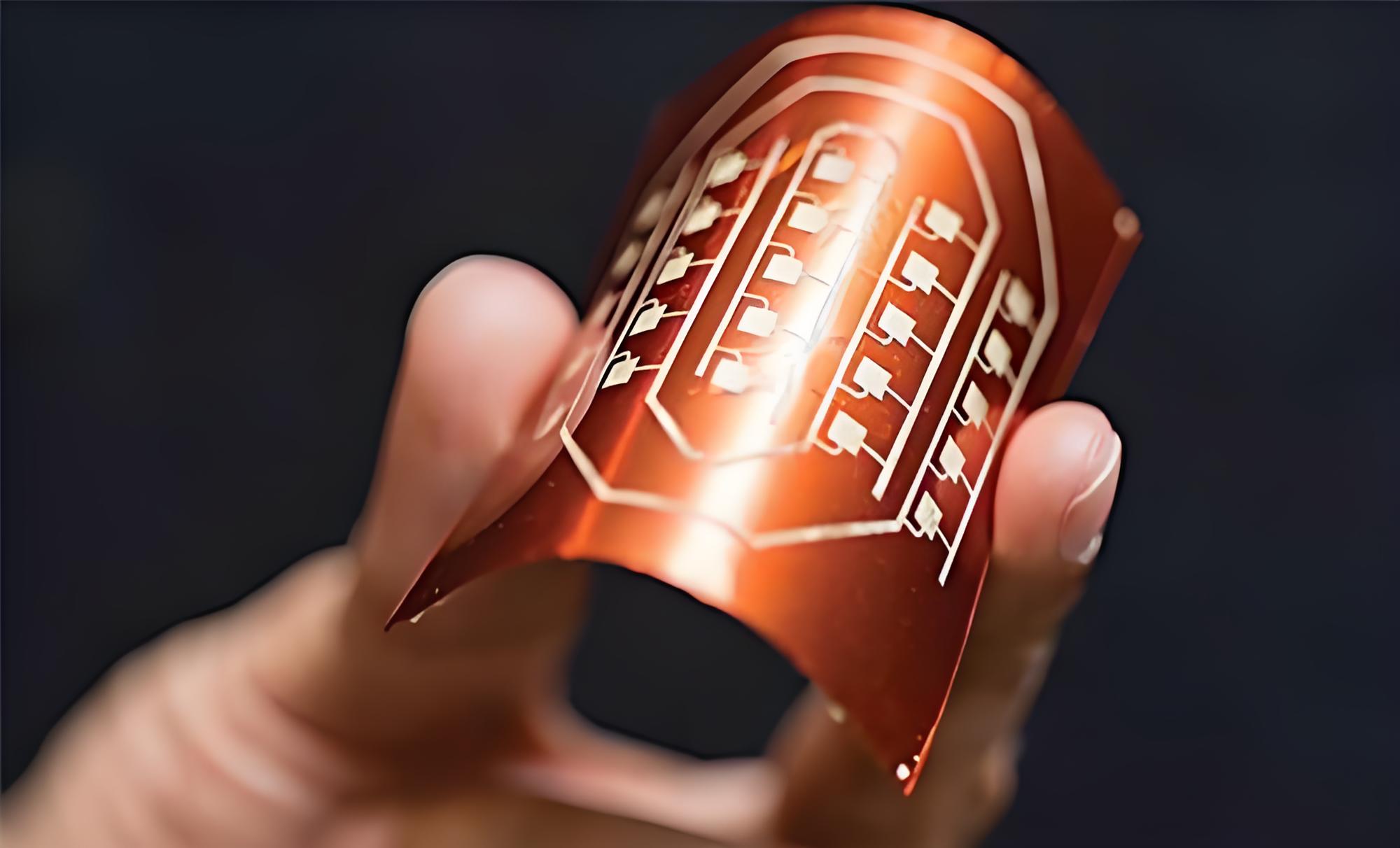
Flexible PCB cost in 2026 ranges from $0.50 to $30+ per square inch. A single-layer board sits near $0.50–$1.20, while HDI flex reaches $12–$30. That flex PCB price per square inch depends on layer count, materials, panel utilization, and order volume. Below you will find benchmark tables, a calculator formula with worked examples, and proven ways to cut spend. See also Flexible Circuits for related specifications.
How Much Does a Flexible PCB Cost?
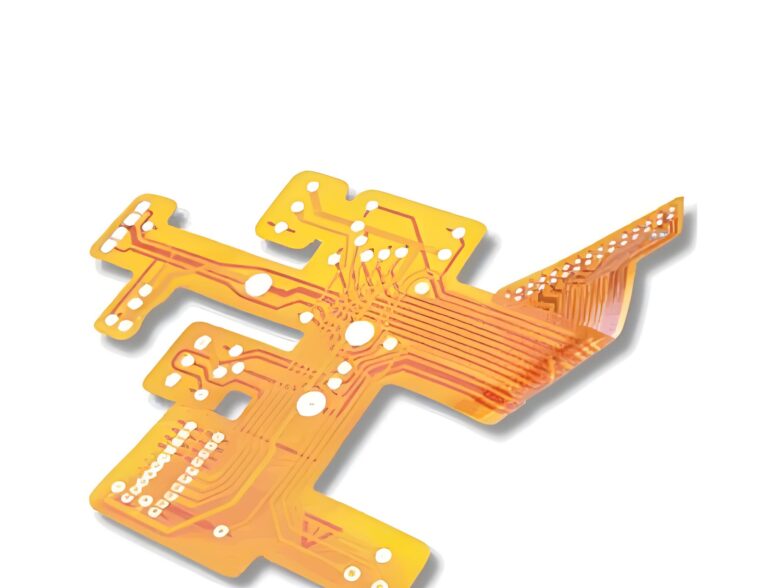
The average flexible PCB cost runs from $0.50 to $30+ per square inch. That range comes from 2025 price data and still holds for 2026 quotes. Layer count, material grade, and order size set the final number. The table below shows the flex PCB price per square inch for each common board type.
| Board type | Price per sq.in | Typical construction |
|---|---|---|
| 1-layer flex | $0.50 – $1.20 | Polyimide base, 1 oz copper |
| 2-layer flex | $1.80 – $3.50 | Adhesive-based construction |
| 4-layer rigid-flex | $4.00 – $8.00 | Laser-drilled microvias |
| HDI flex | $12.00 – $30.00 | 50 μm line width and spacing |
Prototype orders of 1–5 pieces usually carry a 200%–300% price premium. Therefore, a design quoted at $1.00/sq.in can cost $3.00–$4.00/sq.in at sample volume. Volume orders pull that number back down.
Watch the units when you compare quotes. One square inch equals 6.45 cm², so a 10 cm² circuit is about 1.55 sq.in. Panel quotes also bill usable area, not full panel area.
What Drives Flex PCB Price Per Square Inch? The 8 Cost Drivers
Eight variables move the number: layer count, material system, line width and spacing, board thickness, surface finish, size utilization, order volume, and tolerance/testing requirements. Each one changes both material cost and yield.
1. Layer Count and Stack-Up
Every added layer adds lamination cycles and cuts yield. For example, a 2-layer flex costs $1.80–$3.50/sq.in, while a 4-layer rigid-flex costs $4.00–$8.00/sq.in. Laser-drilled microvias explain most of that jump.
2. Material: Polyimide Film and Adhesive System
Polyimide (PI) is $0.15/sq.in standard and $0.22/sq.in for high-Tg. Liquid crystal polymer (LCP) is $0.40/sq.in. PCT film is $0.18/sq.in, about 30% cheaper than LCP with a similar Dk of 2.9. PI remains the default for most circuits, but PCT film is the cheaper choice below 15 GHz.
Adhesive choice also matters. Acrylic adhesive adds about $0.03/sq.in. Epoxy adds $0.07/sq.in and brings better thermal resistance. Adhesiveless construction removes the adhesive layer, cuts thickness by 25% and saves about $0.8/sq.in.
3. Line Width, Spacing and Feature Size
Fine lines cost more because they reduce yield and require tighter process control. An HDI flex board with 50 μm line width and spacing lands at $12–$30/sq.in. Designs at 4 mil line and space sit in the mid range; pushing to 3 mil raises fabrication cost and test sensitivity.
4. Board Thickness and Bend Requirements
Standard flex thickness often runs from 1 mil to 5 mil per dielectric layer. Specifying a tighter thickness tolerance or a thinner core increases handling and lamination cost. A change from 2 mil to 1 mil core can add 6%–12% to fabrication because yield drops. Minimum bend radius below 6× layer thickness may also require special coverlay and tighter test requirements.
5. Surface Finish
Surface finish matters: OSP runs $0.05/sq.in, while ENIG runs $0.12/sq.in. ENIG adds flatness and shelf life; OSP is lower cost when the assembly window is short. These flexible PCB cost factors stack, so review them together before you lock a stack-up.
6. Size Utilization and Panel Layout
Panel layout decides how much film you waste. Move utilization from 60% to 85% and material per good board falls about 29%. Array spacing, tooling rails, and panel size all affect the quoted price per square inch.
7. Order Volume and Tooling Amortization
Volume is the strongest lever. Each step up the ladder removes handling and setup time. Prototype orders absorb the same tooling fee over fewer boards, while high-volume orders spread tooling across thousands of pieces.
8. Tolerance and Testing Requirements
Tighter tolerance raises inspection and handling cost. Moving from standard ±0.1 mm to ±0.05 mm adds 4%–10% in many builds. Add 100% electrical test with netlist verification for 2%–6%, and X-ray for microvias for 5%–12%. Specify only the inspection your application really needs.
Flexible PCB Cost Calculator: Formula and Worked Examples
A flexible PCB cost calculator needs three inputs: material rate, process rate, and tooling. Use this formula for a preliminary estimate.
Total Cost = (Material Cost × 1.3) + (Process Cost × Area) + Tooling Fee
Follow four steps:
1. Collect the material rate per square inch for your film and adhesive.
2. Multiply it by 1.3 to cover handling and yield loss.
3. Add the process rate per square inch.
4. Multiply by board area, then add the tooling fee.
Example: a 4-layer rigid-flex board, 10 sq.in, 50 pieces. Material is PI plus epoxy at $0.25/sq.in. Process cost is $3.2/sq.in, including laser drilling. Tooling is $280, paid once.
- Material with overhead: $0.25 × 1.3 = $0.325/sq.in
- Material plus process: $0.325 + $3.2 = $3.525/sq.in
- Cost per board: $3.525 × 10 = $35.25
- Tooling per board at 50 pcs: $280 ÷ 50 = $5.60
- Total: about $40.85 per board
Raise the order to 500 pieces and the same board drops to about $35.81. Material and process stay flat. Only the tooling spread changes.
Tooling and NRE Amortization
One-time charges fall fast as volume grows. Here is the same $280 tooling fee spread across five order sizes.
| Order quantity | Tooling per board |
|---|---|
| 10 pcs | $28.00 |
| 50 pcs | $5.60 |
| 100 pcs | $2.80 |
| 500 pcs | $0.56 |
| 1,000 pcs | $0.28 |
Test fixtures, stencils, and programming fees follow the same curve. Therefore, always quote the volume you will really order, not the prototype quantity.
How to Reduce Flexible PCB Cost
Volume is the strongest lever. Each step up the ladder removes handling and setup time.
| Order quantity | Price reduction | Tactic |
|---|---|---|
| 10–50 pcs | 15%–20% | Panelization sharing |
| 100–500 pcs | 25%–35% | Standardized specs |
| 1,000+ pcs | 40%–50% | Roll-to-Roll production |
Material swaps come next. Replace LCP with PCT and save 20%–30% on designs below 15 GHz. Choose adhesiveless construction and save about $0.8/sq.in. Switch from ENIG to OSP and cut $0.07/sq.in.
Panel layout decides how much film you waste. Move utilization from 60% to 85% and material per good board falls about 29%. Also consolidate part numbers, relax unnecessary tolerances, and keep line width above the process minimum.
Expedite premiums are separate from volume discounts. Compressed lead times typically add +15%–40%, and same-week rush builds can add +40%–70%. The premium covers overtime, queue priority, and air freight, not tooling.
Design choices lock in most of the cost before you request a quote. Review How to Choose Flexible PCB early, and send a Custom Flex PCB brief with your stack-up, quantity, and acceptance standard.
DFM Review Checklist and Cost Impact
Run this DFM review before you request a quote. Each tighter specification below carries a typical cost increment, and the increments stack with volume and expedite premiums.
- Verify layer count and stack-up against bend, impedance, and assembly needs.
- Confirm line width and spacing at or above the supplier process minimum.
- Check annular ring, via diameter, and microvia aspect ratio.
- Review coverlay openings, stiffener placement, and board thickness tolerance.
- Confirm surface finish and the acceptance standard before quoting.
- Review panel utilization and array spacing for film waste.
- Confirm test coverage, inspection level, and first-article requirements.
| Design rule | Standard spec | Tighter spec | Typical cost increment |
|---|---|---|---|
| Line width/spacing | 4 mil / 4 mil | 3 mil / 3 mil | +8%–15% |
| Annular ring | 0.15 mm | 0.10 mm | +5%–10% |
| Via diameter | 0.20 mm | 0.15 mm | +6%–12% |
| Thickness tolerance | ±20% | ±10% | +5%–12% |
| Surface finish | OSP | ENIG | +$0.07/sq.in |
| Electrical test | Sample | 100% netlist | +2%–6% |
These increments are fabrication-only. Ask the supplier to mark which DFM rules are mandatory and which are optional before you release the design.
Flex vs Rigid vs Rigid-Flex: Cost Comparison
Flex costs more per square inch than rigid. However, it often wins on total cost of ownership once you count connectors, harnesses and assembly steps. The table below compares the full ownership view.
| Cost dimension | Flexible PCB | Rigid PCB | Rigid-Flex PCB | What changes |
|---|---|---|---|---|
| Bare-board fabrication | Highest per sq. in | Lowest per sq. in | Mid to high | PI film, handling, and lamination drive flex cost |
| Assembly | Fewer parts when flex replaces cables | More boards and connectors | Combines both technologies | Rigid-flex removes cable assemblies at the bend |
| Connectors and harness | May still need flex connectors | Board-to-board connectors and wire harness | Eliminates connectors at the bend | Fewer parts to purchase, place, and test |
| Reliability | High in dynamic bend | Good in static applications | High but more complex | Test and qualification cost rises with complexity |
| Total ownership | Best for small, moving assemblies | Best for dense static boards | Best for mixed rigid/flex designs | Compare landed cost and failure cost, not bare-board price |
A $2–$5/sq.in difference can disappear when a rigid design needs two connectors, a harness, and extra assembly labor. For a side-by-side design review, see rigid PCB vs flexible PCB.
China vs US Manufacturing: 2026 Landed Cost Impact
China fabrication usually carries lower labor and overhead, but tariffs and freight change the 2026 landed price. Compare DDP quotes, not FOB quotes.
| Cost element | China fabrication | US domestic fabrication | 2026 impact |
|---|---|---|---|
| Bare-board fabrication | Lower labor and overhead | Higher labor and overhead | US quotes often run 25%–60% higher before freight |
| Tariffs and duties | Section 301 and other duties may apply | Usually none for domestic origin | China landed cost adds 8%–25% depending on HS code |
| Freight and insurance | Air or sea freight plus insurance | Domestic freight | Air freight adds 2%–8% for small orders |
| Lead time | 10–20 days plus transit | 5–15 days | Expedite can narrow the delivery gap |
| Payment terms | Often deposit-heavy | Net 30 may be available | Terms affect cash flow and working capital |
Illustrative landing: a China-built flex board quoted at $1.00/sq.in may land at $1.12–$1.35/sq.in after duty, freight and insurance. A US-built equivalent may quote at $1.35–$1.85/sq.in and land at $1.40–$1.90/sq.in. The gap narrows on small expedited orders.
Landed Cost Breakdown for 2026
Landed cost includes more than the fabrication quote. Build the full number before you compare suppliers.
| Cost component | Typical range | What to verify |
|---|---|---|
| Tariffs and duties | 0%–25% of FOB, by HS code and origin | HTS classification, country of origin, trade program eligibility |
| Freight and insurance | 2%–10% by air; 1%–5% by sea | Incoterm, dimensional weight, consolidation options |
| Payment terms and financing | 1%–3% of order value | Deposit, net terms, letter of credit fees |
| Exchange rate | 0%–4% swing | Quote currency, hedge or fixed-rate window |
| Incoming QC and inspection | 1%–5% | AQL, test coverage, certificate of conformance |
| Rework and scrap risk | 2%–8% for tight designs | DFM review, first-article approval, warranty terms |
Always compare delivered cost, not bare board price. Ask for the Incoterm, quote validity, and currency basis in writing.
What to Send for an Accurate Flexible PCB Quote
Use this checklist before you request pricing. Missing data usually comes back as a wide range or a later engineering change.
- [ ] Gerber files and drill files in the latest revision.
- [ ] Layer stack-up with PI film, adhesive, copper weight, and coverlay.
- [ ] Order quantity, annual demand, and expected reorder volume.
- [ ] Surface finish and any special cleaning or shelf-life requirement.
- [ ] Acceptance standard, test coverage and inspection level.
- [ ] Target lead time and whether expedite is acceptable.
- [ ] Assembly scope: fabrication only, turnkey, or consigned components.
- [ ] Delivery terms, destination, and required quote validity.
Low-Volume PCB Assembly Cost Factors
Orders under 100 pieces carry setup charges that dominate the unit price.
- Setup fee: $50–$150 per batch
- Passive components: +$0.02–$0.15/pc
- BGAs: +$1.5–$4.0/pc, since X-ray inspection is required
- Turnkey service premium: 18%–25% of PCB cost
Combine several designs on one panel and low-volume PCB assembly cost drops 30%–40%. Also group components into one sourcing list to avoid small-lot surcharges. For turnkey work, see Flex PCB Assembly.
PCB Cost Reduction Case Study
A wearable ECG monitor startup cut flexible PCB cost by 75% in one redesign cycle.
| Change | Cost impact |
|---|---|
| 4-layer flex → 2-layer with HDI | −32% |
| PCT film replacing LCP | −28% |
| Vietnam partner, 60-day lead time | −15% |
| Total | −75% |
The team kept the same footprint and bend radius. They removed two layers, moved to PCT film, and accepted a 60-day lead time instead of an expedited build.
A flexible PCB manufacturer with in-house engineering reviews stack-ups and panel layouts before quoting, so the price you receive already reflects the lowest practical layer count.
FAQ
What is the average flex PCB price per square inch in 2026?
Flexible PCB cost averages $0.50 to $30+ per square inch. A 1-layer flex board costs $0.50–$1.20/sq.in and a 2-layer board costs $1.80–$3.50/sq.in. A 4-layer rigid-flex runs $4.00–$8.00/sq.in, and HDI flex with 50 μm features runs $12–$30/sq.in. Prototypes of 1–5 pieces add a 200%–300% premium.
How do I use a flexible PCB cost calculator?
Start with the material rate per square inch and multiply it by 1.3, then add the process rate. Multiply the result by board area and add the tooling fee. For example, a 10 sq. in., 4-layer rigid-flex board at 50 pieces costs about $40.85 each, with $5.60 of that being amortized tooling.
What do I need to send for an accurate flexible PCB quote?
Send Gerber files, the layer stack-up, order quantity, surface finish, acceptance standard and target lead time. State whether the quote covers fabrication only or also components and assembly. A fabrication quote covers the bare board, so parts and assembly are priced separately. The checklist above lists the full package.
What is the MOQ for flexible PCB orders in 2026?
MOQ varies by supplier and panel layout. Prototype MOQ is commonly 1–5 pieces; production MOQ is often 50–100 pieces. Below MOQ, tooling and setup are spread over fewer boards and the unit price rises. Ask whether panel sharing can lower the effective MOQ.
How does prototype pricing compare with production pricing?
Prototypes of 1–5 pieces usually carry a 200%–300% premium because tooling and setup are spread over very few boards. At 100–500 pieces, unit price often falls 25%–35%; at 1,000+ pieces, it can fall 40%–50%. The board itself does not change much — the amortization does.
How much does expedited flexible PCB production cost?
Expedited builds typically add +15%–40% for compressed lead times. Same-week rush orders can add +40%–70%. The premium pays for overtime, queue priority, and air freight; it does not reduce tooling or material cost.
How long is a flexible PCB quote valid?
Most 2026 quotes are valid for 15–30 days. Prototype quotes may be valid for 15 days; volume quotes are often 30 days. Ask for the quote validity, currency, and exchange-rate basis in writing, because PI film, copper, and freight can move.
What hidden fees should I watch for in a flexible PCB quote?
Watch for tooling, test fixtures, engineering changes, panelization charges, expedite fees, freight, duties, payment fees and rework risk. Request an itemized quote with the Incoterm and acceptance standard so the landed cost is visible before you place the order.
1. How much does a flexible PCB cost in 2025?
Flexible PCBs typically cost $0.50 to $30+ per square inch in 2025. Prices depend on factors such as layer count, materials (polyimide, PCT, LCP), HDI complexity, and order volume. Prototype runs usually cost 200–300% more due to setup fees and small batch processing.
2. What factors influence the cost of a flexible PCB?
Major cost drivers include:
Material choice (Polyimide, PCT, LCP, adhesive or adhesiveless constructions)
Layer count (1-layer vs HDI or rigid-flex structures)
Manufacturing processes (laser drilling, micro-vias, ENIG/OSP finishes)
Order volume (large batches significantly reduce per-unit cost)
Tooling and setup fees, especially for prototypes or low-volume orders
Each factor impacts the final price per square inch and overall project cost.
3. Is a flexible PCB more expensive than a rigid PCB?
Yes. Flexible PCBs generally cost more because:
Polyimide base films are 275% more expensive than FR4
4-layer flex processing is 113% higher due to HDI and laser drilling
Tooling fees are typically 150% higher
However, flex PCBs can reduce system-level costs by up to 70% due to fewer connectors, simplified assembly, and smaller device footprints.
4. How can I reduce the cost of flexible PCB production?
You can lower flex PCB cost using these strategies:
Increase order quantity (up to 50% savings in mass production)
Use PCT instead of LCP for mid-frequency applications
Choose OSP instead of ENIG for lower finishing costs
Use adhesiveless constructions to cut thickness and save up to $0.80/sq.in
Panelize multiple designs to reduce low-volume assembly costs by 30–40%
Optimizing design and material selection can significantly reduce total cost.
5. How do I estimate the cost of a flexible PCB?
A common cost formula is:
Total Cost = (Material Cost × 1.3) + (Process Cost × Area) + Tooling Fee
Example: A 4-layer rigid-flex PCB, 10 sq.in, 50 pcs → $38.65 per unit.
This method allows engineers to make accurate early-stage budget estimates before requesting formal quotations.
6. How much does a custom flexible PCB cost per unit?
Typical unit pricing by order volume:
Prototypes (5–10 pcs): $12–$45 per piece
Mid-volume (100–500 pcs): $4–$15 per piece
Mass production (1000+ pcs): $0.80–$3 per piece
Higher complexity (HDI, rigid-flex, micro-vias) or premium materials (LCP, high-Tg PI) can increase unit cost.
Related Posts
- Flexible PCB Cost Guide — Related article
- Innovative Flexible Circuit Manufacturing — Related article
- Rigid PCB vs Flexible PCB: Best Choice for 2026 — Related article
- How to Choose Flexible PCB: Types, Materials & Design Guide — Related article
- EMI Shielding Film for Flex Circuits: Selection Guide — Related article