
Explore the Cutting – Edge World of PCB Technology!
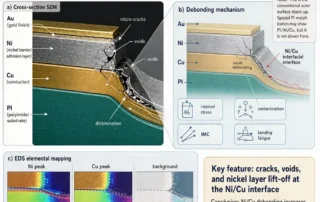
Nickel–copper adhesion failure in flexible PCBs: causes, tests, and prevention
Learn what causes nickel–copper adhesion failure in flexible PCBs, how to test it with peel, cross-section and thermal shock, and which plating controls prevent blisters and peeling.
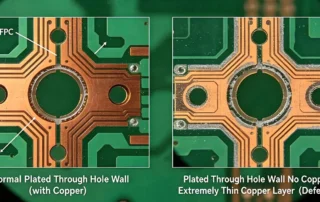
PCB Hole Wall Quality Inspection: Methods, Criteria, and Defect Fixes
How PCB hole wall quality inspection works: AOI, backlight test, microsection, copper thickness checks, IPC acceptance criteria, common defects and process fixes.
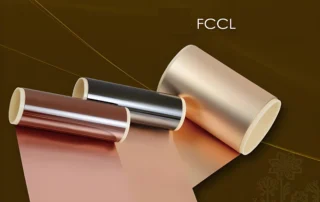
FCCL vs. Rigid Copper Clad Laminate: Key Differences & How to Choose
FCCL stands for *Flexible Copper Clad Laminate*—a bendable composite of copper foil and a flexible dielectric film such as polyimide or PET. When contrasted with rigid copper clad laminate (the standard FR-4 type used in most PCBs), the fundamental rule is simple: FCCL is for circuits that must flex or fold; rigid CCL is for circuits that stay flat[...]
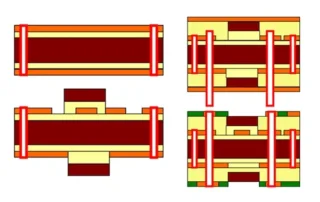
Common Structures and Process Flows for Rigid-Flex Boards
Rigid-flex PCB (R-FPCB, R-FPCB) is a composite printed circuit board formed by combining a flexible PCB with a rigid printed circuit board (PCB) through processes such as lamination, in accordance with relevant manufacturing requirements. It is suitable for both flexible and rigid areas, offering significant advantages in saving internal product space and reducing the overall size of the finished[...]
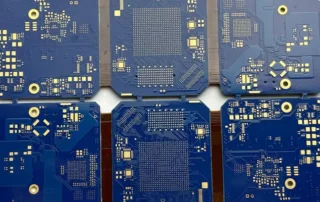
Smart FPCB Manufacturing: AI, Digital Twins, and Data-Driven Technologies for Higher Production Efficiency
Flexible printed circuit boards (FPCBs) are becoming one of the most important components in modern electronic products. Unlike traditional rigid circuit boards, flexible PCBs are thin, lightweight, bendable, and able to fit into very small spaces. These advantages make them ideal for products such as smartphones, wearable devices, electric vehicles, medical equipment, communication systems, and even aerospace technology. As[...]
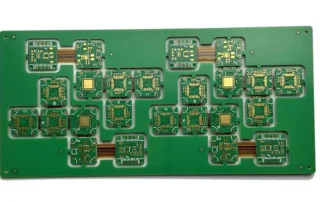
One⁃time lamination process for first⁃order rigid⁃flex PCB with unequal thickness
In the field of printed circuit boards (PCBs), rigid-flex printed circuit boards (R-FPCBs) are widely used in sectors with extremely high requirements for space utilization and reliability—such as aerospace, military equipment, and high-end electronic devices—due to their unique combination of rigidity and flexibility. With the rapid advancement of technology, the PCB industry—as the foundational pillar of the electronic information[...]
Nickel–copper adhesion failure in flexible PCBs: causes, tests, and prevention
Learn what causes nickel–copper adhesion failure in flexible PCBs, how to test it with peel, cross-section and thermal shock, and which plating controls prevent blisters and peeling.
PCB Hole Wall Quality Inspection: Methods, Criteria, and Defect Fixes
How PCB hole wall quality inspection works: AOI, backlight test, microsection, copper thickness checks, IPC acceptance criteria, common defects and process fixes.
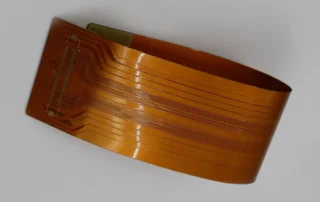
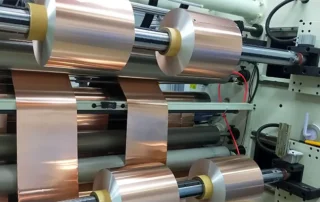
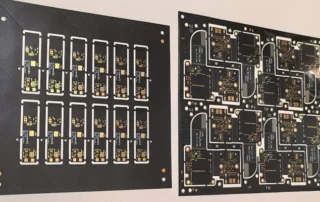
PI-Based Flexible Circuits: 3D Printing Encapsulation and Liquid Metal Reliability Optimization (Part II)
Back to Part 1 « Effect of Process Parameters on Line Widths in Circuit and Packaging Layers Process parameters are critical to the line widths in circuit and packaging layers. Therefore, this study investigated the effects of printing voltage, flow rate, and speed (see Figures 12 and 13). Fig. 12 Influence of process parameters on circuit width Fig.[...]
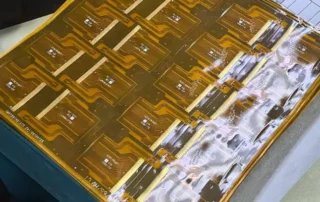
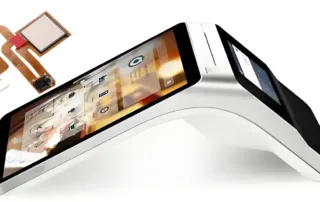
How FPC Fingerprint Sensors Work: 5 Expert Tips
Introduction: The Evolution of FPC Fingerprint Sensors Fingerprint recognition has improved a lot. It has changed from early capacitive sensors to today’s thin and high-performance biometric modules. Among all fingerprint recognition technologies, FPC (Fingerprint Cards) sensors are notable. People recognize them for their accuracy, ease of integration, and advanced signal processing capabilities. This guide explains how FPC fingerprint sensors[...]

Flex Sensors Explained: Bend Detection to Fingerprint Tech
Flex Sensors Demystified: 10 Must-Know Facts From Fingerprint Tech to Bend Detection Magic! 🔍 Intro: Why Your Next Innovation Needs Flex Sensors Ever wondered how smart gloves track finger movements or how foldable phones measure bend angles? Meet flex sensors – paper-thin tech Changing healthcare, gaming, and security! Often mixed up with fingerprint sensors, this guide will show you[...]
Common Structures and Process Flows for Rigid-Flex Boards
Rigid-flex PCB (R-FPCB, R-FPCB) is a composite printed circuit board formed by combining a flexible PCB with a rigid printed circuit board (PCB) through processes such as lamination, in accordance with relevant manufacturing requirements. It is suitable for both flexible and rigid areas, offering significant advantages in saving internal product space and reducing the overall size of the finished[...]
Smart FPCB Manufacturing: AI, Digital Twins, and Data-Driven Technologies for Higher Production Efficiency
Flexible printed circuit boards (FPCBs) are becoming one of the most important components in modern electronic products. Unlike traditional rigid circuit boards, flexible PCBs are thin, lightweight, bendable, and able to fit into very small spaces. These advantages make them ideal for products such as smartphones, wearable devices, electric vehicles, medical equipment, communication systems, and even aerospace technology. As[...]
One⁃time lamination process for first⁃order rigid⁃flex PCB with unequal thickness
In the field of printed circuit boards (PCBs), rigid-flex printed circuit boards (R-FPCBs) are widely used in sectors with extremely high requirements for space utilization and reliability—such as aerospace, military equipment, and high-end electronic devices—due to their unique combination of rigidity and flexibility. With the rapid advancement of technology, the PCB industry—as the foundational pillar of the electronic information[...]
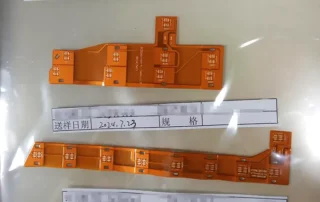
Flexible Circuits: Enhancing Performance Through Shielding, Heat Dissipation, and Reinforcement
Flexible and rigid-flex circuits are typically the first choice for PCB designers when they need to save space, reduce weight, or eliminate bulky connectors. They have driven the rapid growth of micro-electronic devices, ranging from medical wearables and drone systems to rugged aerospace applications. However, as application demands continue to rise, even the most optimally designed flexible circuits are[...]
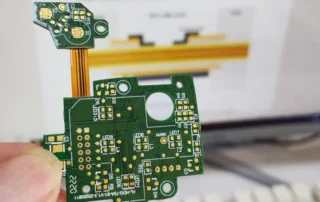
Rigid-Flex PCB Dimensional Stability: Control of Expansion and Contraction in Mass Production
In the mass production of rigid-flex boards, dimensional expansion and contraction deviations are key process issues that affect product yield, mating accuracy, and service life. Unlike pure rigid or flexible boards, the expansion and contraction characteristics of rigid-flex boards combine the properties of both types. The overall control logic centers on the expansion and contraction of the flexible substrate,[...]
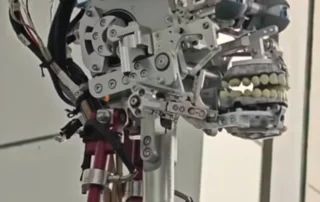
Rigid-Flex PCBs in Robotics: Key Enabling Technology for Humanoid and Industrial Systems
As robotics advances from traditional industrial automation toward humanoid robots, collaborative robots, autonomous mobile platforms, and wearable exoskeletons, electronic architectures are becoming increasingly complex. Modern robots must integrate high-performance computing, multi-sensor perception, real-time communication, precision motion control, and efficient power management within highly constrained spaces. Traditional rigid PCBs connected through cables and connectors often struggle to satisfy these requirements.[...]
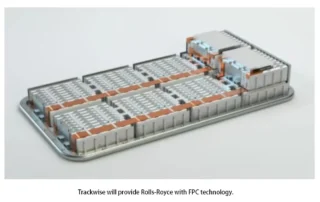

Rigid PCB vs Flexible PCB Best for Your Choice in 2026
Rigid PCB vs Flexible PCB: Which Wins for Your Applications? Introduction PCBs are the nervous system of nearly all modern electronics. People can use them to create everyday items, such as wireless earbuds, and vital medical devices, like pacemakers. Prismark Research predicts that the global PCB market will reach $89.7 billion by 2027. Flexible PCB applications are expected to grow[...]
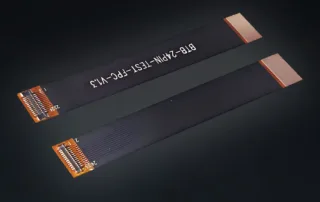
Choosing the Right Flex Circuit Connector: Tips and Best Practices
Summary Selecting the right flex circuit connector is essential for ensuring reliable electrical continuity, mechanical robustness, and efficient assembly in modern electronics. This guide talks about the basics of connectors. It covers different types, like ZIF, FPC, FFC, and BTB. It also compares FPC and FFC connectors. Additionally, it provides details about design, materials, how they connect, environmental testing, and[...]

How to choose flexible pcb?
Flexible printed circuit boards (PCBs), also known as flex PCBs, feature a layer of copper sandwiched between two layers of polymer. They connect to one or more rigid PCBs using through-hole technology. Choosing the right form factor is essential. You can choose from single-sided, double-sided, multilayer, or rigid-flex options. This choice involves balancing mechanical, electrical, and cost factors. 1.[...]

Choosing the Right FPC Cable for Your Application
When selecting an FPC cable, understanding the specific parameters and use-case requirements is critical. Unlike rigid PCBs, designers tailor the varying specifications of FPC cables precisely for each device. What Is an FPC Cable? FPC Cables, como circuitos impresos flexibles, son impresos en un sustrato aislante flexible como el poliéster o la poliimida, donde se graban senderos conductores como[...]

What is FPC in Mobile? (FAQ Guide)
FPC in mobile phones refers to flexible printed circuits (FPCs). These flexible circuits are essential components in modern mobile devices, offering a lightweight and compact alternative to traditional wiring. The more compact, lighter, and slimmer design makes them beneficial for smartphone users. They help deliver high performance and efficient power. Learn more about the other page! 1. What does FPC refer to in[...]
FCCL vs. Rigid Copper Clad Laminate: Key Differences & How to Choose
FCCL stands for *Flexible Copper Clad Laminate*—a bendable composite of copper foil and a flexible dielectric film such as polyimide or PET. When contrasted with rigid copper clad laminate (the standard FR-4 type used in most PCBs), the fundamental rule is simple: FCCL is for circuits that must flex or fold; rigid CCL is for circuits that stay flat[...]
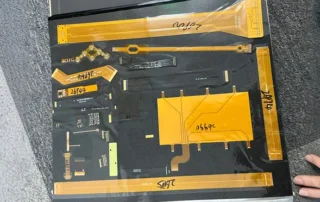
Rigid-Flex PCB Design: Benefits, Applications, Routing, and Manufacturing Guide
Combining all the characteristics of flexible circuits with rigid circuit boards that fully leverage high-density interconnect (HDI) technology represents a major technological breakthrough of our time. This design successfully avoids the need for board-to-board stacking connectors or typical flexible circuits. Anyone who has attempted to mate a flexible circuit with a stacking connector knows that this is a bottleneck[...]

Flexible PCB Enables AI-Powered Gesture Recognition for Wearable Human-Machine Interfaces
In many science fiction movies, people can control unmanned devices, send commands, and even communicate silently with machines simply by making a hand gesture. In the past, this type of interaction often relied on cameras, voice commands, or complex external devices, but these methods are unreliable in dark, noisy, obstructed, or situations where speaking is inconvenient. Consequently, a more[...]
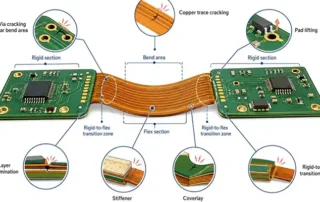
Common Flexible PCB Failure Modes: Causes, Prevention, and Design Best Practices
Flexible printed circuit boards (FPCBs) have become indispensable in modern electronics because they reduce weight, save space, and enable three-dimensional packaging. Industries such as consumer electronics, automotive, aerospace, industrial automation, and medical devices increasingly rely on flexible circuits to improve reliability while accommodating complex mechanical designs. Despite these advantages, flexible PCBs experience failure mechanisms that differ significantly from those[...]

Flexible Electronics: Moving Circuits from “Rigid Boards” to a “Flexible” Future
Flexible electronics, also known as flexible circuits, represent an emerging class of electronic technologies that utilize flexible substrates as their foundation. These systems combine electronic components with bendable materials, enabling circuits to maintain reliable performance while adapting to curved, folded, or mechanically deformed surfaces. Flexible electronics Compared to traditional rigid circuits, its core feature lies in integrating conductive layers,[...]
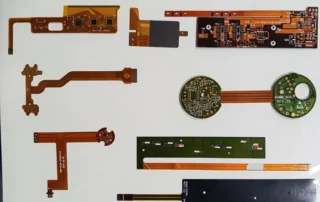
Flexible PCB Applications & Use Cases: Where Flex Circuits Excel (And Where They Don’t)
Walk into any modern electronics teardown, and you'll find one technology appearing across industries: the flexible printed circuit board (Flex PCB). From foldable smartphones and smartwatches to electric vehicles, medical devices, and aerospace systems, Flex PCBs are used in products with completely different requirements. Some prioritize miniaturization and comfort, while others demand extreme reliability, vibration resistance, or long-term durability.[...]