
Smart FPCB Manufacturing: AI and Digital Twins for Higher Production Efficiency
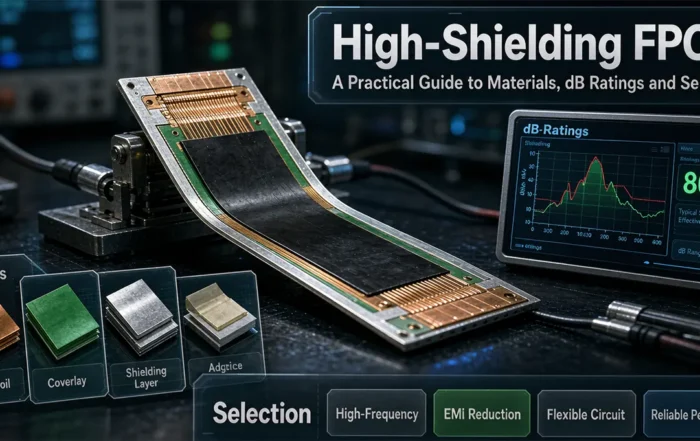
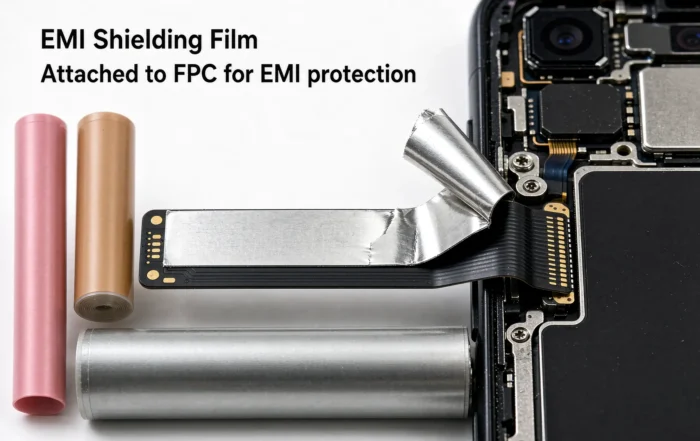
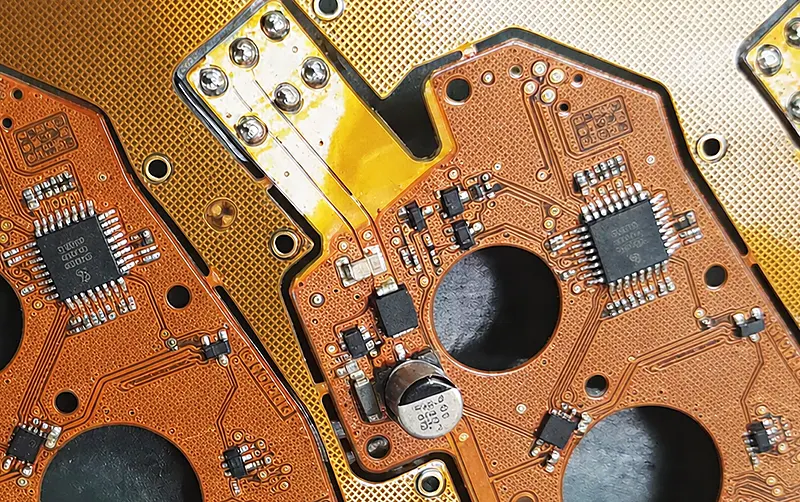
Smart FPCB Manufacturing uses sensors, industrial networks, AI, digital twins, and real-time data to run flexible PCB production with fewer defects and less downtime. It replaces guesswork with measured process control across etching, drilling, lamination, imaging, and final assembly, so factories maintain quality while cutting costs and lead time.
Current Challenges in FPCB Manufacturing
A flexible PCB passes through material preparation, etching, drilling, lamination, imaging, and final assembly. A defect smaller than the eye can see can cause the finished product to fail. Therefore, every step needs tight control.
Many factories still depend on manual inspection. Inspectors get tired after long shifts. Two people may judge the same defect differently. Small flaws slip through, and inspection speed cannot always match production speed.
Manual inspection also happens after a step is finished. By then, many defective boards may already exist. Late discovery means scrap, rework, and lost time.
Demand adds more pressure. Products such as smartphones, wearables, electric vehicles, medical devices, and communication systems keep shrinking. Meanwhile, customers want shorter lead times and more customization.
How Smart FPCB Manufacturing Works
Smart FPCB Manufacturing connects machines, sensors, and data into one loop. Sensors collect temperature, pressure, and machine status. Industrial networking moves that data to a central system. Analytics then turns it into action.
The loop is simple. First, measure the process. Next, compare results with the target. Then adjust the machine before defects appear. As a result, engineers stop reacting to failed lots and start controlling the process itself.
Three technology layers matter most:
- AI models for defect detection and parameter tuning
- A digital twin for virtual testing before a physical run
- Real-time dashboards that show yield, downtime, and scrap by line
AI FPCB Manufacturing: Inspection and Process Control
AI changes inspection first. Vision models learn from images of good and bad boards. Then they flag defects at line speed and classify them by type. Because the model does not tire, every board gets the same standard.
AI also supports process control. Models compare etching, drilling, and lamination parameters with measured results. When a trend drifts, the system alerts the operator early.
The same approach helps with maintenance. Vibration and temperature data feed predictive models. Therefore, teams service equipment before a breakdown, not after.
Digital Twin FPCB Production: Test Before You Build
A digital twin is a live model of a real line. It mirrors machine settings, material flow, and cycle times. Engineers can test a change in the model first.
For example, a new lamination profile can be simulated before it touches the press. The team sees the effect on cycle time and quality risk. As a result, ramp-up for new designs gets faster.
Digital twin FPCB production also helps planning. Managers compare scenarios for capacity, staffing, and scheduling. They choose the option with the best output and the lowest risk.
Building a Smart FPCB Factory: A Practical Roadmap
Start with data, not software. Step one is to connect key stations and log parameters automatically. Step two is to clean that data and set baselines.
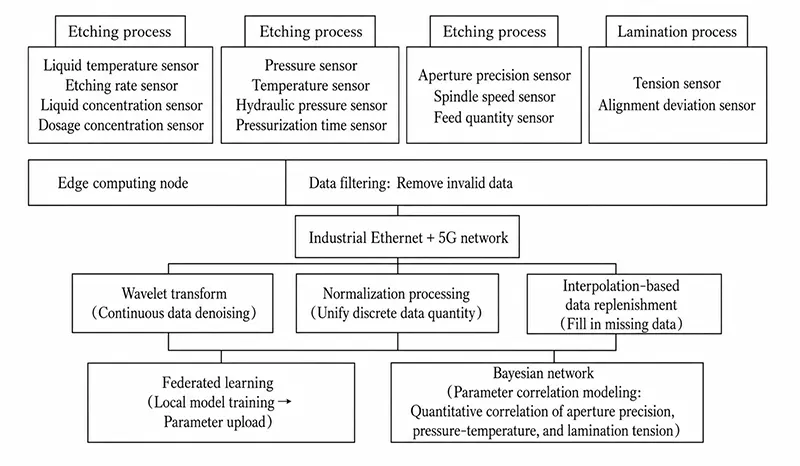
Schematic diagram of data fusion process for multi source sensing technology on flexible circuit boards
Next, add one high-value use case. Predictive maintenance and automated optical inspection are common first projects. Keep the scope narrow, and measure results in yield and downtime.
After that, expand step by step:
1. Connect etching, drilling, and lamination lines to one data platform.
2. Add AI inspection on the tightest tolerance steps.
3. Build a digital twin for the bottleneck process.
4. Train operators so the data becomes a daily habit.
Also, keep product variety in view. Double-Sided Flex PCB Manufacturing and Rigid-Flex PCB Technology bring different process windows. Therefore, models should be tuned per product family, not once for the whole plant.
Where the Data Pays Off
The payoff shows up in quality, speed, and cost. Real-time data catches drift early. Predictive maintenance cuts unplanned stops. Better process control reduces scrap and rework.
Data also feeds design decisions. A Wire Harness-Like FPCB Manufacturing Process uses long, narrow traces where handling matters. High-Shielding FPCB builds add shielding layers with extra steps. Each design has its own risk points, and data shows which ones fail most.
Thermal topics matter too. FPCB heat dissipation depends on copper area, stack-up, and current load. Therefore, tracking those parameters helps prevent field failures.
Smarter lines also serve Industrial Automation customers who need stable, repeatable output. For definitions and common questions, see the PCB Manufacturing FAQ. For a deeper look at how models tune process windows on flexible circuit boards, review the AI-driven optimization work on etch and plating control.
FAQ
What is Smart FPCB Manufacturing?
Smart FPCB Manufacturing is a production model for flexible printed circuit boards that links sensors, industrial networks, AI, and digital twins into one data loop. It monitors etching, drilling, lamination, imaging, and assembly in real time, then adjusts parameters before defects appear. The goal is stable yield, less downtime, and shorter lead time.
How does AI FPCB manufacturing reduce defects?
AI models learn from images and process data collected on the line. They classify defects at production speed and flag parameter drift in etching, drilling, and lamination. Because the model applies the same standard to every board and never tires, small flaws are caught earlier than with manual visual inspection, and rework volume drops.
What does digital twin FPCB production do in a factory?
A digital twin is a live virtual copy of a real line, including machine settings, material flow, and cycle times. Engineers test changes such as a new lamination profile in the model before running them on hardware. Therefore, teams see quality risk and cycle-time impact first, and new designs ramp up faster with less trial scrap.
Related Posts
- Wire Harness-Like FPCB Manufacturing Process Guide — Related article
- High-Shielding FPCB Manufacturing: High-Current Methods — Related article
- AI-Driven Optimization of Flexible Circuit Boards Production — Related article
- Boosting PCB and FPCB Heat Dissipation — Related article
- Closed-Loop Recyclable Flexible PCB Manufacturing Guide — Related article