
AI-Driven Optimization of Flexible Circuit Boards Production
AI-driven optimization of flexible circuit board production combines real-time sensor monitoring with closed-loop adaptive control to keep FPCB manufacturing inside narrow process windows. In AI FPCB production, the system detects deformation risks and environmental interference, then adjusts parameters before quality drifts. This approach to flexible circuit board production optimization supports high-precision manufacturing with more consistent quality and efficiency.

Flexible Circuit Board Production Processes: Key Manufacturing Challenges
Flexible circuit boards offer lightweight, bendable, and three-dimensional spatial layout advantages, making them indispensable in modern electronic devices. During production, flexible circuit boards encounter numerous manufacturing challenges:
- Substrates with high thermal expansion coefficients are prone to warping and deformation under high-temperature conditions.
- Increasing circuit miniaturization demands micron-level alignment precision, which traditional mechanical positioning methods struggle to achieve.
- Narrow exposure parameter windows make imaging quality susceptible to fluctuations in environmental humidity.
- Cumulative interlayer alignment errors significantly impact yield rates, resulting in generally low production rates for multilayer boards.
These issues make traditional fixed-parameter control methods inadequate for meeting high-precision production demands.
AI-Driven Optimization of FPCB Production: Intelligent Control Methods
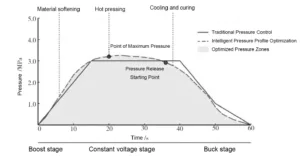
Intelligent control technology employs a perception-decision-execution closed-loop system to achieve adaptive parameter adjustment. Research focuses on developing smart control systems and exploring the mapping relationship between parameters and performance to enhance production quality and efficiency.
Intelligent Control System Architecture Design
The intelligent control system architecture incorporates a multi-level closed-loop control structure and real-time process parameter monitoring mechanisms. The multi-level structure comprises:
- A basic control layer using fuzzy proportional-integral-derivative control algorithms.
- A process parameter coordination layer using model predictive control.
- A product quality optimization layer using deep reinforcement learning.
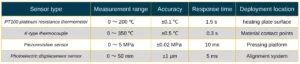
It employs bottom-up information flow and top-down control flow to form a hierarchical collaborative system. Real-time process parameter monitoring relies on a high-precision sensor network integrating temperature monitoring with thermocouple arrays, pressure monitoring with piezoresistive thin-film sensors, and time monitoring with optical sensors. Coupled with data preprocessing modules and anomaly detection algorithms, data is transmitted via 5G industrial gateways to ensure precise control decisions.
Multi-Sensor Data Acquisition and Fusion Technology
The multi-sensor data acquisition system comprises a temperature sensing network, a pressure monitoring array, a positional accuracy tracking system, and an environmental parameter monitoring module. Table 1 in the source material presents the temperature sensing network as a hybrid deployment strategy. These fused data streams support the closed-loop system by giving the control layers a real-time view of process conditions.
Verification of Intelligent Control Process Optimization Effects

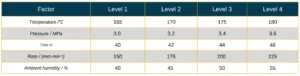
Verification of intelligent control process optimization effects centers on whether the perception-decision-execution closed loop can maintain process windows and reduce quality fluctuations. Because the system monitors temperature, pressure, time, position, and environmental parameters in real time, verification can assess how adaptive parameter adjustment responds to material deformation risks, humidity fluctuations, and cumulative interlayer alignment errors.
The mapping relationship between parameters and performance provides the basis for evaluating production quality and efficiency. Rather than relying on fixed settings, AI-driven optimization of FPCB production uses sensor fusion, anomaly detection, and hierarchical control decisions to support more stable outcomes across flexible circuit board production processes.
Conclusion
Flexible circuit boards remain essential in smart terminals, wearable devices, and medical equipment, but their production faces deformation, precision, process-window, and yield challenges. AI-driven optimization of FPCB production addresses these issues through a perception-decision-execution closed loop, multi-level control, real-time sensor monitoring, and data fusion. By connecting parameter choices to performance outcomes, intelligent control supports adaptive adjustment and more reliable flexible circuit board production processes.
FAQ
What are flexible circuit boards?
Flexible circuit boards are bendable circuit substrates used in smart terminals, wearable devices, and medical equipment. Their bendable nature and high space utilization make them suitable for thinner and lighter electronic products, and they can support three-dimensional spatial layouts.
Why are flexible circuit board production processes challenging?
Flexible circuit board production processes face high thermal expansion substrates that can warp under high temperatures, micron-level alignment precision requirements for miniaturized circuits, narrow exposure parameter windows sensitive to humidity, and cumulative interlayer alignment errors that can reduce multilayer board yield.
How does AI-driven optimization of FPCB production work?
AI-driven optimization of FPCB production uses a perception-decision-execution closed loop. It combines fuzzy proportional-integral-derivative control, model predictive control, and deep reinforcement learning with sensor data for temperature, pressure, time, position, and environmental parameters. Data is transmitted via 5G industrial gateways, and anomaly detection supports adaptive parameter adjustment.
Related Posts
- FPCs for Smart Glasses Guide — Related article
- Innovative Flexible Circuit Manufacturing — Related article
- Design of Automatic Assembly Equipment for Flexible Circuit Board — Related article
- Flexible Circuits: Technology and Applications — Related article
- Flexible Coating Materials in Circuit Board Manufacturing – GekunFlex — Related article