
Explore the Cutting – Edge World of PCB Technology!
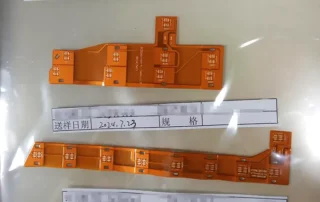
Flexible Circuits: Enhancing Performance Through Shielding, Heat Dissipation, and Reinforcement
Flexible and rigid-flex circuits are typically the first choice for PCB designers when they need to save space, reduce weight, or eliminate bulky connectors. They have driven the rapid growth of micro-electronic devices, ranging from medical wearables and drone systems to rugged aerospace applications. However, as application demands continue to rise, even the most optimally designed flexible circuits are[...]
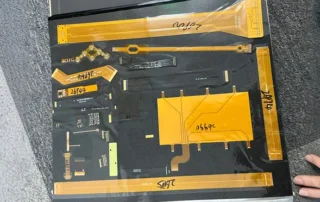
Rigid-Flex PCB Design: Benefits, Applications, Routing, and Manufacturing Guide
Combining all the characteristics of flexible circuits with rigid circuit boards that fully leverage high-density interconnect (HDI) technology represents a major technological breakthrough of our time. This design successfully avoids the need for board-to-board stacking connectors or typical flexible circuits. Anyone who has attempted to mate a flexible circuit with a stacking connector knows that this is a bottleneck[...]

Flexible PCB Enables AI-Powered Gesture Recognition for Wearable Human-Machine Interfaces
In many science fiction movies, people can control unmanned devices, send commands, and even communicate silently with machines simply by making a hand gesture. In the past, this type of interaction often relied on cameras, voice commands, or complex external devices, but these methods are unreliable in dark, noisy, obstructed, or situations where speaking is inconvenient. Consequently, a more[...]
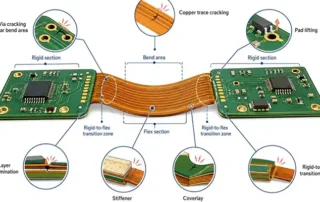
Common Flexible PCB Failure Modes: Causes, Prevention, and Design Best Practices
Flexible printed circuit boards (FPCBs) have become indispensable in modern electronics because they reduce weight, save space, and enable three-dimensional packaging. Industries such as consumer electronics, automotive, aerospace, industrial automation, and medical devices increasingly rely on flexible circuits to improve reliability while accommodating complex mechanical designs. Despite these advantages, flexible PCBs experience failure mechanisms that differ significantly from those[...]

Flexible Electronics: Moving Circuits from “Rigid Boards” to a “Flexible” Future
Flexible electronics, also known as flexible circuits, represent an emerging class of electronic technologies that utilize flexible substrates as their foundation. These systems combine electronic components with bendable materials, enabling circuits to maintain reliable performance while adapting to curved, folded, or mechanically deformed surfaces. Flexible electronics Compared to traditional rigid circuits, its core feature lies in integrating conductive layers,[...]
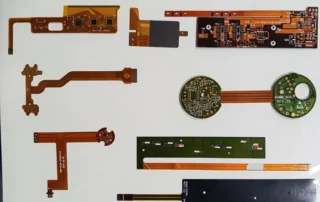
Flexible PCB Applications & Use Cases: Where Flex Circuits Excel (And Where They Don’t)
Walk into any modern electronics teardown, and you'll find one technology appearing across industries: the flexible printed circuit board (Flex PCB). From foldable smartphones and smartwatches to electric vehicles, medical devices, and aerospace systems, Flex PCBs are used in products with completely different requirements. Some prioritize miniaturization and comfort, while others demand extreme reliability, vibration resistance, or long-term durability.[...]
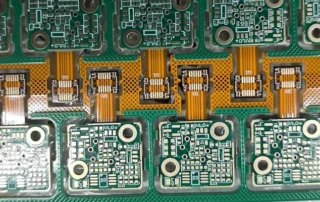
High-frequency FPC materials: LCP, MPI, and Low Dielectric Loss Trends (Part II)
High-frequency FPC materials are flexible circuit substrates built to keep signal loss low at GHz frequencies. They use resins with a low dielectric constant and a low dissipation factor, such as LCP, MPI, and fluororesins. This part of the guide explains how these materials differ and where each one fits. What Are High-frequency FPC materials? High-frequency FPC materials are[...]
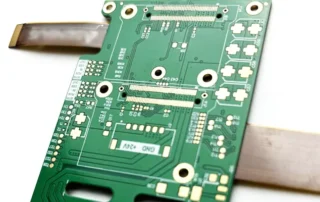
Rigid-Flex PCB Air-Gap Process Optimization for High-Yield Flexible Circuit Manufacturing(Part II)
Back to Part 1 « Evaluation by replacing dry film with a wet film with better flow properties Liquid ink shows good filling and flow properties. It is expected to effectively fill the pits at the bottom of the copper surface in the air gap. However, the ink requires high exposure energy. The process cannot remove residual ink during[...]
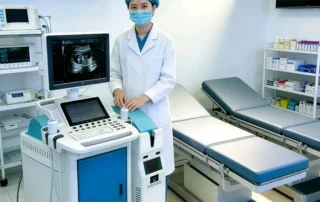
Medical Ultrasound FPCB Design: Optimization of 3L Stepped and Cutout Flexible Circuit Structures
Ultrasound probe products are widely used in medical diagnostic equipment. Some probes are designed for single use and are classified as medical consumables, resulting in strong market demand and broad growth prospects. Development Trends of FPC in Medical Ultrasound Devices The development of flexible printed circuit (FPC) boards for medical ultrasound products is mainly characterized by: Miniaturization High wiring[...]
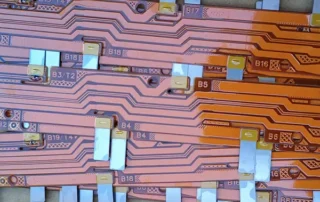
Pattern-Based FPC Routing Algorithm for Optimized Flexible PCB Design(Part I)
Flexible printed circuits (FPCs) are a specialized type of printed circuit board increasingly used in miniaturized and diversified electronic products. As applications expand, FPC designs have become more complex. Unlike conventional PCB routing, FPC routing faces stricter constraints and highly irregular routing spaces. FPC Routing Challenges In FPC layouts, components are densely concentrated within fan-out regions, resulting in uneven[...]
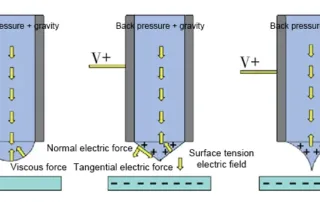
Liquid Metal Flexible Circuits: High-Reliability 3D Printed PI-Based Encapsulation Technology
Soft circuits have been a hot topic in health monitoring, biomedical, and rehabilitation diagnostics research in recent years. Traditional flexible conductors are fabricated by combining conductive fillers with stretchable elastomers. For instance, embedding nano-metal particles and ionic gels within elastomers yields conductive elastomers with excellent performance under complex strain conditions. However, the conductivity of these materials is significantly affected[...]
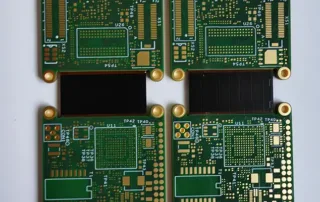
High-Frequency Rigid-Flex PCB Manufacturing: Key Process Technologies Using PTFE Materials
With the advancement of information technology, higher demands have been placed on the efficient and stable transmission of electrical signals, driving continuous upgrades in high-frequency materials. Influenced by market needs, the application and research of FPC in high-frequency fields lag behind that of PCB. Currently, the primary high-frequency materials used in FPCs are MPI, LCP, and PTFE. Among these,[...]
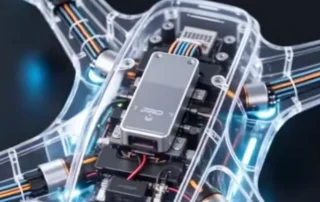
Rigid-Flex PCB for Drones: Applications, Benefits & Manufacturer Selection
The rapid growth of drone technology is driving increasing demands for lighter weight, higher reliability, longer flight endurance, and greater functional integration. Whether in consumer drones, industrial inspection platforms, agricultural UAVs, or professional aerial photography systems, electronic components must operate reliably within compact spaces while enduring continuous vibration, temperature fluctuations, and complex environmental conditions. Traditional PCB assemblies, which rely[...]
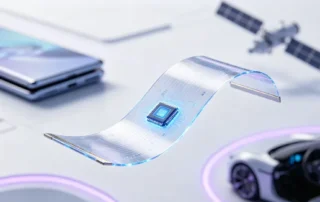
Inner-Layer Pad Protection Methods for FPC: Materials, Processes, and Comparative Analysis
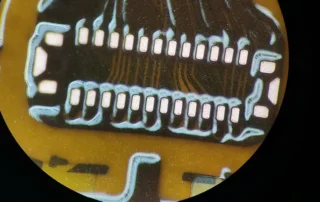
With the rapid advancement of electronic technology, standard single- and double-sided flexible circuit boards can no longer meet customer needs, leading to a growing demand for highly integrated, multilayer flexible boards and rigid-flex boards. When designing multilayer flexible boards, inner-layer pads often need to remain exposed. Therefore, during fabrication, the copper in these areas must be protected to prevent[...]
FPC Design: Materials, EDA Tools, and Signal Integrity Guide
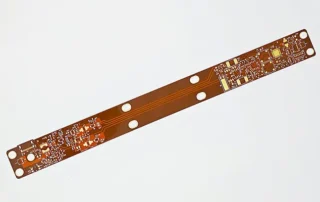
Manufacturers create a Flexible Printed Circuit Board (FPC) as a high-performance electronic interconnect component using precision etching processes, with a flexible polymer material (such as polyimide or polyester film) serving as the dielectric layer. Compared to rigid circuit boards, designers can bend, fold, and twist FPCs, allowing them to adapt to complex three-dimensional layouts. They offer significant advantages in[...]
Preventing FPCB Pad Cracking: Bump Design, Material Selection & Stamping Guide
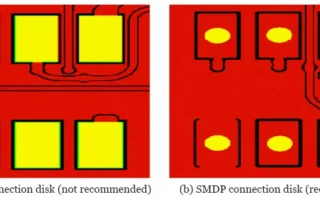
Direct answer: FPCB pad bump cracking is most effectively prevented by combining three controls: Design— lower bump height, rounded transition profiles, and fillets at pad-to-trace junctions. Material — high-ductility copper foil, typically rolled annealed copper, with well-adhered plating. Stamping process — progressive forming, proper die clearance, controlled speed/pressure, and adequate pad support. Avoiding sharp geometric transitions and excessive single-step[...]

Unlocking the Future of Electronics: How Flexible PCB Buttons Are Changing Device Design
Unlocking the Future of Electronics: How Flexible PCB Buttons Are Changing Device Design Summary: Manufacturers create flexible PCB buttons from flexible printed circuit boards. They use very thin copper layers and high-quality dielectric materials. This design allows for slim, high-density PCBs in today’s compact electronic products. By using advanced flex circuits instead of rigid circuit boards, manufacturers get better durability.[...]
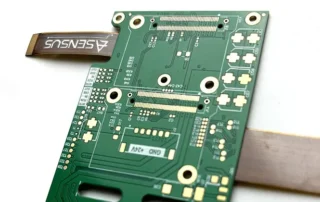
How Are Fully Recyclable Flexible PCBs Made?
With the widespread use of electronic devices, waste electrical and electronic equipment (WEEE) has become a major challenge for global environmental management. Statistics show that the world generated approximately 53.6 million metric tons of electronic waste in 2019, and this figure is projected to surge to 243 million metric tons by 2050. As a core component of electronic[...]
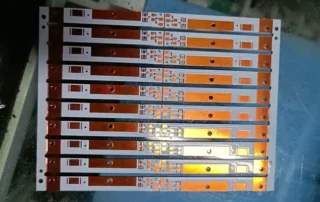
Adhesive-Free FCCL Substrates vs Adhesive-Based Substrates: Performance Differences Explained
Anyone in the hardware industry knows that FPCs are like the “nerve pathways” of electronic devices. From the flexible cables in smartwatches to the hinge connectors in foldable screens and the moving joints of robots, all of these rely on FPCs for support. But do you know what determines the performance of an FPC? The answer lies in its[...]
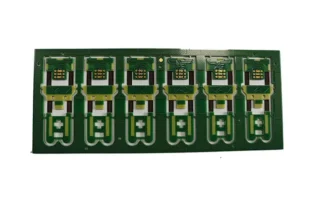
Flexible PCBs: Structure, Materials, and Selection Guide
Flexible PCBs allow engineers to bend, roll, and fold circuits freely. Manufacturers use polyimide film as the substrate to produce these circuits, which the industry also calls “soft boards” or “FPCs.” Manufacturers categorize flexible printed circuit manufacturing processes into double-sided flexible printed circuit processes and multilayer flexible printed circuit processes based on the number of layers. FPCs can withstand[...]
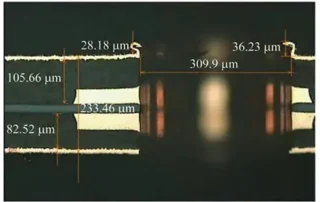
Rigid-Flex PCB Drilling: New Technologies to Reduce Burrs and Improve Yield
Rigid-Flex Printed Circuit Boards (R-FPCBs) are composite printed circuit boards formed by combining flexible printed circuit boards (FPCBs) and rigid printed circuit boards (PCBs) through processes such as lamination, in accordance with relevant manufacturing requirements. It is suitable for both specific flexible areas and specific rigid areas, offering significant advantages in saving internal product space and reducing the volume[...]
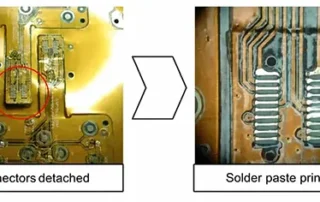
Flexible PCB SMT Process: Complete Guide to Flexible Printed Circuit Assembly and Manufacturing
Flexible PCB is a flexible circuit board, also known as a flexible circuit or bendable circuit board, and commonly referred to as a “flex board.” It is a highly reliable, flexible printed circuit made using polyimide or polyester film as the substrate. The miniaturization of electronic products is an inevitable trend. Due to space constraints during assembly, a significant[...]
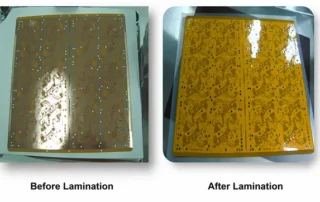
LCD/OLED Module Basics—An Introduction to FPC Raw Material Manufacturing
Flexible PCB are a foundational technology in modern electronics, enabling compact, lightweight, and highly reliable interconnections between components in devices such as smartphones, automotive control units, medical instruments, and wearable electronics. Unlike traditional rigid PCBs, Flexible PCB are built on flexible polymer substrates, allowing them to bend, fold, and conform to tight spatial constraints without compromising electrical performance. Understanding[...]