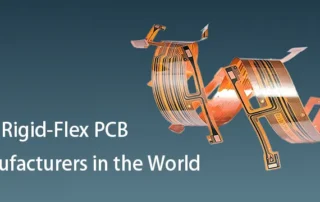
Explore the Cutting – Edge World of PCB Technology!
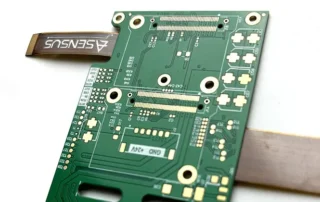
How Are Fully Recyclable Flexible PCBs Made?
With the widespread use of electronic devices, waste electrical and electronic equipment (WEEE) has become a major challenge for global environmental management. Statistics show that the world generated approximately 53.6 million metric tons of electronic waste in 2019, and this figure is projected to surge to 243 million metric tons by 2050. As a core component of electronic[...]
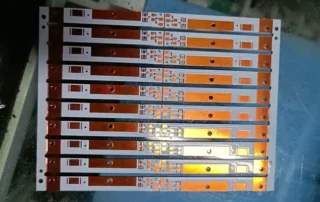
Adhesive-Free FCCL Substrates vs Adhesive-Based Substrates: Performance Differences Explained
Anyone in the hardware industry knows that FPCs are like the “nerve pathways” of electronic devices. From the flexible cables in smartwatches to the hinge connectors in foldable screens and the moving joints of robots, all of these rely on FPCs for support. But do you know what determines the performance of an FPC? The answer lies in its[...]
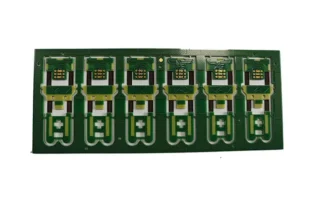
Flexible PCBs: Structure, Materials, and Selection Guide
Flexible PCBs allow engineers to bend, roll, and fold circuits freely. Manufacturers use polyimide film as the substrate to produce these circuits, which the industry also calls “soft boards” or “FPCs.” Manufacturers categorize flexible printed circuit manufacturing processes into double-sided flexible printed circuit processes and multilayer flexible printed circuit processes based on the number of layers. FPCs can withstand[...]
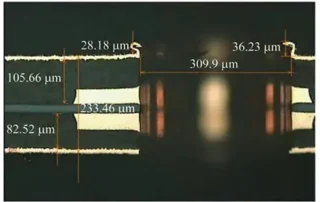
Rigid-Flex PCB Drilling: New Technologies to Reduce Burrs and Improve Yield
Rigid-Flex Printed Circuit Boards (R-FPCBs) are composite printed circuit boards formed by combining flexible printed circuit boards (FPCBs) and rigid printed circuit boards (PCBs) through processes such as lamination, in accordance with relevant manufacturing requirements. It is suitable for both specific flexible areas and specific rigid areas, offering significant advantages in saving internal product space and reducing the volume[...]
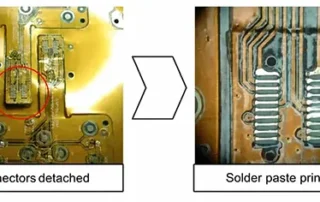
Flexible PCB SMT Process: Complete Guide to Flexible Printed Circuit Assembly and Manufacturing
Flexible PCB is a flexible circuit board, also known as a flexible circuit or bendable circuit board, and commonly referred to as a “flex board.” It is a highly reliable, flexible printed circuit made using polyimide or polyester film as the substrate. The miniaturization of electronic products is an inevitable trend. Due to space constraints during assembly, a significant[...]
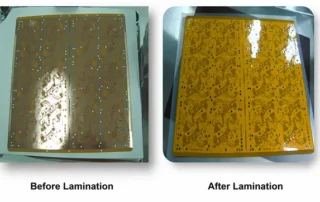
LCD/OLED Module Basics—An Introduction to FPC Raw Material Manufacturing
Flexible PCB are a foundational technology in modern electronics, enabling compact, lightweight, and highly reliable interconnections between components in devices such as smartphones, automotive control units, medical instruments, and wearable electronics. Unlike traditional rigid PCBs, Flexible PCB are built on flexible polymer substrates, allowing them to bend, fold, and conform to tight spatial constraints without compromising electrical performance. Understanding[...]
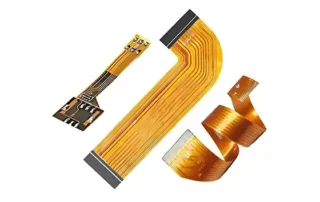
Carbon-Coated Film Evaluation for Reliable FCCL Copper Plating
Flexible printed circuits comprise one or more layers of etched conductive material on one or both sides of a dielectric film and are widely used in smartphones, laptops, wearable devices, automotive electronics, and other fields. Flexible Copper Clad Laminate (FCCL) serves as the substrate material for flexible printed circuit boards, comprising a flexible insulating base film (typically polyimide, PI)[...]
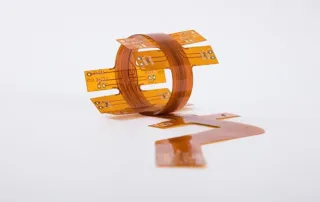
How can FPC be made to have good resistance to bending?
Flexible printed circuits (FPCs) are increasingly deployed in compact electronics, robotics, medical devices, and wearable systems. However, the mechanical performance requirements of a flex circuit depend fundamentally on whether the application involves static bending or dynamic bending. Understanding this distinction at the design stage determines material selection, laminate architecture, routing strategy, and mechanical constraints. “Static Bending” or “Dynamic Bending”?[...]
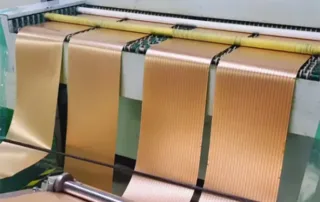
Enhancing FPC Insulation Performance in Ultra-Long Thick Copper Flexible Circuits
Flexible printed circuit boards (FPCs) have gained widespread adoption in consumer electronics, new energy vehicles, aerospace, and medical equipment due to their lightweight, bendable nature, and high integration capabilities. As electronic devices evolve toward higher power and density, demand for ultra-long, thick copper FPCs is growing to meet requirements for high current-carrying capacity and efficient heat dissipation. However, thick[...]
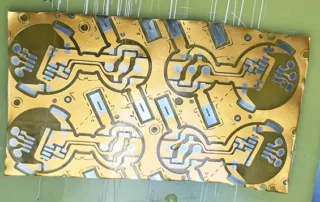
PTFE Blind Via Processing for High-Frequency FPC: Process Optimization and Insertion Los
Industry Background and Technology Trends With the rapid advancement of artificial intelligence, 5G communications, and IoT technologies, electronic devices are rapidly evolving toward higher frequencies, faster speeds, miniaturization, and integration. Against this backdrop, high-frequency flexible printed circuit boards (FPCs), as critical interconnect components, face increasingly stringent performance requirements. Signal transmission integrity and low-loss characteristics have become key factors determining[...]
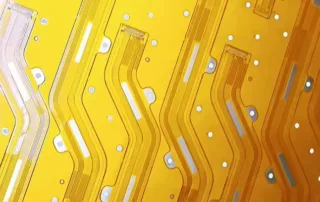
Optimizing Blind Slot Multilayer Flexible PCB Manufacturing: A New Laser-Controlled Fabrication Method
As an interconnection between electronic components, multilayer flexible printed circuit boards (FPCBs) meet the circuit connection needs of various electrical and electronic products. They align with the industry trend toward lighter, thinner, shorter, smaller, higher-performance, and high-density electronic devices. Electronic products become increasingly miniaturized and diversified. Traditional planar circuit boards face significant constraints in space utilization and safety. Fail[...]

Flexible Tactile Sensor Design Using FPCB Processing for Robotic and Industrial Applications
Tactile sensors can obtain relevant characteristics of both the sensor and the contacted object's surface through physical contact, such as temperature, pressure, hardness, and material properties. With the advancement of robotic bionics, the application scope of these “artificial skin”-like tactile sensors continues to expand, playing an increasingly vital role in robotic bionics, medical devices, and various industrial equipment. Scholars[...]
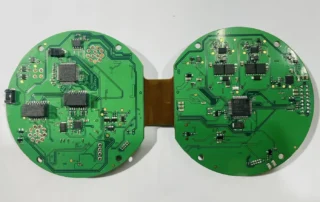
Rigid-Flex PCB Manufacturing: Process Optimization for Outer-Layer Flexible Structures
Rigid-flex printed circuit boards (R-FPCBs) combine the advantages of both rigid and flexible boards. As printed circuit boards (PCBs) continue to evolve toward being lighter, thinner, and smaller, the demand for these products is growing steadily. While the design of R-FPCBs offers significant convenience, it also presents greater challenges than the manufacturing processes for conventional rigid PCBs (rigid boards).[...]
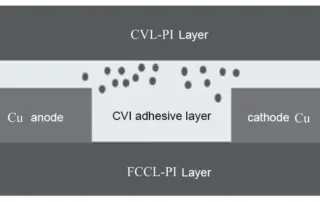
Understanding CAF Failure in Multilayer FPCBs: Mechanisms, Ion Migration, and Reliability Analysis
As printed circuit boards become increasingly multilayered and densely populated, demands for their reliability grow ever more stringent. Particularly with the multilayering of flexible printed circuits, engineers focus on product failures and malfunctions. Ion migration between different conductors causes these issues. Electrical failures resulting from ion migration exhibit highly unstable failure latency periods, posing significant challenges for managing the[...]
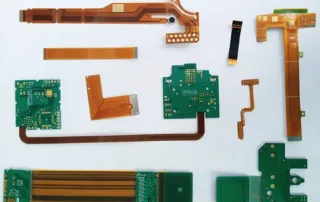
PI Protective Film Process for Rigid-Flex PCBs: Reducing Flexible-Area Cosmetic Defects
The PI protective film process for rigid-flex PCBs applies a polyimide (PI) protective film onto the cover film surface of the flexible area before or during lamination. Its primary purpose is to shield the flexible panel from prepreg (PP) powder, resin overflow, pitting, compression cracking, and contamination—defects that commonly occur during rigid-flex lamination and lead to high scrap rates.[...]
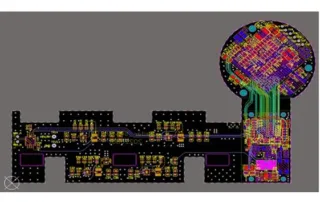

Flexible Electronics–Enabled RF Signal Processing Circuits for Miniaturized Missile Systems
With the widespread operational deployment of unmanned platforms, miniaturized, low-cost, and mass-produced munitions will become an inevitable trend in future weapons development. Therefore, designers must minimize the volume ratio of onboard electronic equipment, controlling it within 15% to 20% to reserve more space for warheads and propulsion systems. Miniaturization Challenges in Next-Generation Munitions However, traditional rigid circuit system structural[...]

Flexible Printed Circuits on Textiles via Screen Printing for Wearable Electronics
The principle of flexible electronic printing technology involves using inks with electronic functionality to fabricate electronic devices or circuits on flexible substrates through precision printing techniques. The printed circuits possess corresponding electronic capabilities. Flexible electronic printing technology holds broad application prospects in radio frequency identification (RFID) tags, sensors, thin-film transistors, supercapacitors, and other fields. Printing is a relatively low-cost[...]
Flexible PCB: Features, Design Guide, Applications, and Benefits
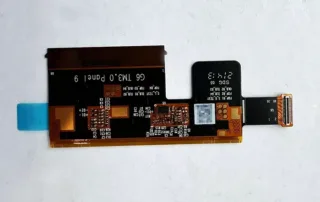
Flexible printed circuit boards (flexible boards or flex PCBs) are thin, lightweight electronic interconnects designed to bend, fold, or twist to fit complex three-dimensional assemblies. Unlike traditional rigid PCBs, flexible boards are typically manufactured using polyimide or polyester substrates that provide excellent thermal stability, mechanical flexibility, and electrical insulation. This structure enables designers to reduce assembly space, eliminate bulky[...]
Types and Characteristics of Flexible Copper-Clad Laminates
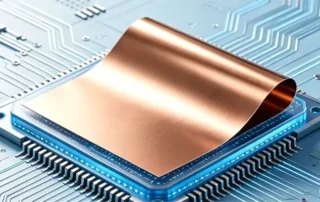
Copper-clad laminates (CCL) used in the manufacture of printed circuit boards (PCBs) can be divided into two major categories: copper-clad laminates (CCL) and flexible copper-clad laminates (FCCL). Most flexible copper-clad laminates consist of a flexible insulating base film and a metal layer. High flexibility is the most prominent product feature of flexible copper-clad laminates; Therefore, they are also known[...]