
Rigid-Flex PCB for Drones: Applications, Benefits & Manufacturer Selection
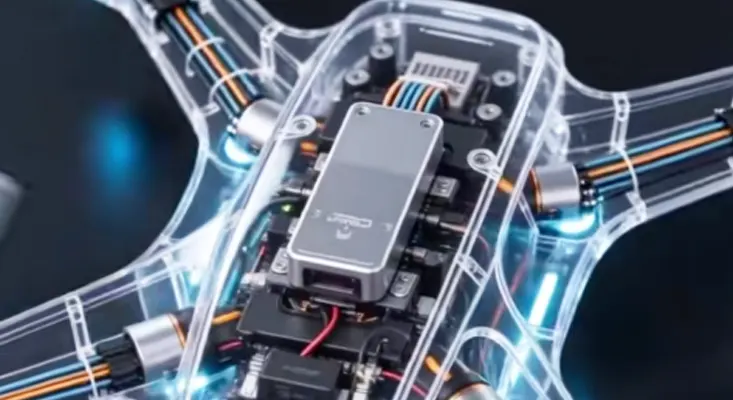
The rapid growth of drone technology is driving increasing demands for lighter weight, higher reliability, longer flight endurance, and greater functional integration.
Whether in consumer drones, industrial inspection platforms, agricultural UAVs, or professional aerial photography systems, electronic components must operate reliably within compact spaces while enduring continuous vibration, temperature fluctuations, and complex environmental conditions.
Traditional PCB assemblies, which rely on multiple rigid boards connected by wire harnesses and connectors, often struggle to meet these requirements.
Excessive interconnections increase weight, occupy valuable internal space, and create potential failure points under dynamic operating conditions.
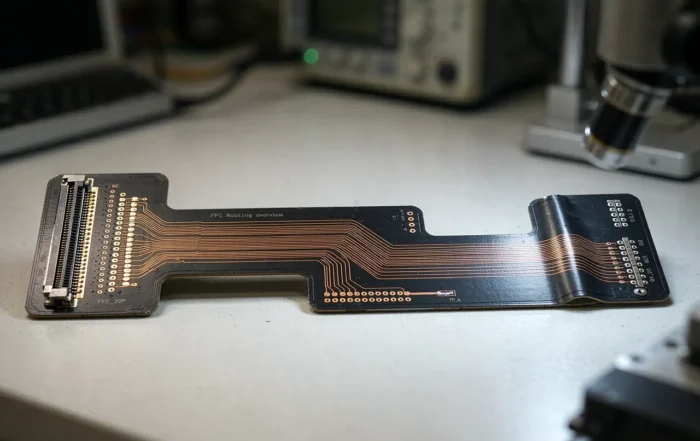
Rigid-flex printed circuit boards (PCBs) provide an effective solution by integrating rigid and flexible circuit technologies into a single structure.
Combining the mechanical stability of rigid boards with the adaptability of flexible circuits, rigid-flex PCBs reduce assembly complexity, improve signal reliability, and enable more efficient use of limited space.
As a result, they have become a critical component in modern drone systems, supporting applications ranging from flight controllers and gimbal cameras to battery management systems, communication modules, and folding arm structures.
This article explores the key benefits and application areas of rigid-flex PCBs in drones, as well as the essential capabilities and qualifications manufacturers must possess to produce high-quality rigid-flex boards for demanding UAV applications.
Their value is primarily reflected in the following three aspects:
1. Weight reduction and extended range: By replacing wiring harnesses and multiple rigid boards, they reduce internal weight, resulting in longer flight times.
2. Stability and reliability: By eliminating connectors and solder joints prone to loosening, they provide stable connections in high-frequency vibration environments.
3. Space optimization: The flexible sections can adapt to the complex three-dimensional space inside the drone, significantly improving internal space utilization.
Core Application Areas
The application of rigid-flex boards in drones primarily spans the following core systems:
1. Flight Control System: The Nervous Center:
As the “brain” of the drone, the flight control system is one of the most critical areas for rigid-flex board applications.
Its rigid sections are used to securely mount important chips such as processors, while the flexible sections extend outward like “arms” to mount sensors, providing shock and vibration isolation that significantly enhances flight stability.
The flight control system of the DJI Mavic 3 uses a single rigid-flex board to replace three traditional rigid boards and 12 cable harnesses, reducing the weight of this component alone by 25 grams (approximately 15%).
2. Gimbal and Camera System: Ensuring Stable Footage
The gimbal must rotate continuously to maintain a stable image. The flexible portion of the rigid-flex PCB can withstand tens of thousands of repeated bends, replacing traditional cables that are prone to breaking; the rigid portion securely supports the image sensor and processing chips, ensuring stable signal transmission and enabling smooth, stable shooting.
3. Power Supply and Battery Management System: The Power Core
Battery packs and power management systems have extremely high safety requirements. The application of rigid-flex PCBs is primarily reflected in the following areas:
(1) Battery Connections:
Flexible circuit boards connect the battery cells to the protection board, providing a more reliable connection than traditional hard wires during severe vibrations and minor displacements.
(2) Power Management:
Core chips for monitoring and managing the battery are integrated into the rigid section, resulting in a lighter weight. By reducing the number of internal solder joints, the system achieves a high IP67 rating for water and dust resistance.
4. Sensing and Communication Modules: Sensory Network
In components such as GPS modules, image transmission modules, and radar/vision systems, the rigid section of the rigid-flex PCB provides a stable platform for precision components, while the flexible section handles internal connections within the airframe.
This ensures high-quality high-frequency signal transmission and utilizes the properties of flexible materials to absorb impact energy.
5. Arms and Folding Structures: The Foundation of Form
For folding drones, the flexible section can be designed at the arm hinges—which require repeated opening and closing—to directly connect the arms to the central control board.
This arrangement not only transmits signals and power but also accommodates folding movements and absorbs vibration energy.
Manufacturers capable of producing rigid-flex PCBs for drones must be both “certified industry leaders” and “technical experts.”
Because drones impose extremely stringent requirements on circuit boards—including high reliability, lightweight design, and vibration resistance—the screening of suppliers will, at a minimum, be conducted across the following dimensions:
Which Manufacturers Can Produce High-Quality Rigid-Flex Boards?
1. The Essential “Three Pillars” of Certification
Manufacturers must possess industry-recognized foundational, specialized, and safety certifications, which serve as mandatory assessments of their quality management, production standards, and safety levels.
(1) Basic Quality Certifications
① Representative Certification: ISO 9001
② Key Evaluation Point: Whether the company has comprehensive quality management processes in place.
(2) Industry-Specific Certifications:
Representative Certifications: AS9100D (aerospace), IATF 16949 (automotive electronics), ISO 13485 (medical)
Key Assessment Criteria:
① AS9100D: Tailored to the specific requirements of the aerospace sector, this standard is stricter than general standards; civilian drones may refer to this standard.
② IATF 16949: Its stringent reliability requirements align closely with drone applications, demonstrating the manufacturer’s capabilities.
③ ISO 13485: Demonstrates exceptional process control and product traceability capabilities.
(3) International Safety Certifications
Representative Certification: UL Certification
Key Evaluation Points: Verifies the flame resistance rating and electrical performance of materials from a safety perspective; this is a mandatory entry requirement for products exported to the North American market.
2. Robust Manufacturing and Testing Capabilities
Certifications alone are not enough; true technical prowess is reflected in the specific details of manufacturing and quality control:
(1) Ultra-fine processing capabilities:
Drones strive for extreme lightweight design, which requires manufacturers to be able to process extremely fine circuits and microscopic holes.
For example, the minimum line width/spacing for mass production must reach 0.05 mm, and the minimum drill hole diameter must be as small as 0.05 mm.
The ability to incorporate fine circuits and micro-holes into standard manufacturing processes is, in itself, a testament to technical prowess.
(2) High-layer-count and HDI technology:
Core modules such as flight controllers and power supplies are becoming increasingly integrated, necessitating the use of HDI (High-Density Interconnect) technology.
Capable manufacturers must possess the ability to produce 8-layer, 10-layer, or even 12-layer-plus rigid-flex boards, as well as mass-produce high-end products such as 3-stage HDI boards.
3. Rigorous Quality Control System and Traceability:
Manufacturers implement comprehensive inspection processes. They deploy end-to-end AOI (Automated Optical Inspection) equipment and X-ray inspection systems to verify product quality.
They also operate an MES (Manufacturing Execution System). This system records key information for each PCB, including material batch data and production parameters, and maintains full traceability.
This traceability enables effective downstream quality analysis. It also supports accurate determination of responsibility in case of defects or failures.
4. Comprehensive reliability testing capabilities:
Given the harsh operating environments of drones, manufacturers must have the in-house capability to conduct multiple reliability tests:
(1) Dynamic bending test:
Simulates the tens of thousands of repeated bends experienced by structures such as gimbals and folding arms during actual flight.
(2) Environmental Stress Testing:
Simulates the various harsh conditions drones face. Typical tests include rapid temperature cycling from -40°C to +85°C, as well as combined temperature, humidity, and vibration testing under humidity levels ranging from 20% to 95%.
(3) Protection Rating Testing:
Verifies that the designed circuit boards meet IP67 or even higher dust and water resistance ratings.
(4) Materials Science Expertise:
Competent manufacturers demonstrate strong expertise in materials science. They select materials with precision according to specific application scenarios.
For instance, they may apply calendered copper foil in critical areas where improved bend resistance is required.
They may also choose modified polyimide in high-frequency circuits to achieve lower signal loss.
5. Simulation Capabilities:
Manufacturers begin the process with pre-production simulation using advanced software tools. They analyze structural stress and signal integrity during this stage.
Through these simulations, they identify potential design flaws in advance and implement necessary corrections before mass production starts. This approach helps reduce development risks and significantly shortens the R&D cycle.
Conclusion
As drones continue to evolve toward greater intelligence, longer flight endurance, and higher levels of integration, the demand for advanced interconnection technologies is increasing rapidly.
Rigid-flex PCBs have become a key enabling technology in modern drone design by combining the structural stability of rigid boards with the flexibility of flexible circuits.
These capabilities reduce overall weight, enhance reliability, optimize internal space utilization, and maintain performance under continuous vibration.
As a result, engineers rely on them in critical systems, including flight controllers, gimbal camera systems, battery management units, communication modules, and foldable mechanical structures.
However, achieving these performance advantages depends heavily on the capabilities of the PCB manufacturer.
Companies serving the drone industry must possess not only recognized certifications and advanced production technologies but also comprehensive testing, traceability, materials engineering, and simulation capabilities.
By partnering with experienced and technically competent rigid-flex PCB manufacturers, drone developers can improve product reliability, accelerate development cycles, and gain a competitive advantage in an increasingly demanding market.
As unmanned aerial vehicle technologies continue to expand across consumer, industrial, agricultural, and aerospace applications, high-quality rigid-flex PCBs will remain a fundamental component supporting the next generation of drone innovation.