Explore the Cutting – Edge World of PCB Technology!
Types and Characteristics of Flexible Copper-Clad Laminates
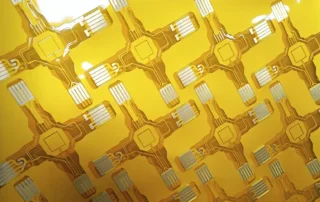
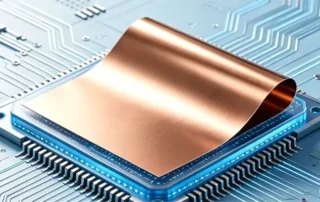
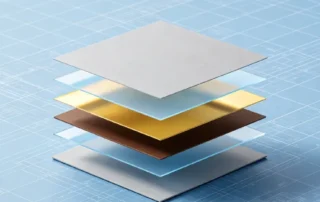
Copper-clad laminates (CCL) used in the manufacture of printed circuit boards (PCBs) can be divided into two major categories: copper-clad laminates (CCL) and flexible copper-clad laminates (FCCL). Most flexible copper-clad laminates consist of a flexible insulating base film and a metal layer. High flexibility is the most prominent product feature of flexible copper-clad laminates; Therefore, they are also known[...]
Rigid-Flex PCB Dimensional Stability: Control of Expansion and Contraction in Mass Production
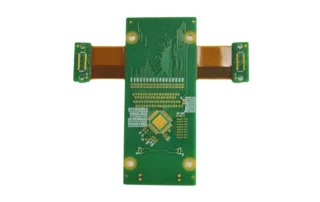
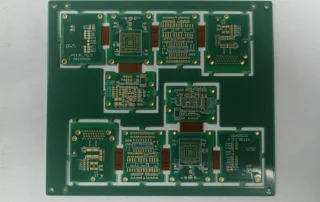
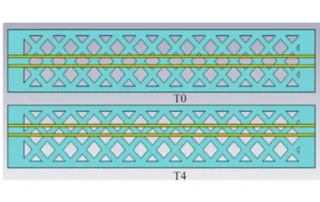
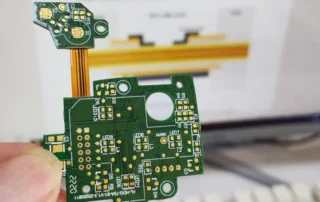
In the mass production of rigid-flex boards, dimensional expansion and contraction deviations are key process issues that affect product yield, mating accuracy, and service life. Unlike pure rigid or flexible boards, the expansion and contraction characteristics of rigid-flex boards combine the properties of both types. The overall control logic centers on the expansion and contraction of the flexible substrate,[...]
Rigid-Flex PCBs in Robotics: Key Enabling Technology for Humanoid and Industrial Systems
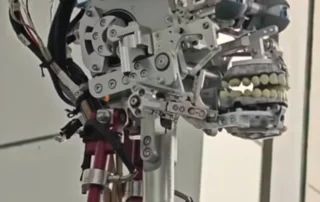
As robotics advances from traditional industrial automation toward humanoid robots, collaborative robots, autonomous mobile platforms, and wearable exoskeletons, electronic architectures are becoming increasingly complex. Modern robots must integrate high-performance computing, multi-sensor perception, real-time communication, precision motion control, and efficient power management within highly constrained spaces. Traditional rigid PCBs connected through cables and connectors often struggle to satisfy these requirements.[...]

Rigid-Flex PCB for Drones: Applications, Benefits & Manufacturer Selection
The rapid growth of drone technology is driving increasing demands for lighter weight, higher reliability, longer flight endurance, and greater functional integration. Whether in consumer drones, industrial inspection platforms, agricultural UAVs, or professional aerial photography systems, electronic components must operate reliably within compact spaces while enduring continuous vibration, temperature fluctuations, and complex environmental conditions. Traditional PCB assemblies, which rely[...]
High-Frequency Flexible PCB Impedance Control: Complete Design & Engineering Guide
Introduction Why the high frequency flexible PCB broken by wrong derating? It's a question often asked by RF engineers. In the case of high-frequency boards such as those used in 5G, IoT modules, and aerospace systems, small impedance mismatches can lead to large signal reflections, which in turn degrade the signal integrity of the system as a whole. What is a High Frequency[...]

Cleaning PCB Boards: Expert Practical Tips & Best Practices
Why Cleaning PCB Boards Is Crucial? PCBs accumulate flux residues, solder paste, dust, and oils during manufacturing or field use. Left unaddressed, these contaminants can trap moisture and create conductive paths, leading to short circuits and accelerated corrosion. Dust and particulates act as insulators, reducing heat dissipation and causing overheating of sensitive electronic components. Over time, dirty boards have[...]

Flexible PCB Design: Avoid These 6 Common Mistakes
Flexible PCB Design: Avoid These 6 Common Mistakes Flexible PCB design is crucial for creating lightweight, compact, and high-performance electronics. Flexible printed circuits (FPCs) have three main advantages over rigid circuit boards. They are lighter, more adaptable, and can bend without breaking. However, these benefits also come with specific design challenges that many engineers overlook. This guide from Gekun,[...]

How to Choose the Right Flex Material for Your PCB
In the fast-evolving world of electronics, flexible circuits enable revolutionary design possibilities. The foundation of any high-performance FPC lies in selecting the right flex material. But how do you choose the best option when there are so many combinations — RA or ED copper? Adhesive or adhesiveless? Thick or ultra-thin? This article provides a professional yet clear guide tailored[...]
Flexible PCB Cost 2026: Calculator, Price per Sq.Inch & Low-Cost Manufacturing Guide
How Much Does a Flexible PCB Cost? The average flexible PCB cost ranges from $0.50 to $30+ per square inch in 2025, depending on layer count, materials, and order volume. This guide reveals cost calculation methods, compares flex vs rigid PCB cost structures, and provides actionable strategies for low-cost PCB fabrication. Key Cost Drivers of Flexible PCBs 1. PCB Cost Per Square Inch Breakdown Parameter[...]
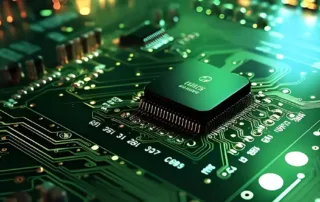
PCB Testing: 8 Essential Methods for Quality Assurance (2026 Update)
Printed circuit boards (PCBs) are essential components for all electronic products. Manufacturers use them in smartphones, medical devices, computers, and military equipment. As PCBs become more complex with high densities, fine pitches, and multilayers, full test coverage is crucial. This helps protect against hidden defects and ensures steady manufacturing yields. In today’s post, we will explore 8 common PCB[...]
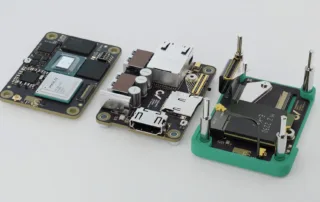
Design of Automatic Assembly Equipment for Flexible Circuit Board
Flexible printed circuits (FPCs) are circuit boards featuring a substrate made of polyimide or polyester film, coated with conductive copper foil or conductive carbon ink [1]. Owing to their compact size, excellent bendability, lightweight nature, and high reliability [2], they have become indispensable components in smart consumer electronics. As electronic products like wearables, flexible displays, and smart devices evolve[...]
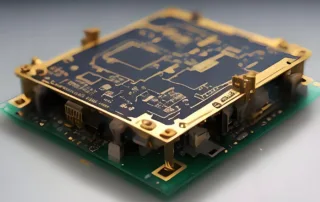
PCB Surface Finish Types Explained: Best Options for Flexible PCBs
Introduction: Why Surface Finish Matters in PCB Fabrication Every circuit board requires protection for its copper traces. Without a reliable finish, exposed copper quickly oxidizes, reducing electrical conductivity and making soldering nearly impossible. This is why PCB surface finishes are a critical step in PCB fabrication. Surface finishes serve as a protective layer. They create a flat surface for attaching[...]
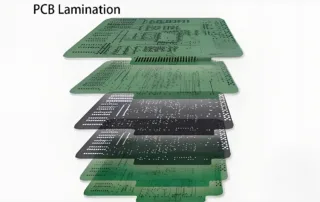
PCB Lamination Process Explained: From Rigid Boards to Flex PCB Manufacturing
PCB Lamination Process Explained: From Rigid Boards to Flex PCB Manufacturing Introduction: Why Lamination Matters in PCB Fabrication Lamination is a key step in making PCBs. It affects how strong and well the finished PCB works. The lamination process is key to making multilayer boards. This includes both rigid boards and flexible circuit boards. It determines how well the[...]
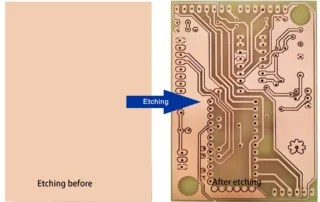
PCB Etching Process: Flexible PCB & Rigid Flex Manufacturing
PCB Etching Process: Flexible PCB & Rigid Flex Manufacturing Introduction The etching task in PCB design is one of the most important steps in making printed circuit boards. It directly influences the precision of the circuit trails, hence performance, as well as the life of the end product. Accurate etching is important. It is used to create a standard[...]
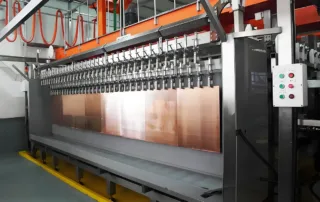
PCB Copper Plating Process for Reliable Conduction
Introduction Copper plating plays a crucial role in the production of PCBs. It ensures good electrical connections and strong mechanical support for printed circuit boards. These will create strong and stable traces. You can trust their quality even after bending or heat treatment. The copper plating process for flexible PCBs is like that for rigid PCBs. This article focuses[...]
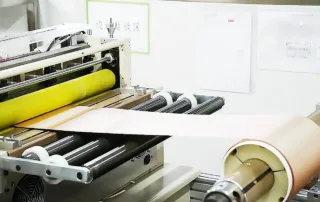
Flexible PCB Material Preparation: Cutting process
Introduction Flexible materials come in rolls. The material is cut to the needed size based on the MI size Material preparation is the first and critical step in any flex PCB manufacturing process.Proper material preparations reduce defects in later steps.This guide focuses on cutting and cleaning.It explains materials, methods, controls, and best practices.Engineers and procurement teams will find practical, actionable[...]