
Explore the Cutting – Edge World of PCB Technology!
Rigid Flex PCB Manufacturing: A Process Overview
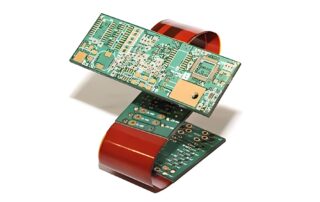
Rigid Flex PCB Manufacturing: A Process Overview 1. What is a Rigid Flex PCB? A rigid flex PCB combines stiff board parts with flexible sections in one structure. This design removes connectors, which cause 82% of connection failures (IPC-2223 data). These rigid flex printed circuit boards excel in: High-density packaging: 3D configurations reduce space by 60% vs. traditional PCBs Extreme environments:[...]

PCB Drilling Techniques Explained: Laser vs Mechanical, Hole Types & Quality Insights
Introduction: Why PCB Drilling Matters More Than Ever In modern electronics manufacturing, PCB drilling is not just a routine step. It is key for making vertical connections between copper layers. This process helps deliver high-performance signal routing. As designs become smaller, 5G technology, and high-density applications increase, the quality of holes in PCBs is important. It impacts product reliability, yield,[...]
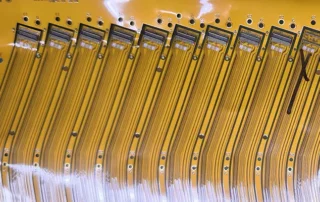
High-Frequency High-Speed FPC Materials for 6G (Part I)
A high-frequency high-speed FPC is a flexible printed circuit built to carry fast signals with low loss. For 6G, designers pair low-Dk and low-Df dielectrics with microstrip or stripline stack-ups. This guide explains the material choices behind 6G FPC materials and how MPI and LCP for high-speed FPC fit the picture. 6G FPC Materials: Why Dielectric Loss Now Matters[...]
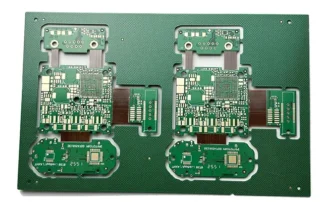

Rigid-Flex PCB Air-Gap Process Optimization for High-Yield Flexible Circuit Manufacturing(Part I)
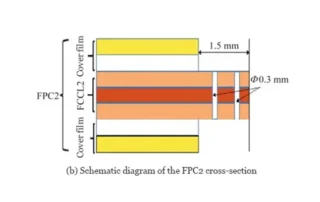
With the development of rigid-flex boards and multi-layer high-density interconnect (HDI) flexible printed circuits, manufacturers have widely adopted multi-dimensional bending in rigid-flex boards and multi-layer flexible printed circuits. These technologies are widely used in consumer electronics such as smartphones, tablets, and wearable devices. Flexible printed circuits offer high reliability and excellent flexibility, characterized by high wiring density, light weight,[...]
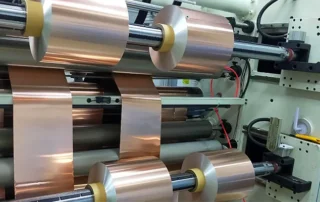
Rolled Copper Foil for FPC: Improving Fold Resistance, Flatness, and Etchability
In recent years, the production of high-qu ality flexible printed circuit boards has placed higher performance demands on its key conductive material— rolled copper foil. This is particularly evident in aspects such as the foil’s fold resistance, high elongation, etchability, and low surface roughness. At the same time, higher demands have been placed on its adaptability to FPC manufacturing[...]
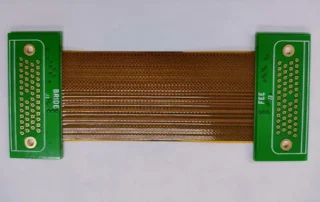
Pattern-Based FPC Routing Algorithm for Optimized Flexible PCB Design(Part II)
Continued part I... › Cost-Based Allocation of Routing Layers In practice, routing often involves multiple layers. Using only a single layer would result in a severe shortage of routing resources and overlook the fact that via placement is permitted in fan-out regions. Multi-Layer Routing Considerations Considering that routing paths on different layers have varying routing parameters and different impacts[...]
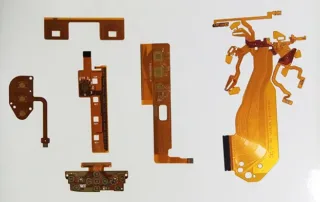
Innovative Flexible Circuit Manufacturing Using UV-Assisted Electroless Plating
The current manufacturing of flexible circuits primarily relies on traditional etching methods, conductive ink printing, and electroless copper plating technologies. While traditional etching is suitable for mass-customized circuit production, it suffers from issues such as pronounced side etching effects, complex process flows, lengthy production cycles, and environmental pollution from acid cleaning. These drawbacks make it difficult to meet the[...]