
Types and Characteristics of Flexible Copper-Clad Laminates
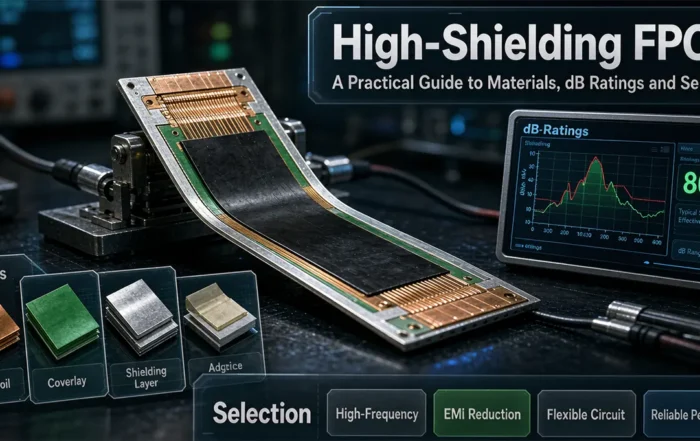
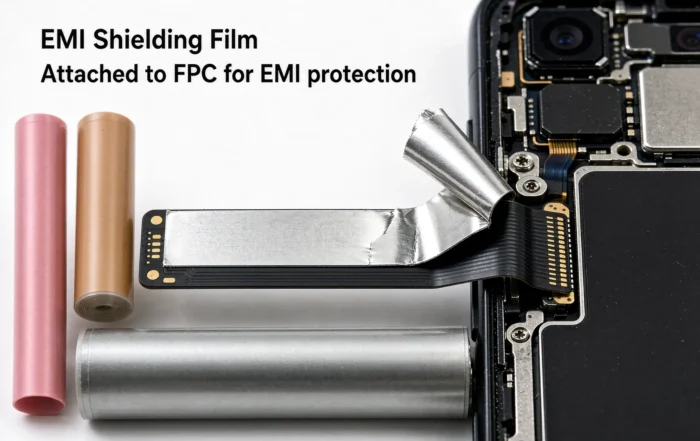
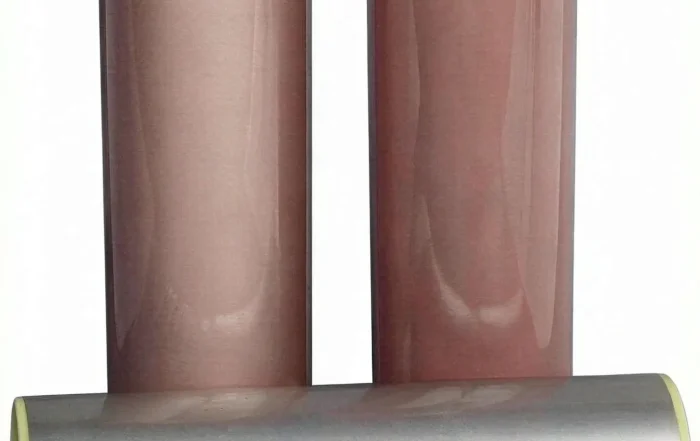
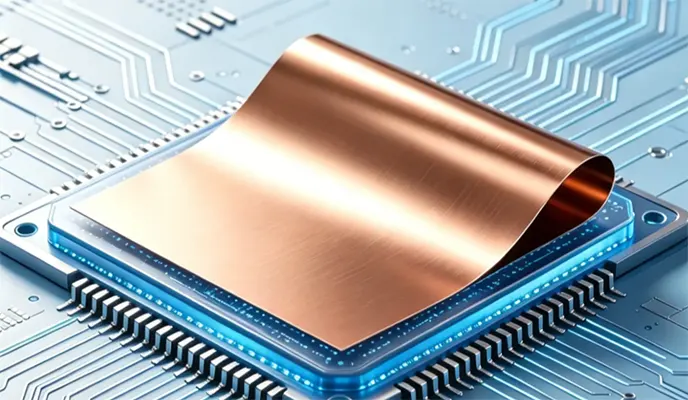
A flexible copper-clad laminate (FCCL) is a base material for flexible printed circuits and rigid-flex boards. It combines a flexible insulating base film with a metal layer. High flexibility is its most prominent feature, so FCCL is also called soft copper-clad laminate. A typical FCCL product is shown in Figure 1. Copper-clad laminates (CCL) used in PCB manufacturing fall into two main groups: rigid CCL and FCCL. Understanding FCCL types and characteristics helps engineers select the right material, while 2L FCCL manufacturing has become increasingly important for fine-line flexible circuits.
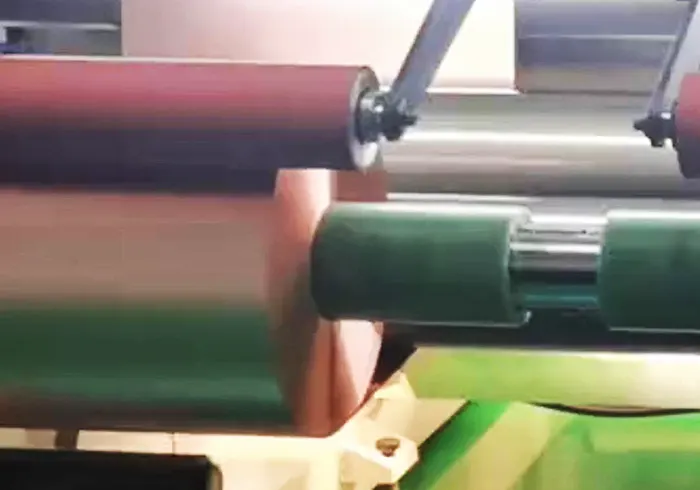
Fig. 1: Appearance of typical FCCL products
What Is a Flexible Copper-Clad Laminate?
Copper-clad laminates (CCL) used in PCB manufacturing fall into two main groups: rigid CCL and flexible copper-clad laminate (FCCL). Most FCCL products use a flexible insulating base film and a metal layer. Therefore, the material can bend while still acting as a circuit substrate. For a direct material comparison, see FCCL vs. rigid copper clad laminate.
FCCL Types and Characteristics
FCCL types and characteristics depend on layer count and bonding method. The two main types are 3L-FCCL and 2L-FCCL. Each type has a different structure, and that structure shapes its performance.
3L-FCCL: Three-Layer Structure
Traditional FCCL has three layers: copper foil, a base film, and an adhesive. For this reason, it is called a three-layer flexible copper-clad laminate, or 3L-FCCL. The adhesive bonds the copper foil to the base film. This structure supports many mass-market flexible circuit products.
2L-FCCL: Two-Layer, Adhesive-Free Structure
2L-FCCL removes the adhesive layer. Its key feature is the absence of an adhesive layer with a composition different from the base film. Therefore, it is also called an adhesive-free flexible copper-clad laminate. Because it has no epoxy or acrylic adhesive layer, 2L-FCCL offers excellent heat resistance, dimensional stability, and chemical resistance.
2L FCCL Manufacturing
2L FCCL manufacturing bonds metal foil to an insulating base film without a separate adhesive layer. FCCL can be made by resin adhesive coating or by direct deposition methods. Direct deposition includes electroplating, sputtering, and electroless plating. In addition, the process choice affects the final FCCL structure and performance. For process questions, see PCB Manufacturing FAQ.
Comparison Between 2L-FCCL and 3L-FCCL
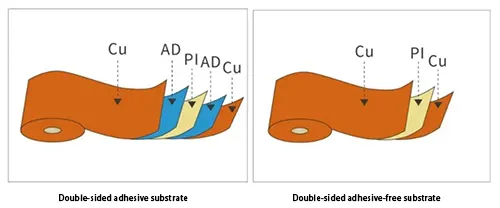
Adhesive-Free vs Adhesive-Based FCCL
2L-FCCL and 3L-FCCL differ in structure and target applications. 3L-FCCL is used in mass-market flexible circuit products. In contrast, 2L-FCCL is used in higher-end flexible circuits, such as rigid-flex boards and COF packages. Since 2L-FCCL has no epoxy or acrylic adhesive, it provides better heat resistance, dimensional stability, and chemical resistance. However, market share still favors 3L-FCCL.
Market Trends and Applications of 2L-FCCL
The market for COF (Chip on Flex) applications has grown rapidly since the second half of 2003. This growth is driven by smaller electronic products and LCD-based devices. As a key COF component, the COF flexible substrate must mount the IC chip, provide circuit interconnections, and offer insulating support. Its three features are high-density fine-line circuits, high precision in lead placement, and the use of 2L-FCCL. In the FCCL market, 2L-FCCL accounts for about 15–20%, while 3L-FCCL accounts for about 80–85%.
How to Choose Between 2L-FCCL and 3L-FCCL
Choose based on application class. For mass-market flexible circuits, 3L-FCCL is common. For rigid-flex boards and COF packages, 2L-FCCL is often the better fit. Also, check heat resistance, dimensional stability, and chemical resistance when the design sees thermal or chemical stress. If bending reliability is a concern, review flexible PCB failure modes and Nickel–copper adhesion failure early. For copper foil selection, see RA copper vs ED copper. For supplier-side support, see Flexible Circuits, Flexible PCB Manufacturer, and Flexible PCB Supplier.
FAQ
What is a flexible copper-clad laminate?
A flexible copper-clad laminate (FCCL) is a base material with a flexible insulating base film and a metal layer. It is used to make flexible printed circuits and can also be a core in rigid-flex boards. High flexibility is its most prominent product feature.
What is the difference between 2L-FCCL and 3L-FCCL?
3L-FCCL has three layers: copper foil, a base film, and an adhesive. 2L-FCCL has no adhesive layer with a composition different from the base film. Therefore, 2L-FCCL is adhesive-free and offers better heat resistance, dimensional stability, and chemical resistance.
Where is 2L FCCL manufacturing used?
2L FCCL manufacturing supports higher-end flexible circuits, such as rigid-flex boards and COF packages. It also appears in COF flexible substrates for LCD driver ICs. In contrast, 3L-FCCL is used in mass-market flexible circuit products.
How are FCCL products made?
FCCL can be made by bonding metal foil to an insulating base film. Examples include resin adhesive coating and direct deposition methods, such as electroplating, sputtering, and electroless plating. For 2L FCCL, the structure avoids a separate adhesive layer.
How do I choose between 2L-FCCL and 3L-FCCL?
Choose 2L-FCCL when you need thinner profiles, better flexibility, and superior electrical performance for high-frequency or fine-line circuits. 3L-FCCL is often more cost-effective for less demanding applications. Consider your bending requirements, thermal exposure, and signal integrity needs. The comparison section above details key differences.
Related Posts
- FCCL vs. Rigid Copper Clad Laminate: Key Differences — Related article
- Flexible PCB Failure Modes & Prevention Guide — Related article
- Adhesive-Free FCCL Substrates vs Adhesive-Based Substrates — Related article
- RA Copper vs ED Copper for Flexible PCB — Related article
- Screen Printed Circuits on Textiles: Silver-Clad Copper Ink — Related article