
Multi-Layer FPC Manufacturing Process: Complete Step-by-Step Guide from Cutting to Testing
Multi-layer FPC manufacturing builds flexible circuits with three or more conductive layers. Plated through holes or vias connect those layers. The process runs from cutting and inner-layer imaging to multilayer FPC lamination steps, drilling, plating, coverlay, and multilayer FPC testing. This guide explains each step and the controls that protect yield.
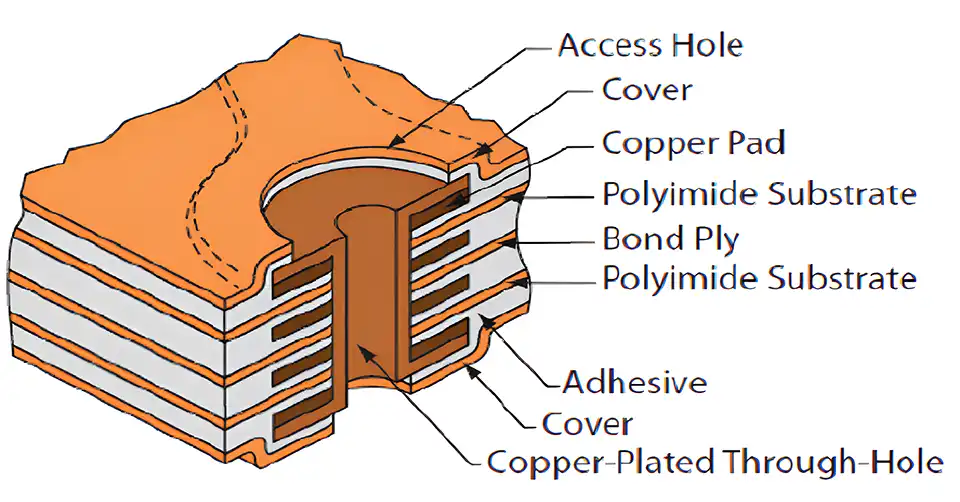
Multi-layer FPC structure
What Is Multi-layer FPC Manufacturing?
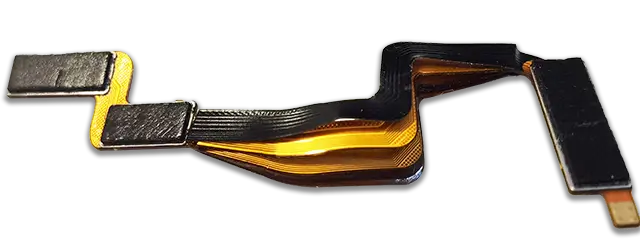
Multi-layer FPC manufacturing is the production of flexible printed circuits with three or more copper layers. Therefore, it differs from Double-Sided Flex PCB Manufacturing, which uses two conductive layers. The layers connect through plated through holes or vias, so designers can route high-density signals in a thin package. These Flexible Circuits bend, fold, and fit tight spaces. In addition, FPCB manufacturing often adds stiffeners, coverlays, and shielding films for mechanical and electrical protection.
Multi-layer FPC Manufacturing Process Steps: Cutting to Final Test

Multi-layer FPC Manufacturing Process Steps
The multi-layer FPC manufacturing process steps follow a controlled sequence. First, materials are prepared and cut. Next, inner layers are imaged and etched. After that, layers are laminated, drilled, plated, and finished. Finally, each panel goes through electrical and visual checks.
Step 1: Material Preparation and Cutting
Material preparation starts with flexible copper-clad laminate, coverlay, adhesive, and stiffener. The cutting process separates these materials into panels that match the panel size and layer count. Moreover, cutting accuracy affects later registration. For example, a small size shift can cause layer misalignment during lamination.
Step 2: Inner-Layer Imaging and Etching
Inner-layer imaging transfers the circuit pattern onto the copper surface. After that, etching removes unwanted copper to form traces, pads, and ground planes. Because flexible materials are thin, handling must avoid scratches, wrinkles, and stretch. In addition, operators check trace width and spacing before lamination.
Step 3: Multilayer FPC Lamination Steps
Multilayer FPC lamination steps bond inner layers, adhesive layers, and coverlay into one stack. First, layers are aligned with tooling holes or optical targets. Next, the stack is pressed under controlled heat, pressure, and time. The adhesive then flows and cures to hold the structure together. However, material expansion and shrinkage can shift layers, so bake and cooling steps matter.
Step 4: Drilling, Copper Plating, and Outer Layers
Drilling creates holes for layer-to-layer connections. Mechanical drilling handles larger holes, while laser drilling supports finer features. After that, copper plating deposits conductive copper inside the holes and on the outer copper. Then, outer-layer imaging and etching define the outer traces and pads.
Step 5: Coverlay, Surface Finish, and Stiffeners
Coverlay protects the finished traces and opens windows for pads and connectors. Surface finish keeps the exposed copper solderable. In addition, stiffeners add local rigidity at connectors and component areas. Therefore, higher layer counts often need tighter control of coverlay registration and adhesive flow.
Step 6: Multilayer FPC Testing and Final Inspection
Multilayer FPC testing checks electrical continuity and isolation before shipment. Also, visual and dimensional checks confirm layer alignment, coverlay windows, and finish quality. Panels that fail are reworked, scrapped, or reviewed against the customer specification. The test plan can include electrical test, flying probe or fixture test, AOI, and impedance test as defined below.
Electrical Test, AOI, and Impedance Test Standards for Multi-Layer FPC
Multi-layer FPC testing needs more than one method because opens, shorts, visual pattern defects, and impedance shifts are different failure modes. The test plan should define the method, whether testing is 100 percent or sampled, and the accept or reject limit before production.
Electrical Test: Continuity, Isolation, and Opens/Shorts
Electrical test compares the panel against the netlist. It checks continuity for each net, isolation between nets, and opens or shorts. Flying probe test uses moving probes and needs no fixture, so it fits prototypes, low-volume builds, and fine-pitch HDI where fixture cost is high. Fixture test uses a dedicated bed-of-nails or custom fixture, so it fits mass production and can test all nets quickly. Acceptance criteria are no open, no short, continuity resistance within the specified limit, and isolation resistance above the specified threshold.
AOI: Automated Optical Inspection Criteria
AOI checks the pattern after inner-layer etching, after outer-layer etching, and around coverlay openings. It looks for trace width and spacing deviations, nicks, scratches, foreign material, residue, and coverlay registration errors. Acceptance should follow the customer-approved workmanship standard and the drawing. AOI does not replace electrical test because it cannot confirm inner-layer continuity or isolation.
Impedance Test: TDR and Acceptance Limits
Impedance test uses time-domain reflectometry (TDR) on controlled-impedance traces. It can test a coupon on the panel or the actual product traces. Acceptance depends on the design target and tolerance, for example a specified ohm value with a permitted percentage window. Layer count, dielectric thickness, trace width, and copper thickness all affect the result, so impedance should be reviewed together with the stack-up.
Test Method and Acceptance Summary
| Test method | Purpose | Typical use | Acceptance basis |
|---|---|---|---|
| Electrical continuity and isolation | Find opens, shorts, and net resistance faults | 100 percent or sampled per spec | Netlist, resistance limit, isolation threshold |
| Flying probe | Electrical test without fixture | Prototypes, low volume, fine pitch | Netlist and customer limits |
| Fixture test | Fast electrical test for all nets | Mass production | Netlist and fixture program |
| AOI | Find visual pattern and coverlay defects | After imaging, etching, and coverlay | Customer-approved workmanship standard |
| Impedance test (TDR) | Confirm controlled impedance | High-speed and RF designs | Design target and tolerance window |
Layer-Count-Specific Process Routes: 4-Layer, 6-Layer, and 8-Layer FPC
Layer count changes the number of lamination cycles, the registration risk, and the drilling and plating demands. The route below is a planning guide. The final route depends on design rules, material thickness, and reliability requirements.
4-Layer Multi-Layer FPC Route
A 4-layer FPC uses two inner copper layers and two outer copper layers. The route is usually inner-layer imaging and etching for the two inner layers, then one main lamination cycle, drilling, copper plating, outer-layer imaging and etching, coverlay, surface finish, and test. Common issues are inner-layer misregistration, adhesive voids, and drill smear if the stack is not baked and drilled correctly.
6-Layer Multi-Layer FPC Route
A 6-layer FPC adds more inner layers or sub-stacks, so it often needs more than one lamination cycle. The route includes inner-layer imaging and etching, sub-stack lamination, final lamination, drilling, plating, outer-layer imaging and etching, coverlay, finish, and test. Common issues are cumulative layer shift, thicker stack handling, via wall quality, and coverlay registration over dense pads.
8-Layer Multi-Layer FPC Route
An 8-layer FPC has the highest registration and lamination demand in this comparison. It may use multiple sub-stacks or sequential lamination before final drilling, plating, outer-layer imaging, coverlay, finish, and test. Common issues are warpage, layer-to-layer alignment, plating uniformity in high-aspect-ratio holes, and impedance variation across the panel.
Layer-Count Route and Issue Comparison
| Layer count | Typical process route | Key process differences | Common issues |
|---|---|---|---|
| 4-layer | Inner-layer imaging and etching, one main lamination, drilling, plating, outer layers, coverlay, test | Moderate registration; fewer press cycles | Inner-layer misregistration, adhesive voids |
| 6-layer | Multiple inner layers or sub-stacks, more lamination cycles, drilling, plating, outer layers, coverlay, test | Tighter tooling; more bake and cooling control | Cumulative layer shift, thicker stack, via quality |
| 8-layer | Multiple sub-stacks or sequential lamination, drilling, plating, outer layers, coverlay, test | Highest alignment demand; strict impedance control | Warpage, plating uniformity, impedance variation |
Process Controls for Layer Alignment and Lamination
Layer alignment is the main difficulty in a multi-layer stack-up. Therefore, shops control tooling, temperature, pressure, and dwell time during lamination. In addition, they track material lot shrinkage and bake panels before pressing. These core challenges in manufacturing flex PCB decide whether fine traces stay centered over pads in every layer.
Common Defects and Yield Improvement
Common defects include layer misalignment, delamination, wrinkles, and insufficient copper in holes. For example, weak adhesive flow can leave voids between layers. Also, panel size shift after bake can offset inner and outer features. However, most defects trace back to material handling, registration, or press parameters. Tracking each defect by process step helps teams raise yield.
Process Capability and Design Guidelines
Design choices decide how easily a stack can be built. For example, more layers mean more lamination cycles and more alignment risk. Also, fine traces, small vias, and tight coverlay openings need a narrower process window. Some end uses, such as an FPC for Automotive Camera Modules, add bend and reliability demands on the structure. Scrap handling matters as well, and interest is rising in a Closed-Loop Recyclable Flexible PCB approach. Therefore, share the stack-up, layer count, and bend requirements before quoting.
| Process stage | Purpose | Key control |
|---|---|---|
| Cutting | Separate laminate, coverlay, adhesive, and stiffener into panels | Panel size accuracy |
| Inner-layer imaging and etching | Form traces, pads, and ground planes | Trace width and spacing |
| Lamination | Bond inner layers, adhesive, and coverlay | Heat, pressure, time, alignment |
| Drilling | Create layer-to-layer connections | Hole position and size |
| Copper plating | Deposit copper in holes and on outer copper | Plating coverage |
| Coverlay and finish | Protect traces and keep pads solderable | Registration and adhesive flow |
| Testing | Confirm continuity and isolation | Electrical and visual checks |
Multi-Layer FPC Process Capability Reference
Use this table as a manufacturability hint, not a fixed guarantee. Confirm the actual capability window with the fabricator for the chosen material, layer count, and stack-up.
| Capability item | Typical multi-layer FPC window | Design note |
|---|---|---|
| Layer count | 3 to 8+ layers; higher counts by sequential lamination | More layers add lamination cycles and registration risk |
| Minimum line width and spacing | Fine-line capability often around 50 to 75 µm; confirm with fabricator | Tighter lines reduce process window and yield |
| Minimum laser via diameter | Often around 0.1 mm; depends on dielectric and laser system | Smaller vias need tighter registration and plating control |
| Minimum mechanical hole | Often 0.2 mm or larger; depends on stack thickness | Aspect ratio affects plating uniformity |
| Coverlay opening tolerance | Depends on material and registration method | Tight openings can expose adhesive or cover pads |
| Impedance tolerance | Typically a specified percentage window; confirm with test coupon | Layer count and dielectric thickness affect impedance |
FPCB Manufacturing Terms: FPC, FFC, and Rigid-Flex
FPCB manufacturing is the same production route for flexible printed circuits, and the term is a short form of flexible printed circuit board. In addition, mixed designs join flexible layers with rigid layers through Rigid-flex PCB manufacturing. Some builds also use a high-frequency rigid-flex PCB stack when impedance control matters. Also, buyers often ask about the FFC versus FPC difference when they compare flex parts.
FAQ
What is FPCB manufacturing?
FPCB manufacturing is the production of flexible printed circuit boards, and it follows the same route as multi-layer FPC manufacturing. It covers material cutting, inner-layer imaging and etching, lamination, drilling, copper plating, coverlay, surface finish, and electrical test. The name is a short form, not a separate process.
What are the multi-layer FPC manufacturing process steps?
The sequence is material preparation and cutting, inner-layer imaging and etching, lamination, drilling, copper plating, outer-layer imaging and etching, coverlay and surface finish, then electrical and visual testing. Each step adds registration risk, so alignment checks run between stages.
How do multilayer FPC lamination steps keep layers aligned?
Layers are aligned with tooling holes or optical targets before pressing. The stack is then pressed under controlled heat, pressure, and time so the adhesive flows and cures. Because materials expand and shrink, bake and cooling steps limit layer shift during and after lamination.
What does multilayer FPC testing include?
Multilayer FPC testing includes electrical continuity and isolation test, flying probe or fixture test, AOI, and impedance test where controlled impedance is required. Visual and dimensional checks then verify layer alignment, coverlay windows, and surface finish. Panels that fail are reworked, scrapped, or reviewed against the customer specification. More definitions sit in our PCB Manufacturing FAQ.
Which flex structures can a multi-layer process cover?
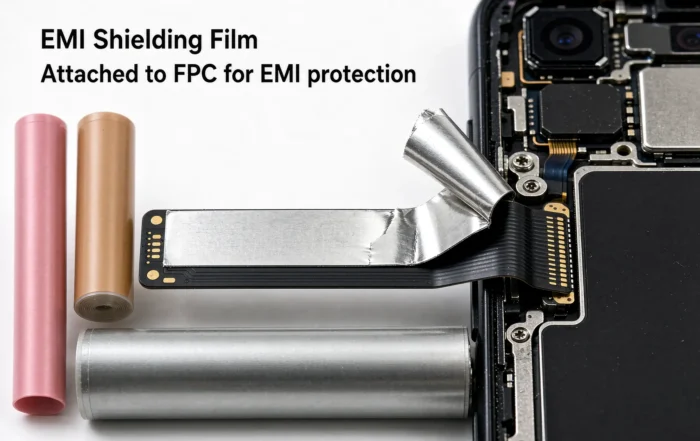
Multi-layer FPC manufacturing covers flexible circuits with three or more copper layers, while double-sided flex uses two. Mixed builds add rigid layers for board support, and stiffeners, coverlays, and shielding films add local protection where the design needs it.
How does layer count affect the multi-layer FPC process?
4-layer, 6-layer, and 8-layer FPCs differ mainly in lamination cycles and registration risk. A 4-layer build usually needs one main lamination cycle, a 6-layer build often needs more inner layers or sub-stacks, and an 8-layer build may need multiple sub-stacks or sequential lamination. Higher layer counts also make warpage, via quality, and impedance control more critical.
Related Posts
- High-Frequency Rigid-Flex PCB Manufacturing — Related article
- Rigid-Flex PCB manufacturing Guide — Related article
- Closed-Loop Recyclable Flexible PCB Manufacturing Guide — Related article
- Core Challenges in Manufacturing Flex PCB – GekunFlex — Related article
- FPCB Differential Impedance Optimization with Mesh Copper — Related article