PI-Based Flexible Circuits: 3D Printing Encapsulation and Liquid Metal Reliability Optimization (Part II)
Back to Part 1 «
Effect of Process Parameters on Line Widths in Circuit and Packaging Layers
Process parameters are critical to the line widths in circuit and packaging layers. Therefore, this study investigated the effects of printing voltage, flow rate, and speed (see Figures 12 and 13).

Fig. 12 Influence of process parameters on circuit width

Fig. 13 Influence of process parameters on line width of package layer
The printing voltage is critical for forming the Taylor cone jet and has a significant impact on the line width of the circuit and encapsulation layers.
As shown in Figures 12(a) and 13(a), the voltage increase leads to an increase in line width.
A moderate voltage increase enhances the electrostatic force pulling the liquid material. This stronger force ejects more material onto the substrate.
As shown in Figures 12(b) and 13(b), controlling the voltage and flow rate parameters results in a decrease in line width as the speed increases.
If the speed is too high, the material supply becomes insufficient, preventing continuous printing.
As shown in Figures 12(c) and 13(c), controlling the voltage and speed parameters increases the line width as the flow rate increases.
Increasing the flow rate increases the amount of liquid material extruded per unit time.
This increase in extruded material expands the coverage area of the material deposited on the substrate. The expanded coverage area widens the line width.
Figure 12(d) shows the line width morphology of the circuit under an optical microscope.
Figure 13(d) shows the morphology of the encapsulation layer under an electron microscope.
Electrical Stability of Flexible Circuits
We investigated the electrical stability of flexible circuits on a PI substrate under bending conditions. We clamped samples onto a testing machine to conduct bending tests.
As shown in Figure 14, where L is the original length of the flexible circuit sample and d is the bending diameter of the circuit.
A resistance tester measured the resulting changes in resistance. The printed samples had a test length of 4 cm.
Bending tests used bending diameters ranging from 3.5 cm to 2 cm, with each test cycle consisting of 100 repetitions.
Resistance Behavior under Different Bending Radii
Figure 15 shows the test results. Under bending deformation, the circuit resistance changes minimally. Each time the bending deformation releases, the resistance returns to its original value.
In Figure 15(a), when the bending radius is 3.5 cm, the resistance change rate ranges from 0.05% to 0.09%.
Subsequently, Figure 15(b) shows that at a bending radius of 3 cm, the resistance change rate ranges from 0.13% to 0.18%.
Figure 15(c) shows that at a bending diameter of 2.5 cm, the resistance variation rate ranges from 0.29% to 0.38%.
Figure 15(d) shows that at a bending diameter of 2 cm, the resistance variation rate ranges from 0.40% to 0.54%.
Bending Cycle Stability Performance
The results of the bending cycle test indicate that the rate of change in resistance of the flexible circuit under cyclic bending strain does not exceed 0.54%, and the resistance change remains relatively constant at the same bending diameter.
This demonstrates that the manufactured flexible circuit maintains high stability even after repeated bending at varying degrees.
Electrical Stability under Torsional Deformation
Electrical stability testing of the PI-based flexible circuit under torsion involved clamping the sample in a testing machine and conducting torsion tests, as shown in Figure 16.
The circuit samples underwent 100 cycles of torsion at various angles within the 90°–360° range, as shown in Figure 17.
The circuit resistance changes only slightly during torsion. Each time the torsional deformation is released, the resistance returns to its initial state.
This demonstrates excellent electrical stability and reliability of the circuit.
Resistance Response under Different Torsion Angles
In the 100-cycle tests at different torsion angles, the resistance changes remained highly consistent, and the original resistance values showed almost no fluctuation.
Specifically:
- At 90° torsion [Figure 17(a)], the resistance change rate remained low at 0.12%–0.14%;
- at 180° torsion [Figure 17(b)], the resistance change rate rose slightly to 0.15%–0.19%;
- at 270° torsion [Fig. 17(c)], the rate of resistance change increased to 0.29%–0.30%;
- and at 360° torsion [Fig. 17(d)], although the rate of resistance change reached its peak, it was still only 0.44%–0.45%.
Torsional Cycle Reliability
The torsion cycle testing shows that the rate of resistance change for the flexible circuit remains below 0.45% under cyclic torsional strain.
The results show highly stable resistance change at the same angle.
Even after undergoing multiple torsion cycles of varying degrees, the flexible circuit continues to maintain excellent stability and durability.

Fig. 14 Bending cycle test principle

Fig. 15 Resistance change rate of flexible circuit under different bending states

Fig. 16 Principle of torsional loop test

Fig. 17 Resistance change rate of flexible circuit under different torsion states
Applications
The above results show that directly printing wire-encapsulated flexible circuits is feasible.
The process combines direct material writing and electrohydrodynamic jet 3D printing technolog
Using the aforementioned manufacturing methods and processes, a PI-based flexible LED circuit board was designed and fabricated, as shown in Figure 18.
Figure 18(a) shows a schematic diagram of the PI-based flexible LED circuit board structure.
The bottom layer consists of a PI substrate, onto which three circuits were printed. A 0.1 W emerald-green LED chip was mounted on each circuit, followed by wire bonding.
After heat curing, the electronic device was completed.
First, as shown in Figure 18(b), during bending tests in different directions, all three LEDs maintained stable illumination, and their brightness remained highly consistent.
Furthermore, as shown in Figure 18(c), when the device was subjected to torsion testing in different directions, all three LEDs remained illuminated with highly consistent brightness.
This demonstrates the device’s excellent flexibility under complex deformation conditions, as well as the stability of its circuit connections and outstanding mechanical durability.
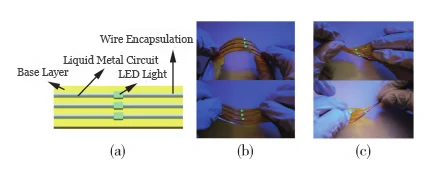
Fig. 18 PI‐based flexible LED circuit board
Conclusions
(1) Adjusting the line width of the encapsulation layer controls the dissolution of the substrate.
Adjusting the degree of imidization of the substrate also controls the dissolution of the substrate. This control effectively manages the sedimentation of the liquid metal circuit.
This process minimizes the sedimentation rate to 8%. Since heating time and temperature regulate the degree of imidization of the substrate, we investigate the effects of heating time, temperature, and encapsulation layer line width on the circuit sedimentation rate.
Controlling sedimentation stabilizes the position of the circuit within the PI substrate, providing a strong guarantee for proper encapsulation and stable operation of the circuit.
(2) First, the effects of print flow rate and cycle time on the thickness and surface roughness of the PI substrate layer were investigated; subsequently, the effects of print voltage, speed, and flow rate on the line width of the liquid metal circuit and the PI encapsulation layer were examined.
By analyzing the trends in the effects of printing parameters, this study provides a crucial foundation for high-quality printing of the PI substrate layer, circuit layer, and encapsulation layer.
(3) After 100 cycles of bending at different bending radii, the resistance change rate of the circuit samples did not exceed 0.54%; after 100 cycles of torsion at different torsion angles, the resistance change rate did not exceed 0.45%;
In practical application tests involving bending and torsion in different directions, the PI-based flexible LED circuit board demonstrated that all three LEDs maintained stable light emission, with highly consistent brightness.
Both electrical stability testing and practical application reveal that the manufactured electronic devices possess excellent stability, high toughness, and strong flexibility, demonstrating the feasibility and superiority of this technology.