
Roll-to-Roll vs Sheet-Based Flex PCB Manufacturing
In flexible printed circuit (FPC) design, engineers typically spend most of their effort on stack-up definition, impedance control, and mechanical routing. However, a less visible but equally critical decision often determines real-world performance: the manufacturing method.
Two dominant approaches—roll-to-roll (R2R) continuous processing and sheet-based batch manufacturing—can lead to significantly different outcomes in bend reliability, impedance stability, yield rate, and long-term mechanical durability.
This distinction becomes increasingly important as flexible electronics expand into applications such as wearables, medical implants, automotive sensing systems, and foldable consumer devices. These products do not operate in static conditions; they flex, vibrate, and experience repeated mechanical stress.
At the core of the debate is not simply speed versus cost, but a deeper engineering trade-off:
manufacturing scale efficiency vs dimensional precision and mechanical stability
Flex PCB Manufacturing Is No Longer Just About Cost
Historically, PCB fabrication decisions were driven primarily by unit cost and production volume. That model is no longer sufficient for modern flexible electronics.
Today, manufacturing strategy directly influences electrical and mechanical performance.
Why Manufacturing Method Changes Electrical Performance
Even when using identical design files, the physical production path alters circuit behavior:
- Copper deformation behavior differs between continuous tension (R2R) and discrete handling (sheet-based).
- Trace consistency is affected by web tension control, thermal expansion, and etching uniformity.
- Registration accuracy depends on whether the substrate is continuously guided or repeatedly repositioned.
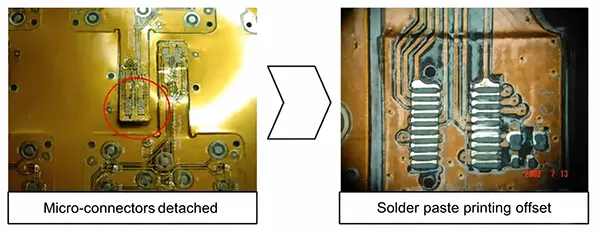
- Signal integrity can be influenced by micro-stretching of copper traces under process stress, especially in fine-pitch designs.
According to IPC-2223 guidance for flexible circuits, mechanical strain management is a critical determinant of electrical reliability, particularly for dynamic flex applications.
The Shift Toward High-Density Flexible Electronics
Flexible PCB technology is evolving toward:
- Sub-50 µm trace widths in advanced designs
- Higher interconnect density for compact wearable devices
- Increased thermal loads in automotive and edge AI electronics
- Dynamic flexing conditions exceeding 1,000+ cycles in consumer and medical devices
These requirements increase sensitivity to process-induced variation, making manufacturing selection a first-order design parameter rather than a downstream decision.
What Is Roll-to-Roll Flex PCB Manufacturing?
Roll-to-roll (R2R) manufacturing is a continuous process in which flexible substrates are processed as a moving web rather than individual panels.
How Continuous Web Processing Works
A simplified R2R flow typically includes:
- Unwinding a polyimide or polyester substrate roll
- Inline surface treatment and cleaning
- Photolithographic imaging or direct patterning
- Etching or additive copper formation
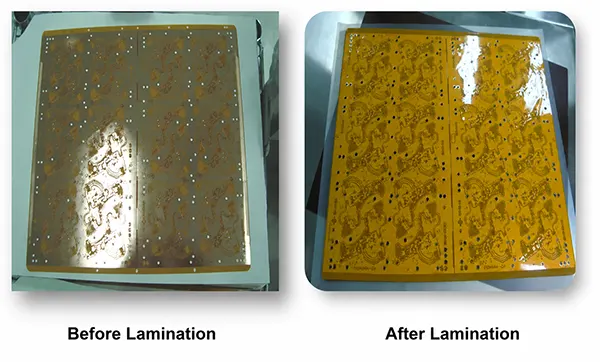
- Coverlay lamination or dielectric coating
- Thermal curing and stabilization
- Rewinding into finished rolls
Unlike sheet-based systems, the substrate is never fully separated during processing. It remains under controlled tension throughout.
This continuous architecture is widely used in high-throughput electronics manufacturing and is particularly suitable for repeatable, large-area flexible circuits.
Why R2R Dominates High-Volume Flexible Electronics
The primary advantage of roll-to-roll manufacturing is not simply production speed—it is system-level efficiency.
Throughput and Scalability
Industry benchmarks from printed electronics manufacturing studies (e.g., IDTechEx reports) indicate that R2R systems can increase output efficiency by 3× to 10× compared to batch sheet processing, depending on product complexity.
Reduced Handling-Induced Defects
Because substrates are not repeatedly clamped, released, and repositioned:
- Mechanical scratches are reduced
- Alignment drift between steps is minimized
- Edge damage from manual handling is eliminated
Lower Labor Dependency
R2R systems rely heavily on inline automation. Once stabilized, they require significantly fewer operator interventions per unit output.
Consistent Long-Run Production
For high-volume products such as antennas or sensors, R2R ensures stable parameter drift over long production runs due to continuous process control feedback loops.
Typical Products Manufactured with R2R
Roll-to-roll processing is especially dominant in applications where geometry is repetitive and tolerances are moderate:
| Application Area | Example Products | Key Requirement |
|---|---|---|
| RFID systems | Antennas, tags | High-volume consistency |
| Wearables | Flexible sensors | Low cost per unit |
| Consumer electronics | Membrane switches | Thin, lightweight structures |
| Medical devices | Biosensors | Biocompatibility + repeatability |
| Thermal systems | Flexible heaters | Large-area uniformity |
These products benefit more from uniformity and scalability than from ultra-tight mechanical tolerances.
The Biggest Strength of Roll-to-Roll Is Not Speed — It’s Manufacturing Momentum
A common misconception is that R2R is primarily a “fast production method.” In reality, its true advantage lies in manufacturing continuity, which fundamentally changes process economics and stability.
Continuous Processing Reduces Production Interruptions
In batch systems, every transition between sheets introduces:
- Re-alignment errors
- Thermal re-stabilization cycles
- Operator-dependent variability
R2R eliminates these discontinuities. The process behaves more like a controlled stream rather than discrete events.
Inline Automation Improves Scalability
R2R lines are designed for integration:
- Inline optical inspection
- Real-time defect correction
- Closed-loop tension control
This enables scalability without proportional increases in labor or downtime.
Material Utilization Efficiency
Sheet-based processes inherently generate edge waste and panelization loss. R2R minimizes:
- Edge trimming waste
- Offcut losses between panels
- Handling-related scrap rates
In high-volume production, this material efficiency directly improves cost-per-functional-unit.
Lower Cost per Functional Circuit
While equipment investment in R2R systems can be high, the amortized cost per circuit decreases significantly at scale.
A generalized comparison from industry manufacturing analyses shows:
| Metric | Roll-to-Roll | Sheet-Based |
|---|---|---|
| Unit cost (high volume) | Low | Medium–High |
| Setup cost | High | Medium |
| Yield consistency | High (stable long runs) | Variable |
| Flexibility for design changes | Lower | Higher |
| Best suited volume | Mass production | Prototyping / low volume |
The economic crossover point typically occurs when production exceeds medium-to-high volume thresholds.
Where Roll-to-Roll Manufacturing Starts to Struggle
Roll-to-roll (R2R) processing is highly effective for high-volume, repetitive flexible circuits, but its advantages diminish as design complexity, dimensional precision, and material sensitivity increase. The limitations are not conceptual—they are rooted in mechanics, thermal behavior, and registration physics.
Tension Variations Can Affect Precision
A defining feature of R2R systems is that the substrate is continuously held under tension. While this enables smooth transport, it also introduces mechanical variability that directly impacts dimensional accuracy.
Even small fluctuations in web tension can lead to:
- Web stretching, where the polymer substrate elongates slightly under load
- Alignment drift, where cumulative positional error accumulates across processing stations
- Registration instability, especially in multilayer or fine-pattern lithography steps
In high-resolution flex circuits, even micron-level deviation can affect impedance control and via alignment. Industry studies on web handling systems in printed electronics consistently show that tension variation is one of the dominant contributors to registration error in continuous processing lines.
Thin Flexible Materials Create Process Challenges
As substrates become thinner (e.g., 12–25 µm polyimide films), mechanical instability increases significantly.
Common issues include:
- Wrinkling, caused by non-uniform tension distribution across the web width
- Curling, resulting from asymmetric thermal exposure during curing or lamination
- Thermal deformation, where repeated heating cycles induce irreversible dimensional shift
These effects are amplified in high-speed R2R systems because dwell time is short and thermal gradients are harder to stabilize.
In practice, this limits how aggressively R2R systems can reduce substrate thickness without introducing yield penalties.
Fine-Pitch Circuits Push R2R Toward Its Technical Limits
As flexible electronics move toward HDI-level complexity, R2R systems face increasing constraints.
Key challenges include:
- Microvias, where via-to-pad alignment tolerance becomes extremely tight
- HDI flex circuits, requiring sub-50 µm trace alignment accuracy
- Tight impedance tolerances, where even small dimensional shifts alter dielectric spacing and effective impedance
At this scale, the cumulative effect of mechanical stretch, thermal drift, and optical alignment error becomes difficult to fully compensate in a continuous process environment.
As a result, R2R is typically more stable in mid-density circuits but less dominant in ultra-high-density interconnect (HDI) flex designs.
Why High-End Aerospace and Medical Applications Often Avoid Pure R2R
Aerospace and medical electronics prioritize reliability over throughput. These applications often require:
- Traceable dimensional stability across multiple layers
- Extremely tight process validation windows
- Controlled mechanical stress history of the substrate
Because R2R inherently introduces continuous mechanical loading, many high-reliability programs prefer hybrid or sheet-based processing to better isolate dimensional variability and improve certification confidence.
In regulated environments (e.g., ISO 13485 medical manufacturing or aerospace qualification standards), process control reproducibility often outweighs throughput advantages.
What Is Sheet-Based Flex PCB Manufacturing?
Sheet-based (S2S) flex PCB manufacturing processes flexible circuits in discrete panels rather than continuous rolls. Each panel is handled independently through sequential fabrication steps.
How Sheet Processing Differs from Continuous Processing
Unlike R2R systems, sheet-based manufacturing relies on:
- Individual panel handling at each process stage
- Sequential processing steps with controlled stops between operations
- Fixed mechanical boundaries that stabilize dimensional behavior
This fundamentally changes how the material behaves during fabrication. Instead of being under continuous tension, the substrate is mechanically relaxed between steps, which reduces cumulative deformation.
Why Sheet-Based Manufacturing Is Still Critical for Advanced Flex PCB Production
Despite lower throughput, sheet-based processing remains essential for high-precision flex circuits due to its superior dimensional control characteristics.
Key advantages include:
- Better alignment control, since each panel is independently registered and corrected
- Improved multilayer registration, especially in complex stack-ups with multiple lamination cycles
- Easier defect isolation, allowing localized inspection and rework without affecting continuous production flow
This makes sheet-based processing particularly suitable for designs where mechanical precision is more important than production speed.
Common Applications for Sheet-Based Flex Circuits
Sheet-based manufacturing is widely used in sectors where performance and reliability dominate production economics:
- Medical implant electronics requiring ultra-stable interconnects
- Automotive camera modules where optical alignment is critical
- Military electronics exposed to vibration and temperature cycling
- High-frequency communication systems requiring stable impedance control
These applications often involve complex geometries or multilayer structures that exceed the practical alignment limits of continuous processing.
The Real Advantage of Sheet-Based Manufacturing Is Mechanical Stability
Sheet-based manufacturing is often described as “high precision,” but a more accurate interpretation is controlled mechanical stability throughout the process chain. Instead of optimizing for speed, it prioritizes dimensional integrity at each fabrication stage.
Better Registration Accuracy for Fine Circuits
Because each panel is fixed during processing, optical alignment systems can recalibrate per unit rather than compensating for continuous motion. This improves registration consistency in fine-line geometries and multilayer structures.
Improved Copper Pattern Stability
Without continuous web tension, copper traces are less prone to micro-stretching. This helps maintain:
- Line width uniformity
- Edge roughness control
- Impedance predictability in controlled impedance designs
These factors are especially important in RF and high-speed signal applications.
Lower Risk of Material Distortion During Processing
Sheet handling reduces cumulative mechanical stress. Each process step begins with a relatively stable substrate state, which minimizes:
- Residual strain buildup
- Thermal warping propagation
- Layer misalignment accumulation
Better Reliability for Dynamic Flex Applications
Although counterintuitive, sheet-based flex circuits can outperform R2R in high-cycle dynamic bending applications when precision lamination and stress distribution are critical. This is because mechanical stress can be engineered more predictably in discrete manufacturing steps.
R2R vs Sheet-Based Manufacturing — Engineering-Level Comparison
The differences between roll-to-roll and sheet-based flex PCB manufacturing become clearer when evaluated across engineering performance metrics rather than cost alone.
| Parameter | Roll-to-Roll (R2R) | Sheet-Based (S2S) |
|---|---|---|
| Production speed | Very high (continuous flow) | Moderate (batch-based) |
| Dimensional stability | Moderate, tension-dependent | High, mechanically constrained |
| Fine-line capability | Limited by web stability | Superior for HDI features |
| Multilayer alignment accuracy | Good but drift-prone | High due to discrete registration |
| Material compatibility | Best for flexible, stable films | Wider range including fragile stacks |
| Yield stability | High in stable processes | High in complex/precision builds |
| Scalability | Excellent for mass production | Moderate scalability |
| Automation level | Highly automated inline systems | Semi-automated, station-based |
| Cost structure | Low at high volume | Higher unit cost, lower risk in complex builds |
Engineering Interpretation of the Trade-Off
From a systems engineering perspective, R2R and sheet-based manufacturing optimize different variables:
- R2R optimizes throughput, continuity, and cost efficiency
- S2S optimizes dimensional control, mechanical stability, and design complexity tolerance
Neither system is universally superior. Instead, they define two distinct manufacturing regimes:
- R2R = production scale physics
- S2S = precision fabrication control
Modern flex PCB programs increasingly combine both approaches in hybrid manufacturing flows, using R2R for base structures and sheet-based processing for critical precision layers.
Which Manufacturing Method Produces Better Flex PCB Reliability?
Reliability in flexible PCBs is not defined by initial functionality, but by how consistently the circuit survives mechanical cycling, thermal stress, and environmental exposure over its lifecycle. This shifts the comparison between roll-to-roll (R2R) and sheet-based (S2S) manufacturing away from cost efficiency and toward long-term physical stability under stress evolution.
The key distinction is simple:
R2R optimizes continuous production physics, while S2S optimizes controlled structural behavior.
Bend Cycle Performance
Flex PCBs are frequently evaluated using dynamic bend testing, typically defined by IPC-6013 and IPC-TM-650 standards. The outcome depends strongly on how copper and dielectric layers are formed during manufacturing.
R2R processes tend to produce circuits with more uniform thickness in high-volume runs, which can improve baseline repeatability. However, continuous tension during processing can introduce micro-strain into copper foils, which may accumulate during cyclic bending.
Sheet-based processing reduces cumulative stress history, allowing more predictable strain distribution across bend zones. This is particularly important in tight-radius dynamic flex applications where repeated deformation exceeds 100,000 cycles.
In practical reliability engineering, S2S structures often show improved consistency in fatigue life distribution, even when average performance is similar to R2R builds.
Thermal Expansion Behavior
Thermal cycling is a critical failure driver in flex PCBs, especially in automotive and aerospace environments where temperature swings can exceed −40°C to +125°C.
Polyimide substrates typically exhibit a coefficient of thermal expansion (CTE) in the range of:
- X-Y direction: ~12–20 ppm/°C
- Z-direction: significantly higher and more variable, depending on construction
R2R systems can introduce residual mechanical stress due to continuous tension during curing stages. This stress can interact with thermal expansion, leading to slight dimensional instability under repeated cycling.
Sheet-based manufacturing reduces pre-loaded mechanical strain, allowing thermal expansion to occur more isotropically at the material level. This improves long-term alignment stability in multilayer structures.
Adhesion Strength
Adhesion between copper and dielectric layers is one of the most critical reliability factors in flex PCB design.
R2R processes rely heavily on inline lamination and curing under continuous motion. While efficient, this can sometimes limit dwell time and pressure uniformity.
Sheet-based processing allows:
- Longer controlled lamination cycles
- More uniform pressure distribution
- Improved interface wetting between copper and polyimide
This often results in higher peel strength consistency, especially in adhesive-based laminate systems.
Crack Resistance in Copper Traces
Copper fatigue cracking is a dominant failure mode in dynamic flex circuits.
Key factors influencing crack resistance include:
- Copper grain structure (rolled annealed vs electro-deposited)
- Residual stress from manufacturing
- Bend radius relative to copper thickness
R2R processing can induce slight elongation of copper grains due to web tension, which may affect fatigue crack initiation behavior.
Sheet-based processing reduces mechanical pre-stressing, allowing copper microstructure to remain closer to its original rolled or plated state. This often improves crack resistance in high-cycle bending zones.
Environmental Stability
Environmental reliability includes humidity resistance, corrosion behavior, and long-term dielectric stability.
Both R2R and S2S processes can achieve high environmental performance when properly controlled. However, sheet-based manufacturing provides an advantage in:
- Controlled encapsulation of edge regions
- Reduced micro-defect propagation from continuous handling
- Better isolation of localized contamination events
This is particularly important in medical and aerospace applications where failure tolerance is extremely low.
Material Selection Changes Everything
The manufacturing method alone does not determine reliability. Material systems define the baseline physical limits.
Polyimide (PI) in R2R and Sheet-Based Production
Polyimide is the dominant substrate in flex PCBs due to:
- High thermal stability (>260°C)
- Excellent mechanical flexibility
- Low dielectric loss at high frequencies
In R2R systems, PI must maintain dimensional stability under continuous tension. In S2S systems, it experiences more relaxed mechanical conditions, which can reduce creep deformation over time.
Adhesive-Based vs Adhesiveless Flex Laminates
Adhesive-based laminates are easier to process but introduce additional interfaces that can degrade over time.
Adhesiveless copper-clad laminates provide:
- Better thermal stability
- Improved dimensional uniformity
- Higher reliability under thermal cycling
Sheet-based manufacturing more easily accommodates adhesiveless systems because of its controlled lamination cycles.
Copper Foil Types
Two primary copper types dominate flex PCB manufacturing:
- Rolled Annealed (RA) copper
- Superior flexibility
- Better fatigue resistance
- Preferred for dynamic flex applications
- Electro-Deposited (ED) copper
- Lower cost
- Higher rigidity
- Better for static or semi-flex applications
RA copper performs more consistently in both R2R and S2S processes, but S2S better preserves its mechanical properties by minimizing tension-induced deformation.
How Material Behavior Influences Manufacturing Choice
Material systems often dictate process selection:
- Thin RA copper + polyimide → both R2R and S2S viable
- Ultra-thin multilayer stacks → S2S preferred
- Large-area simple circuits → R2R preferred
- High-frequency RF structures → S2S often preferred for stability
Why Hybrid Manufacturing Is Becoming the Future
The industry is increasingly moving away from a binary choice between R2R and sheet-based processing. Instead, hybrid systems are emerging that integrate both approaches within a single production ecosystem.
Combining R2R Efficiency with Sheet-Based Precision
Hybrid manufacturing uses R2R for base layer formation and S2S for precision-critical steps such as:
- Multilayer alignment
- Fine-line lithography correction
- Controlled lamination of sensitive structures
This approach optimizes both throughput and reliability.
Selective High-Precision Processing
Not all circuit regions require the same level of accuracy. Hybrid systems enable:
- High-precision processing only where needed
- Reduced cost burden on non-critical areas
- Targeted reinforcement of high-stress zones
Semi-Continuous Manufacturing Lines
Modern production lines increasingly combine:
- Continuous substrate feeding
- Intermittent panelization for precision steps
- Automated re-registration systems
This reduces the trade-off between speed and accuracy.
AI-Based Inline Inspection Systems
Machine learning-based optical inspection systems are now used to:
- Detect micro-defects in real time
- Predict registration drift
- Adjust process parameters dynamically
This is especially important in high-density flex circuits where manual inspection is insufficient.
Smart Factories for Flexible Electronics
Industry 4.0 integration is enabling:
- Digital twin modeling of flex PCB lines
- Predictive maintenance of web handling systems
- Closed-loop process optimization
These systems reduce variability across both R2R and S2S workflows.
Choosing the Right Flex PCB Manufacturing Method for Your Project
Selection should be based on engineering requirements rather than production preference.
Choose Roll-to-Roll If Your Project Requires
- High production volume
- Lower unit cost
- Simple or moderate circuit geometry
- Consumer electronics scalability
R2R is most effective when design complexity is controlled and repeatability is prioritized over extreme precision.
Choose Sheet-Based Manufacturing If You Need
- Ultra-fine traces and HDI structures
- High reliability under mechanical stress
- Complex multilayer flex PCB architectures
- Stable impedance performance in RF/high-speed systems
- Harsh environmental durability
S2S is preferred when failure tolerance is low and structural predictability is critical.
Key Engineering Questions Before Selecting a Process
- Expected annual production volume?
- Minimum line width and spacing requirements?
- Bend radius and cycle life expectations?
- Signal frequency and impedance constraints?
- Operating environmental conditions?
- Required reliability classification (consumer vs industrial vs aerospace)?
These parameters determine whether manufacturing variability is acceptable or structurally unacceptable.
Future Trends in Flex PCB Manufacturing
Flexible electronics manufacturing is undergoing rapid transformation driven by materials science and automation.
Ultra-Thin Flexible Circuits
Sub-10 µm dielectric films are becoming more common, enabling extreme bending radii and wearable integration.
Stretchable Electronics
New elastomer-based substrates are extending beyond simple flexing into true mechanical stretchability.
Additive Manufacturing Integration
Printed electronics are increasingly integrated with traditional PCB processes for hybrid circuit formation.
Printed Hybrid Electronics
Combination of printed conductors and etched copper structures is emerging for cost-performance optimization.
Sustainable Flex PCB Production
Reduced chemical usage and recyclable substrate systems are becoming key industry goals.
Fully Automated Smart Manufacturing
AI-driven production lines are moving toward near-zero-defect manufacturing through continuous process correction.
Conclusion — The Best Manufacturing Method Depends on What You Need the Flex PCB to Survive
The real question is not which manufacturing method is superior, but what physical conditions the final circuit must endure over its lifetime.
Roll-to-roll manufacturing excels in scalable production environments where consistency and throughput define success. Sheet-based manufacturing excels in environments where mechanical stability, dimensional control, and long-term reliability define success.
Increasingly, advanced electronic systems do not fit neatly into either category. They require hybrid manufacturing strategies that balance:
- electrical performance
- mechanical reliability
- production scalability
- lifecycle durability
Ultimately, flex PCB manufacturing should be selected based on one principle:
not what is easiest to produce, but what the circuit must reliably survive in real-world operation.
References
- IPC-6013 — Qualification and Performance Specification for Flexible Printed Boards
- IPC-TM-650 — Test Methods Manual (Bend and Flex Reliability Testing)
- IDTechEx, Flexible Electronics and Printed Electronics Market Reports
- IEEE Transactions on Device and Materials Reliability — Flexible interconnect fatigue studies
- Rogers Corporation Technical White Papers on flex circuit reliability and materials behavior
- SEMI Standards on roll-to-roll processing and web handling systems
- Nature Electronics — research on stretchable and flexible electronic systems