
FPC in Electric Vehicles: Applications, Benefits, BMS Integration, and Future Trends
FPC in Electric Vehicles uses thin flexible printed circuits inside battery packs and control modules. It replaces bulky round-wire harnesses with a flat, bendable conductor. Therefore, pack builders can route many voltage and temperature signals in one piece. The design also supports CCS busbar FPC layouts and FPC in EV battery management. For example, a single flex circuit can link cell taps to the BMS without a thick cable bundle. In addition, it fits tight spaces around modules and cooling plates. As a result, assembly steps drop and weight falls. This page explains applications, benefits, and trends for these flex circuits. For related build options, see Flexible Circuits.
Key takeaways
- FPC replaces round-wire harnesses in battery packs, saving space and assembly steps.
- BMS sampling, temperature sensing, and fusing can share one flex design.
- Rigid-flex and double-sided flex cover modules must fold into tight spaces.
- Material choice, bend radius, and connector type decide long-term reliability.
What FPC in Electric Vehicles Means
A flexible printed circuit is a copper circuit built on a thin polymer film, usually polyimide. Therefore, it bends, folds, and fits into spaces where a rigid board cannot go. In an EV, this matters because the battery pack is dense and the space above the cells is shallow.
A flex circuit is not the same as a flat flexible cable. For a clear comparison, see FFC vs FPC, which explains when a simple cable is enough and when a full circuit is needed. Also, flex circuits can carry components, connectors, and shielding, so they do real electrical work.
Key Applications of FPC in Electric Vehicles
According to a 2024 market study by Yole Développement, over 63% of electric vehicles use FPC in BMS and entertainment modules. This adoption spans both battery management and cabin electronics.
Battery pack and BMS
The largest use sits inside the pack, where flex circuits link cell groups to the battery management system. Here they sample voltage, read temperature, and sometimes include a fuse element for overcurrent protection.
Cabin, lighting, and sensing
Outside the pack, FPC supports displays, buttons, lighting strips, and sensor modules. Many Automotive Flexible Circuit Boards in production today come from these cabin and lighting programs. Also, thin flex suits curved lamp housings and dashboard shapes.
Modules that need rigid-flex
Some modules combine a rigid control area with a flex tail for a connector. In that case, Rigid-Flex PCB technology keeps the whole assembly in one part.
FPC for EV Battery Management Systems
FPC for EV battery management systems mainly handles two signals: cell voltage and cell temperature. Designers route them on one flex with separate layers or traces to reduce noise.
Common features include:
- Voltage sampling traces with matched lengths.
- Thermistor or NTC placement close to each cell group.
- A fuse or fusible trace for overcurrent events.
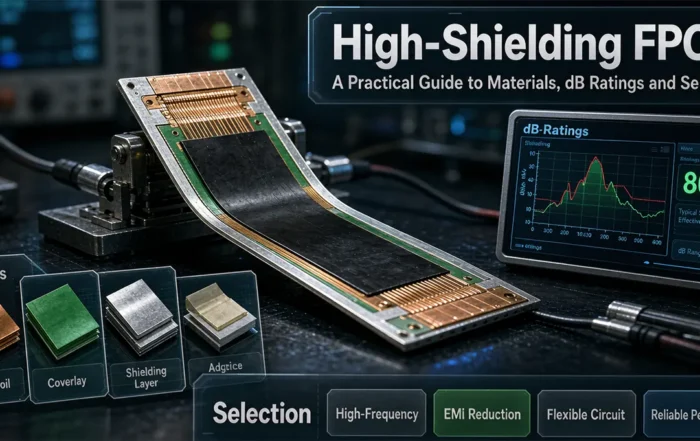
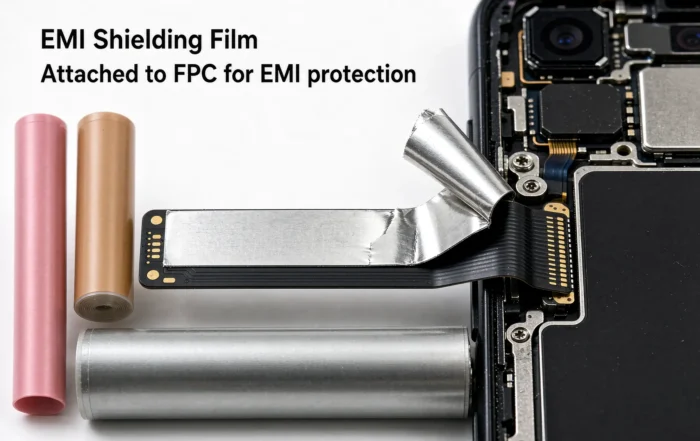
- EMI shielding film to reduce interference from power cables.
- A flex circuit connector that locks into the BMS board.
Because the flex sits close to high-current busbars, shielding and grounding layout matter as much as conductor width. Therefore, bring the EMI plan into the first layout review, not the last.
FPC Wiring Harness in EV vs Traditional Cable Bundles
FPC wiring harness in EV design replaces bundles of round wires with one flat circuit. The table below shows where the difference shows up.
| Item | Round-wire harness | Flex circuit |
|---|---|---|
| Profile | Thick, needs routing space | Thin, flat, fits above cells |
| Weight | Higher copper and insulation mass | Lower mass per signal path |
| Assembly | Many crimps, ties, and clips | Fewer parts, often one connector |
| Reliability | Loose terminals over time | Fixed traces, fewer contact points |
| Tooling | Simple, low setup | Higher setup, lower unit cost at volume |
Therefore, flex wins when signal count is high, and space is tight. For low signal counts, a wire harness may still be cheaper. Cost also depends on layer count, copper thickness, and panel usage, so review flexible PCB cost factors before committing to a layout. Suppliers often quote flexible PCB price per square inch for early budgeting.
Quantitative Comparison: FPC vs Wire Harness vs Rigid PCB in BMS
When selecting an interconnect for battery management, compare the options on weight, volume, assembly hours, reliability, and cost. The table below gives typical ranges from industry EV programs. Exact values depend on signal count, pack architecture, and production volume.
| Metric | Round-wire harness | Rigid PCB plus harness | FPC |
|---|---|---|---|
| Weight per signal path | Baseline | 10 to 20% heavier than baseline due to board and connectors | 30 to 60% lower than baseline |
| Volume | Baseline | 20 to 40% lower in flat areas, but connectors add height | 50 to 70% lower |
| Assembly time | Baseline | 10 to 20% lower | 30 to 50% lower |
| Reliability | Many crimps and loose terminals | Fewer crimps, but board connectors and solder joints remain | Fewer contact points; fixed traces resist vibration |
| Cost at low volume | Lowest | Medium | Highest due to tooling and setup |
| Cost at high volume | Medium | Medium | 10 to 25% lower when volume exceeds 10,000 units |
Use this comparison as a starting point, not a final quote. For BMS designs with many cell groups, flex usually wins on weight, volume, and assembly. For simple low-signal boards, rigid PCB or wire harness may still be the better commercial choice.
FPC CCS Busbar Integration in the Battery Pack
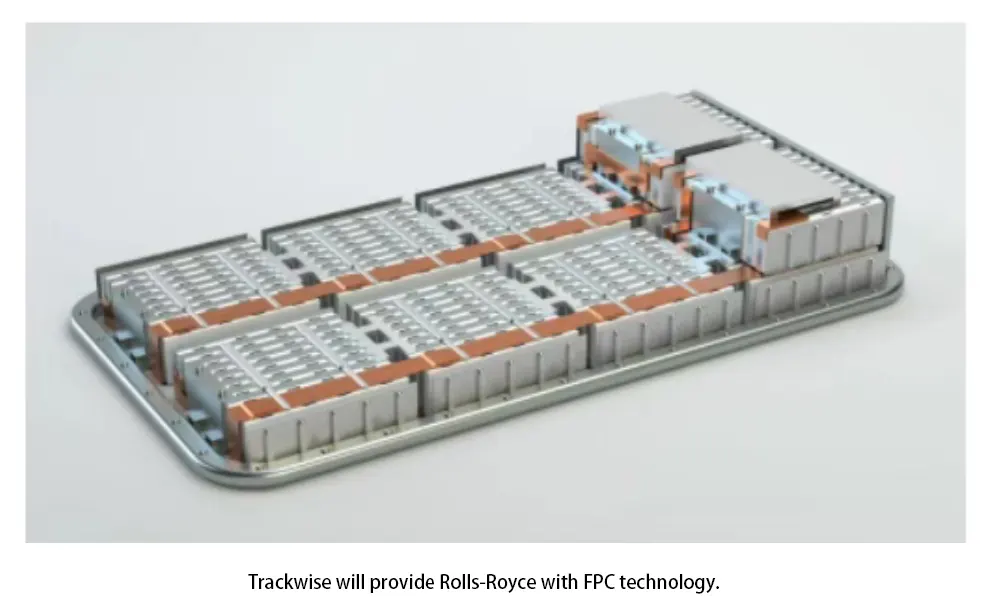
FPC CCS busbar integration means the flex circuit is designed together with the cell contact system and the busbar assembly. Consequently, one part handles both signal routing and mechanical alignment inside the pack.
In practice, the flex tail is bonded to busbar tabs by hot-bar or pulse-heat soldering. This method gives a repeatable joint with controlled heat, which protects nearby cells. Next, the assembly is checked for continuity and joint strength before it moves to pack build.
This integration is optional. It suits packs that want fewer parts and shorter assembly time, while simpler packs can keep separate flex and busbar parts.
Selection and Design Guide for EV Flex Circuits
Ask these questions before releasing a design:
1. Base material. Polyimide is standard for heat and flex life.
2. Copper thickness. Thicker copper carries more current but bends less.
3. Bend radius. Keep static bends generous; avoid sharp folds.
4. Coverlay and stiffeners. Add them where connectors and solder joints sit.
5. Connector type. Match the BMS side and locking style.
6. Temperature and flame needs. Confirm the pack’s operating window.
7. Trace fusing. Size fusible traces for the fault current you expect.
For custom layouts, work with a partner that can support Custom Flex PCB design reviews early. In addition, keep a rigid-flex option open if the module must fold.
Manufacturing and Reliability Support
Gekun is a flexible PCB manufacturer based in Shenzhen and has served flex projects since 2014. The company covers single-sided flex, Double-Sided Flex PCB Manufacturing, multilayer flex, rigid-flex, and flex assembly.
Reliability checks for EV flex parts usually include continuity and isolation tests, thermal shock, vibration, humidity soak, and repeated bend cycling. Many EV programs also screen suppliers against automotive quality frameworks such as IATF 16949 and component-level AEC-Q expectations. Therefore, define the test plan with the supplier before tooling starts.
Sourcing and Commercialization for EV Flex Circuits
Moving from a working sample to volume production requires a clear commercial process. The steps below help procurement and engineering teams align on schedule, cost, and supplier capability.
Custom FPC Process for EV Programs
1. Requirements review. Share schematic, signal list, pack dimensions, and environmental conditions.
2. DFM and stackup proposal. The supplier checks bend radius, copper weight, layer count, and connector placement.
3. Tooling and panelization. The supplier designs the production panel for material yield and assembly handling.
4. Prototype build. Produce first articles for fit, signal integrity, and thermal checks.
5. Validation. Run continuity, isolation, thermal shock, vibration, humidity, and bend cycling.
6. Production release. Lock the stackup, test plan, and quality documents before mass production.
Prototype Lead Time and MOQ
Prototype lead time for a custom EV flex circuit typically runs 5 to 10 business days after DFM approval, depending on layer count and connector assembly. Tooling may add 3 to 5 days. Volume production usually starts 2 to 4 weeks after final approval.
MOQ varies by supplier and design. For prototypes, MOQ can be as low as 1 to 5 pieces. For volume orders, MOQ often falls between 100 and 1,000 pieces, driven by panel utilization and material minimums. Ask for both prototype and production MOQ before quoting.
Cost Model for EV Flex Circuits
A complete cost model includes:
- NRE and tooling. Photoplot, test fixture, and assembly fixture.
- Material. Polyimide base, copper thickness, coverlay, stiffeners, and shielding film.
- Layer count and copper weight. More layers and thicker copper raise cost.
- Connector and assembly. Connector type, hot-bar soldering, and component placement.
- Test and yield. Continuity, isolation, thermal, and bend tests.
- Panel utilization. How many parts fit on a production panel.
Request a breakdown by these items, not just a per-piece price. This makes supplier comparison fair and shows where design changes can reduce cost.
Supplier Evaluation Checklist
Use this checklist when qualifying a flex circuit supplier for EV programs:
- Automotive quality system and traceability from lot to raw material.
- DFM support and experience with BMS or busbar flex designs.
- In-house capability for single-sided, double-sided, multilayer, and rigid-flex.
- Assembly services for connectors, hot-bar soldering, and testing.
- Reliability lab access for thermal shock, vibration, humidity, and bend cycling.
- Clear change control and documentation for automotive PPAP or equivalent.
- Transparent cost model and quoted MOQ for prototype and volume.
- Capacity and lead time for your forecasted annual volume.
Future Trends for FPC in Electric Vehicles
Higher pack voltages and faster charging push flex designs toward thicker copper and better thermal paths. Also, 800V platforms raise the need for stronger EMI control between sampling traces and power busbars.
Wireless BMS and smart battery sensors may reduce some wiring, but they will not remove flex from the pack soon. Instead, flex will likely carry more integrated functions, such as local sensing and fusing. Finally, expect more combined flex and busbar parts as pack makers chase fewer assembly steps.
FAQ
What is FPC in Electric Vehicles?
FPC in Electric Vehicles is a flexible printed circuit used inside a car, most often in the battery pack and control modules. It replaces round-wire bundles with a thin, bendable circuit that carries signals and sometimes power.
Can an FPC replace the wiring harness in an EV battery pack?
Yes, for high-signal-count runs. One flex circuit can replace many wires, which cuts weight, thickness, and assembly steps. However, for a few simple signals, a wire harness may still cost less.
How much does an EV battery flex circuit cost?
Price depends on layer count, copper thickness, panel usage, connector type, and test requirements. Ask for a quote based on flexible PCB price per square inch, then review flexible PCB cost factors such as material grade and tooling before comparing suppliers.
What tests should an EV flex circuit pass?
Typical checks include continuity, isolation, thermal shock, vibration, humidity, and bend cycling. The exact list should match the pack’s duty cycle and the customer’s automotive quality requirements.
Is FPC or rigid PCB better for battery management systems?
Flex fits curved, shallow spaces and reduces connectors. Rigid boards suit flat areas with heavy components. When both are needed, a Rigid-Flex PCB design combines the two in one part.
Related Posts
- Choosing the Right Flex Circuit Connector | Gekun — Related article
- FFC vs FPC: Key Differences and How to Choose — Related article
- Flexible PCB Cost 2026: Price Per Sq.Inch & Calculator — Related article
- Flexible PCB Cost Guide — Related article
- Flexible Tactile Sensor Design Using FPCB Processing — Related article