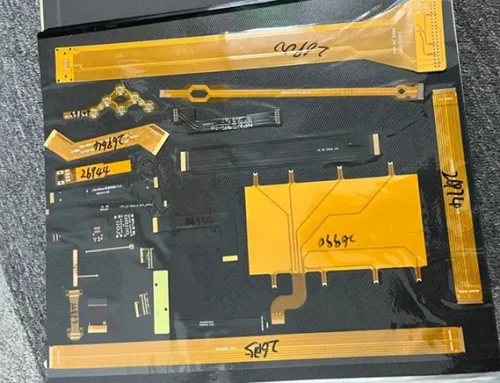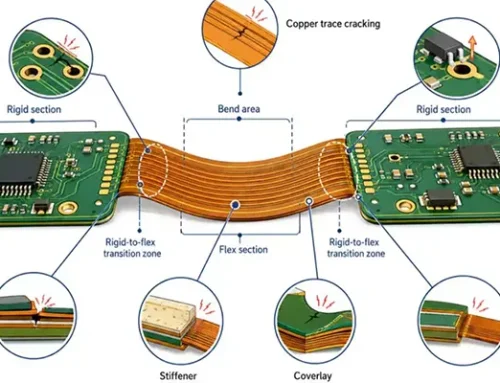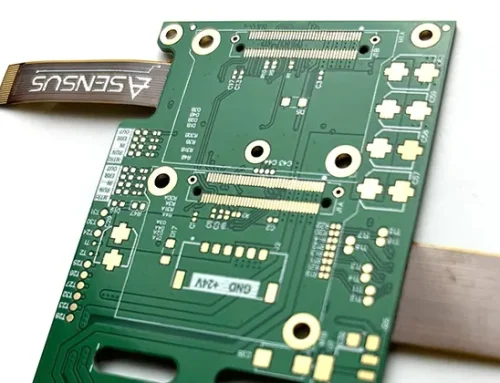
Flexible PCB Applications & Use Cases: Where Flex Circuits Excel (And Where They Don’t)
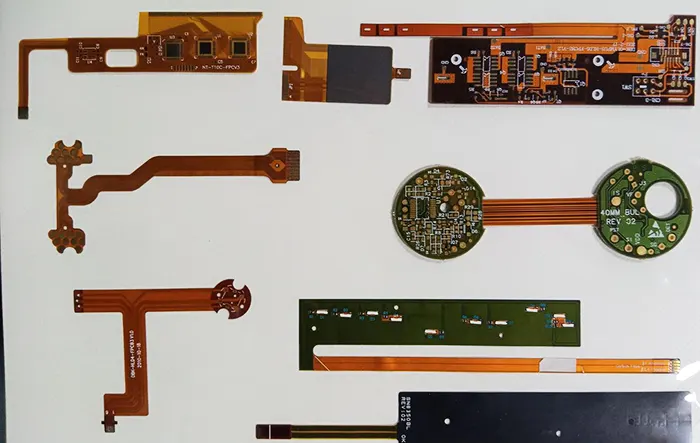
Walk into any modern electronics teardown, and you’ll find one technology appearing across industries: the flexible printed circuit board (Flex PCB).
From foldable smartphones and smartwatches to electric vehicles, medical devices, and aerospace systems, Flex PCBs are used in products with completely different requirements. Some prioritize miniaturization and comfort, while others demand extreme reliability, vibration resistance, or long-term durability.
The reason is simple: modern electronics are becoming smaller, lighter, and more complex. Traditional rigid PCBs and wire harnesses often struggle to fit compact, curved, or moving structures while adding weight and assembly complexity.
Flex PCBs solve these challenges by allowing circuits to bend, fold, and adapt to three-dimensional designs without sacrificing electrical performance.
However, engineers do not choose Flex PCBs simply because they are flexible. The real advantage lies in solving specific design challenges where rigid boards or traditional wiring are less effective.
This guide explores Flex PCB applications from an engineering perspective—where they are used, why designers choose them, which industries benefit most, and when a flexible circuit may not be the right choice.
Here is a more concise and direct rewrite with a stronger engineering focus:
What Makes a Flexible PCB Different?
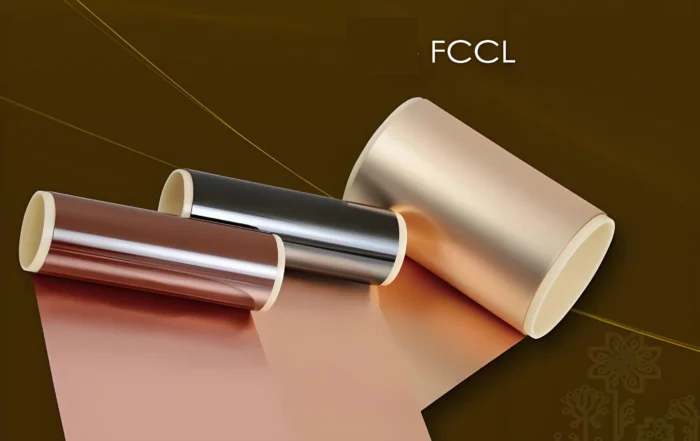
Unlike traditional rigid PCBs based on FR-4 substrates, flexible PCBs use thin, bendable materials such as polyimide (PI) or polyester (PET). Copper layers are laminated onto these substrates and protected with coverlay films, creating circuits that can bend while maintaining reliable electrical performance.
The key advantage of a Flex PCB is not simply its ability to bend—it changes how electronic systems can be designed.
Instead of relying on rigid boards connected by cables and connectors, flexible circuits can follow the shape of the product. They can fit around batteries, pass through narrow spaces, fold inside hinges, and connect moving components while reducing overall size and weight.
This makes Flex PCBs ideal for compact and complex products where traditional wiring solutions are difficult to implement.
Engineers typically classify Flex PCB applications into two categories: static flex and dynamic flex.
- Static Flex: Bent during assembly and remains fixed during operation. Common applications include smartphone cameras, displays, and battery connections.
- Dynamic Flex: Designed for repeated movement and flexing throughout the product lifetime. Common applications include printer heads, robotics, folding devices, and automotive systems.
| Feature | Static Flex | Dynamic Flex |
|---|---|---|
| Movement after installation | Minimal or none | Continuous repetitive bending |
| Typical applications | Cameras, displays, batteries | Robotics, printers, folding devices |
| Main design focus | Compact packaging | Flex durability and cycle life |
| Bend cycles | One-time installation | Thousands to millions of cycles |
Beyond mechanical flexibility, Flex PCBs also simplify electrical connections. They can replace complex wire harnesses by integrating multiple connections into a single lightweight circuit.
Fewer connectors and solder joints mean fewer potential failure points, improving reliability while reducing assembly time. This advantage is especially important in automotive, aerospace, and medical electronics, where long-term performance is critical.
Flex PCBs also enable three-dimensional circuit routing. Unlike rigid boards that require flat mounting space, flexible circuits can wrap around corners, fit into curved housings, and maximize internal space utilization.
This design freedom helps manufacturers create thinner, lighter, and more integrated products—from smartphones and wearables to advanced automotive systems.
As electronics continue moving toward smaller form factors and higher functionality, flexible circuits have become a core technology for modern product design.
Why Engineers Choose Flex PCB Instead of Rigid PCB
Engineers choose Flex PCBs not because they are flexible, but because they solve design challenges that rigid PCBs and wire harnesses cannot easily address.
Space optimization is one of the biggest advantages. Rigid PCBs require fixed mounting areas, while flexible circuits can bend, fold, and route through tight spaces. This allows designers to maximize internal space and create smaller, thinner products.
Motion resistance is another key factor. Applications such as foldable smartphones, robotics, printers, automotive systems, and medical devices require circuits that can withstand repeated movement. Properly designed dynamic Flex PCBs can endure thousands or even millions of bending cycles while maintaining reliable electrical performance.
Weight reduction is also critical in industries such as aerospace, electric vehicles, and wearable electronics. Replacing bulky cable harnesses with lightweight flexible circuits reduces system weight, simplifies packaging, and improves assembly efficiency.
Higher reliability is achieved by reducing connectors, solder joints, and cable interfaces—common failure points in traditional assemblies. A single integrated flexible circuit provides more stable connections and better resistance to vibration and thermal stress.
Simplified manufacturing is another advantage. Flex PCBs combine multiple electrical connections into one compact assembly, reducing wiring complexity, assembly time, and potential installation errors.
For these reasons, Flex PCBs have become a preferred solution for products requiring compact design, high reliability, and efficient integration.
The following table summarizes the engineering considerations that typically influence PCB selection.
| Engineering Challenge | Why Flex PCB Is Preferred |
|---|---|
| Limited installation space | Conforms to complex 3D geometries and curved enclosures |
| Repeated mechanical movement | Designed for long-term dynamic flex performance |
| Weight-sensitive products | Eliminates bulky wiring harnesses and connectors |
| High reliability requirements | Reduces interconnection failure points |
| Complex assembly processes | Integrates multiple circuits into one flexible assembly |
| Miniaturized electronics | Enables higher packaging density without sacrificing performance |
In practice, engineers rarely ask, “Should I use a flexible PCB?” Instead, they ask a more practical question:
Does my product have design constraints that a rigid PCB cannot solve efficiently?
If the answer involves limited space, continuous movement, connector reduction, lightweight construction, or improved reliability, then a Flex PCB often becomes not just an alternative—but the most effective engineering solution.
Application Scenarios: Solving Engineering Problems with Flexible PCBs
Most articles classify flexible PCB applications by industry, but that only tells part of the story. In practice, engineers rarely begin a project by asking, “Which industry is this for?” Instead, they start by identifying the mechanical and electrical challenges the product must overcome.
Questions such as Will the circuit move repeatedly? Is space extremely limited? Can the product withstand vibration? Is weight critical? Will it operate in harsh environments? often determine whether a flexible PCB is the right solution.
Viewed from this perspective, products from completely different industries frequently share the same engineering requirements—and therefore rely on the same Flex PCB technology.
Scenario 1: Products That Constantly Bend
Repeated movement is one of the biggest reasons engineers choose flexible circuits over rigid PCBs or traditional cable assemblies.
Every time a cable bends, microscopic mechanical stress accumulates inside the conductor. After thousands or millions of cycles, copper fatigue, broken solder joints, or damaged connectors can lead to electrical failure.
Dynamic Flex PCBs are specifically engineered to withstand continuous bending throughout a product’s service life.
Their copper traces, substrate materials, and bend radii are carefully designed to distribute mechanical stress, significantly extending fatigue life compared with conventional wire harnesses.
Foldable smartphones are perhaps the most recognizable example.
Every time a user opens or closes the device, multiple flexible circuits bend around the hinge to connect the display, touch sensors, cameras, and antennas.
Similar design principles are found inside inkjet printers, where print-head cables flex continuously during operation, and in laptop display hinges that open and close thousands of times over the life of the computer.
Even compact camera modules increasingly rely on flexible circuits to connect image sensors, autofocus mechanisms, and optical stabilization units while accommodating complex mechanical movement.
| Product | Why Dynamic Flex Is Required | Engineering Benefit |
|---|---|---|
| Foldable smartphones | Continuous hinge movement | Long flex life and compact routing |
| Inkjet printers | Moving print head | High fatigue resistance |
| Laptop displays | Repeated opening and closing | Improved cable durability |
| Camera modules | Mechanical autofocus movement | Flexible packaging in confined spaces |
Table 1 summarizes typical dynamic-flex applications.
According to IPC-2223 design guidelines, controlling bend radius, copper thickness, and conductor orientation is essential for achieving long service life in dynamic flex applications.¹
Scenario 2: Products with Extremely Limited Space
Some products never move during operation, yet they still depend heavily on flexible circuits because there simply isn’t enough room for rigid PCBs and bulky cable assemblies.
Miniaturization has become one of the defining trends in electronics. Engineers are expected to add more sensors, cameras, wireless modules, batteries, and processors without increasing product size.
Traditional rigid boards consume valuable internal volume and often require multiple connectors between separate modules.
Flexible PCBs solve this problem by routing circuits through narrow gaps, wrapping around batteries, or folding into unused cavities.
Instead of forcing designers to build products around flat circuit boards, the circuit conforms to the available space.
Modern smartwatches illustrate this concept well. Inside a device only a few millimeters thick, flexible circuits connect the display, battery, heart-rate sensor, wireless antenna, charging module, and buttons while occupying minimal volume.
Wireless earbuds present an even greater challenge, where every cubic millimeter affects battery capacity and acoustic performance.
Augmented reality (AR) glasses push packaging efficiency further by distributing electronics throughout extremely thin frames.
Flexible circuits connect displays, cameras, microphones, sensors, and batteries without adding excessive bulk or weight.
Medical implants represent another important example. Devices such as pacemakers and neurostimulators must fit comfortably inside the human body while maintaining long-term reliability.
Flexible circuits allow electronic assemblies to conform to anatomical shapes, improving both packaging efficiency and patient comfort.
Scenario 3: Products Exposed to Continuous Vibration
Mechanical vibration is a hidden enemy of electronic reliability. While products may appear stationary, continuous vibration gradually weakens connectors, loosens terminals, and stresses solder joints.
Traditional wiring harnesses are particularly vulnerable because every connector introduces another mechanical interface that can loosen under repeated vibration.
In demanding environments, these interconnection failures often become one of the leading causes of electrical problems.
Flexible PCBs minimize this risk by integrating multiple electrical pathways into a single circuit. Fewer connectors mean fewer opportunities for failure.
This design philosophy is widely adopted in modern vehicles, where electronics are constantly subjected to engine vibration, road shocks, and temperature cycling.
Aircraft face even harsher operating conditions due to continuous vibration combined with pressure and thermal fluctuations.
Industrial machinery, robotic production lines, and railway signaling systems also rely on flexible circuits to improve long-term reliability under constant mechanical stress.
As electronic content continues to increase across transportation systems, replacing bulky wiring harnesses with integrated flexible circuits has become an effective strategy for improving durability while reducing maintenance requirements.
Scenario 4: Products Where Every Gram Matters
Weight reduction is no longer just a performance goal—it has become an economic and environmental requirement.
In aerospace systems, every kilogram removed from an aircraft or satellite can reduce launch costs, improve fuel efficiency, or increase payload capacity.
For drones, lighter electronics directly translate into longer flight times and greater operating range.
Flexible PCBs contribute to lightweight design by replacing traditional cable assemblies, eliminating connectors, and reducing the overall amount of structural material required inside electronic systems.
Portable medical equipment benefits in much the same way.
Devices such as wearable ECG monitors, insulin pumps, and portable ultrasound scanners become more comfortable for patients when electronic assemblies occupy less space and weigh less.
According to NASA’s electronic packaging guidance, reducing wiring complexity remains one of the most effective methods for lowering spacecraft mass while simultaneously improving reliability.²
| Application | Weight Reduction Priority | Why Flex PCB Helps |
|---|---|---|
| Drones | Longer flight time | Fewer cables and connectors |
| Satellites | Lower launch mass | Lightweight integrated interconnects |
| Aerospace systems | Fuel efficiency | Reduced wiring harness weight |
| Portable medical devices | Patient comfort | Compact, lightweight electronics |
Table 2 compares typical weight-sensitive applications.
Scenario 5: Products Operating in Harsh Environments
Not every application challenges electronics through movement. Some challenge them through heat, chemicals, moisture, vibration, or exposure to aggressive operating conditions.
Polyimide—the most widely used substrate material for Flex PCBs—offers excellent thermal stability, chemical resistance, and mechanical durability.
Many flexible circuits can operate across temperature ranges far beyond those encountered in everyday consumer electronics, making them suitable for industrial and transportation applications.³
Automotive engine compartments expose electronics to elevated temperatures, oil contamination, humidity, and constant vibration.
Oil and gas exploration equipment faces corrosive chemicals and extreme environmental conditions. Industrial robots operate around lubricants, dust, and continuous mechanical motion, while military electronics must remain functional under severe thermal and mechanical stress.
Because flexible circuits combine mechanical resilience with reduced connector count, they are often selected wherever reliability must be maintained despite challenging operating environments.
Industry Deep Dive: Why Different Industries Choose Flexible PCBs
Although engineering challenges often overlap, each industry has its own design priorities. Understanding these priorities explains why flexible PCB adoption continues to accelerate across diverse markets.
Consumer Electronics: Fitting More Technology into Less Space
Consumer electronics remain the largest market for flexible PCBs, driven by relentless demand for thinner, lighter, and more powerful devices.
A modern flagship smartphone no longer contains just one flexible circuit.
Instead, it typically integrates multiple Flex PCBs that connect the OLED display, camera modules, antenna systems, charging circuits, battery management electronics, Face ID or facial recognition sensors, microphones, speakers, vibration motors, and side buttons.
This modular architecture allows manufacturers to optimize internal space while simplifying assembly and improving repairability.
As foldable devices become more common, the number and complexity of flexible circuits continue to increase because moving displays require reliable interconnections capable of surviving hundreds of thousands of folding cycles.
Automotive Electronics: Why Electric Vehicles Need More Flex PCBs
Vehicle electronics have evolved dramatically over the past decade.
While traditional gasoline vehicles already contained numerous electronic control units, modern electric vehicles integrate significantly more sensors, communication modules, and power management systems.
Several factors are driving this growth. Advanced Driver Assistance Systems (ADAS) rely on cameras, radar, lidar, and ultrasonic sensors distributed throughout the vehicle.
Battery Management Systems (BMS) require extensive monitoring of voltage and temperature across hundreds or even thousands of battery cells.
Smart lighting systems now include adaptive LED matrices, animated signal lamps, and interior ambient lighting, all requiring compact and reliable electrical interconnections.
Industry estimates suggest that a modern passenger vehicle may contain 50–100 flexible printed circuits, while premium electric vehicles with advanced ADAS and intelligent cockpit systems often incorporate even more, depending on vehicle architecture and feature content.⁴
| Automotive System | Typical Role of Flex PCB |
|---|---|
| Battery Management System | Cell monitoring and interconnection |
| ADAS Cameras | High-density signal routing |
| Radar modules | Compact RF connections |
| Smart lighting | Curved LED assemblies |
| Digital dashboards | Display interconnections |
| Interior sensors | Flexible packaging in limited spaces |
Table 3 illustrates where flexible circuits are commonly deployed.
As vehicles continue evolving toward electrification and autonomous driving, the demand for flexible circuits is expected to grow alongside electronic content per vehicle.
Medical Electronics: Different Devices, Different Priorities
Medical applications illustrate how one technology can satisfy very different engineering objectives.
Wearable healthcare devices prioritize flexibility, comfort, and low weight. Smart ECG patches, glucose monitors, and health trackers must conform to the human body while maintaining reliable signal transmission.
Implantable devices place even greater emphasis on miniaturization, long-term reliability, and biocompatibility. Pacemakers, cochlear implants, and neurostimulators often use highly specialized flexible circuits capable of operating reliably for many years inside the human body.
Hospital equipment, including MRI systems, ultrasound scanners, and patient monitoring devices, typically uses flexible circuits to reduce assembly complexity while accommodating dense electronic packaging and repeated equipment movement.
Although these products differ significantly, they all benefit from one common characteristic: the ability of flexible circuits to maximize functionality within extremely limited space.
Aerospace and Defense: Reliability Above Everything Else
Few industries impose stricter reliability requirements than aerospace and defense.
Aircraft avionics, satellites, missile guidance systems, and military communication equipment must continue operating under vibration, acceleration, radiation, and extreme temperatures where repair may be impossible.
Reducing connector count becomes especially valuable because every eliminated connection represents one less potential failure point. Flexible circuits also reduce overall system weight—a critical factor affecting payload capacity, fuel efficiency, and launch costs.
For mission-critical electronics, reliability is not simply desirable; it is a fundamental design requirement.
Industrial Automation: Supporting the Smart Factory
Industry 4.0 has transformed manufacturing equipment into highly connected, sensor-rich systems.
Robotic arms require continuous cable movement without fatigue failure. Servo systems demand reliable high-speed signal transmission under constant motion.
Machine vision equipment combines cameras, lighting modules, and processors within compact enclosures, while automated production lines increasingly depend on distributed sensors and flexible manufacturing equipment.
Flexible PCBs provide engineers with a practical solution for routing signals through moving joints while reducing maintenance caused by worn cable assemblies.
As factories become smarter and automation continues expanding, flexible circuits will play an increasingly important role in enabling compact, reliable, and maintenance-friendly industrial equipment.
Fastest-Growing Flexible PCB Applications (2026–2030)
The next wave of Flex PCB demand will be driven less by traditional consumer electronics and more by intelligent, connected, and autonomous systems.
Industry analysts expect growth to accelerate in applications where compact packaging, continuous movement, and high reliability converge.
Artificial intelligence (AI) hardware is one of the most promising areas.
Edge AI devices, AI-enabled cameras, and intelligent sensors require increasingly dense electronic assemblies, making flexible interconnects valuable for maximizing functionality in limited space.
Humanoid robots represent another rapidly emerging market. Unlike conventional industrial robots that operate within fixed ranges, humanoid robots contain dozens of moving joints, each requiring reliable power and signal transmission through constantly flexing structures.
Flexible PCBs reduce cable bulk while improving durability under continuous motion.
Flexible display technology is also expanding beyond foldable smartphones into rollable monitors, automotive displays, and next-generation wearable devices.
At the same time, smart clothing and electronic textiles are incorporating lightweight flexible circuits capable of integrating sensors, communication modules, and power management directly into fabrics.
Healthcare is moving toward ultra-thin wearable medical patches for continuous monitoring of vital signs such as heart rate, blood glucose, hydration, and body temperature. These disposable or semi-disposable devices depend on highly flexible electronic substrates that conform comfortably to the skin.
Autonomous vehicles will further increase demand as additional cameras, radar, lidar, and in-cabin monitoring systems require compact, vibration-resistant interconnections.
Meanwhile, the rapid deployment of low-Earth-orbit (LEO) satellite constellations is creating new opportunities for lightweight, highly reliable flexible circuits in space communications.
Finally, the evolution of smart factories will continue driving adoption. Distributed sensors, collaborative robots (cobots), machine vision systems, and intelligent automation all benefit from compact, durable, and flexible electronic interconnects that simplify installation and improve long-term reliability.
These trends indicate that the future of flexible PCB technology extends well beyond replacing wires—it is becoming a foundational platform for the next generation of intelligent electronic systems.
Which Applications Should NOT Use Flexible PCB?
Flexible PCBs have earned a reputation as a premium solution for compact and high-performance electronics, but they are not the right choice for every design. One of the biggest misconceptions in product development is assuming that a flexible circuit is automatically superior to a rigid PCB simply because it offers greater design freedom.
In reality, experienced engineers evaluate the total cost of ownership, mechanical requirements, manufacturing complexity, and long-term reliability before deciding which PCB technology to use. In many situations, a conventional rigid PCB provides a simpler, more economical, and equally reliable solution.
Understanding where not to use Flex PCB is just as important as knowing where it excels.
Heavy Power Electronics
Applications involving high-current power conversion—such as industrial motor drives, power inverters, welding equipment, or large UPS systems—typically place greater emphasis on current-carrying capacity and thermal management than on mechanical flexibility.
Rigid PCBs constructed on thick FR-4 substrates typically offer superior mechanical support for heavy components, including transformers, inductors, and power MOSFETs.
They also offer improved heat dissipation through thicker copper layers, metal-core substrates, or integrated heat sinks.
While flexible circuits can certainly carry high currents when properly designed, doing so often requires thicker copper, additional reinforcement, or specialized materials, which significantly increase manufacturing costs.
Unless flexibility is essential, rigid PCBs usually provide a more practical solution.
Simple Household Appliances
Many everyday appliances contain electronics that remain completely stationary throughout their service life.
Products such as electric kettles, rice cookers, coffee makers, desk fans, humidifiers, and microwave ovens typically have generous installation space and very limited mechanical movement.
Their control boards perform straightforward functions and rarely require complex three-dimensional packaging.
For these products, a standard rigid PCB offers excellent reliability at substantially lower manufacturing cost. Introducing flexible circuits would increase material and assembly expenses without delivering meaningful performance improvements.
Large Stationary Control Panels
Industrial control cabinets, electrical distribution systems, and factory automation panels often contain dozens of circuit boards mounted inside large enclosures.
Because these systems have ample installation space, engineers generally prioritize modular maintenance, standardized connectors, and straightforward troubleshooting over miniaturization.
Rigid PCBs are easier to manufacture, inspect, replace, and repair during equipment maintenance. Their mechanical rigidity also simplifies installation inside cabinets where vibration is relatively low.
For stationary equipment, the design advantages of Flex PCB rarely justify the additional cost.
Highly Cost-Sensitive Consumer Products
Consumer electronics span an enormous range of price points. While flagship smartphones may contain multiple flexible circuits, many entry-level products compete primarily on manufacturing cost.
Products such as inexpensive remote controls, basic calculators, electronic toys, LED lamps, and low-cost home electronics often use simple single-board designs with few mechanical constraints.
Because flexible PCB fabrication requires specialized materials, laser processing, coverlay lamination, and more complex manufacturing processes, unit costs remain higher than conventional rigid boards.
If product margins are extremely tight and flexibility provides little functional value, rigid PCBs remain the more economical option.
Products with No Mechanical Movement
Perhaps the simplest question an engineer can ask is:
Will this circuit ever need to bend during manufacturing or normal operation?
If the answer is no, there may be little reason to introduce a flexible circuit.
Desktop computers, rack-mounted servers, network switches, laboratory instruments, and many telecommunications systems all contain fixed electronic assemblies operating inside relatively spacious enclosures.
Unless packaging constraints demand three-dimensional routing, rigid PCBs typically offer lower production costs, easier assembly, and simpler maintenance while providing excellent long-term reliability.
The comparison below summarizes common design choices.
| Application Type | Is Flex PCB Recommended? | Preferred Solution | Primary Reason |
|---|---|---|---|
| Heavy power electronics | Usually No | Rigid PCB | Better thermal performance and structural support |
| Household appliances | Usually No | Rigid PCB | Low cost and sufficient space |
| Large control panels | Usually No | Rigid PCB | Easier maintenance and modularity |
| Cost-sensitive electronics | Usually No | Rigid PCB | Lower manufacturing cost |
| Products with no movement | Usually No | Rigid PCB | Flexibility provides little added value |
Ultimately, selecting a flexible PCB should never be driven by technology alone. The best design is the one that solves the engineering problem with the lowest overall cost, highest reliability, and greatest manufacturing efficiency.
Future Trends Shaping Flexible PCB Applications
Flexible PCB technology continues to evolve alongside broader trends in electronics, automation, and advanced manufacturing.
Over the next decade, demand will increasingly be driven not simply by smaller products, but by products that are more intelligent, connected, and mechanically adaptive.
One of the most visible trends is the continued expansion of foldable and rollable electronics. Smartphones have already demonstrated the commercial viability of flexible displays, and similar technologies are now appearing in tablets, automotive displays, laptops, and portable monitors.
These products require flexible interconnects capable of surviving hundreds of thousands of bending cycles while maintaining stable electrical performance.
Looking even further ahead, stretchable electronics represent the next stage of mechanical flexibility.
Unlike conventional Flex PCBs that bend but do not significantly stretch, stretchable circuits are designed to deform in multiple directions while remaining electrically functional.
Researchers are actively developing these technologies for wearable healthcare devices, soft robotics, and electronic textiles.²
Another important direction is printed electronics, where conductive inks are deposited directly onto flexible substrates through additive manufacturing processes.
Although printed electronics currently complement rather than replace traditional Flex PCBs, they offer exciting opportunities for low-cost sensors, RFID tags, smart packaging, and disposable medical diagnostics.
At the same time, electronic devices continue to demand higher circuit density.
Advances in high-density interconnect (HDI) flexible PCBs, laser microvias, finer conductor widths, and ultra-thin dielectric materials enable increasingly complex circuit architectures within extremely limited spaces.
These capabilities are especially valuable for smartphones, AR/VR devices, AI accelerators, and compact medical electronics.
Material technology is evolving as well. Ultra-thin rolled-annealed copper foil improves fatigue resistance while allowing tighter bend radii, making it particularly suitable for dynamic flex applications.
Meanwhile, research into flexible batteries is opening new possibilities for fully conformable electronic products, eliminating one of the last rigid components inside wearable devices.
Healthcare remains one of the fastest-growing application areas.
Flexible biosensors and medical patches capable of continuously monitoring glucose, hydration, blood pressure, or cardiac activity are moving from research laboratories toward commercial healthcare products.
Their success depends heavily on flexible electronic substrates that can conform comfortably to the human body for extended periods.
Automotive electronics will also continue expanding rapidly as electric vehicles incorporate more sensing, connectivity, and autonomous driving capabilities.
Future vehicles will contain increasing numbers of cameras, radar modules, lidar systems, intelligent lighting assemblies, and battery monitoring circuits—all of which benefit from compact, lightweight, and vibration-resistant flexible interconnects.
Perhaps the most transformative trend is the rise of AI-powered devices. From intelligent robots and edge AI cameras to smart manufacturing equipment, artificial intelligence is increasing the number of sensors, processors, and communication modules integrated into each product.
As electronic complexity grows, flexible PCB technology will play an increasingly important role in connecting these components efficiently within limited mechanical space.
According to IPC and IDTechEx, advances in flexible hybrid electronics, wearable technologies, and flexible sensing systems are expected to remain major drivers of innovation throughout the coming decade.
Conclusion
Flexible PCB technology has become a cornerstone of modern electronic design, but its value lies in far more than its ability to bend.
Successful engineers do not choose a flexible circuit simply because it offers mechanical flexibility.
They choose it because it solves specific engineering challenges that conventional rigid PCBs cannot address as effectively.
Whether the goal is reducing package size, lowering system weight, eliminating connectors, improving vibration resistance, or enabling continuous mechanical movement, Flex PCBs provide practical solutions that improve both product performance and reliability.
At the same time, flexibility is not always the right answer. Products with generous installation space, minimal mechanical movement, or strict cost constraints often achieve better overall results with traditional rigid PCBs.
Understanding these trade-offs is an essential part of sound engineering practice.
As electronics continue moving toward AI-enabled systems, autonomous vehicles, wearable healthcare, flexible displays, and intelligent robotics, the role of flexible circuits will continue to expand. Yet the fundamental design principle remains unchanged: select the technology that best matches the engineering challenge—not simply the newest or most advanced option.
By evaluating factors such as packaging constraints, environmental conditions, mechanical movement, reliability requirements, manufacturing complexity, and total lifecycle cost, designers can determine whether a flexible PCB delivers genuine value or whether a rigid or rigid-flex solution is the better choice.
References
- IPC. IPC-2223: Sectional Design Standard for Flexible Printed Boards.
- IDTechEx. Flexible Electronics and Flexible Hybrid Electronics Market Reports.
- IPC. Flexible Hybrid Electronics Roadmap.
- DuPont. Pyralux® Flexible Circuit Materials Technical Guide.
- NASA. Electronic Parts and Packaging Guidance.
- Yole Group. Automotive Electronics and PCB Market Reports; industry estimates on flexible circuit content in modern vehicles.