
Explore the Cutting – Edge World of PCB Technology!
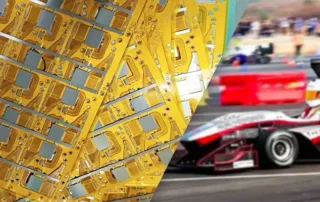
How Flexible PCBs Power Formula Student Race Cars: Design and Applications
Flexible Printed Circuits (FPC) have emerged as an ideal alternative to traditional wiring harnesses in the electrical systems of Formula Student China race cars due to their lightweight, bendable nature, and high-density wiring capabilities. Within the confined cabin space of FS vehicles, the electrical system faces dual technical challenges: ensuring operational reliability while optimizing spatial layout. This is particularly[...]
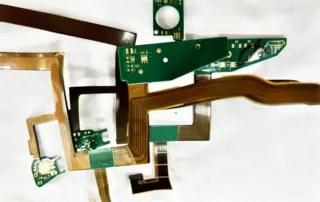
Flexible Coating Materials in Circuit Board Manufacturing
Flexible coating materials play an increasingly critical role in the modern circuit board industry as electronic products continue to evolve toward higher density, lighter weight, and greater mechanical reliability. From flexible printed circuits (FPCs) to rigid-flex and high-reliability PCBs, these materials are widely applied to protect conductive traces, enhance environmental resistance, and maintain electrical performance under repeated bending, vibration,[...]

Flexible Printed Circuits on Textiles via Screen Printing for Wearable Electronics
The principle of flexible electronic printing technology involves using inks with electronic functionality to fabricate electronic devices or circuits on flexible substrates through precision printing techniques. The printed circuits possess corresponding electronic capabilities. Flexible electronic printing technology holds broad application prospects in radio frequency identification (RFID) tags, sensors, thin-film transistors, supercapacitors, and other fields. Printing is a relatively low-cost[...]
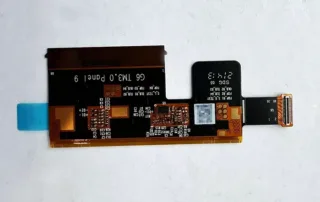
Flexible PCB: Features, Design Guide, Applications, and Benefits
Flexible printed circuit boards (flexible boards or flex PCBs) are thin, lightweight electronic interconnects designed to bend, fold, or twist to fit complex three-dimensional assemblies. Unlike traditional rigid PCBs, flexible boards are typically manufactured using polyimide or polyester substrates that provide excellent thermal stability, mechanical flexibility, and electrical insulation. This structure enables designers to reduce assembly space, eliminate bulky[...]
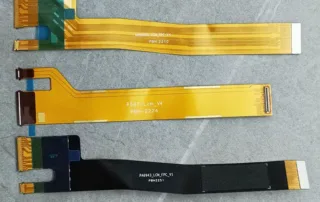
Flex PCB Manufacturing Explained: Materials, Layup Structures, and Production Processes
Printed Circuit Boards (PCBs) are the foundational building blocks of modern electronic systems, providing both electrical interconnection and mechanical support for electronic components. As electronic products continue to evolve toward higher density, thinner profiles, and more complex functional integration, PCB technologies have diversified to include rigid, flexible, and rigid-flex structures. Each PCB type employs carefully selected materials—such as copper[...]
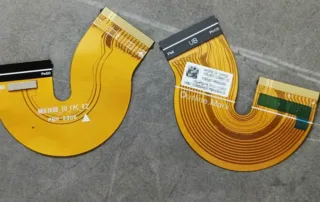
What is the relationship between PCB trace width and current?
In PCB design, current-carrying capacity is one of the most misunderstood yet most critical parameters—particularly in power electronics, motor drivers, and high-current control systems. While signal integrity, impedance control, and EMC often receive significant attention, trace current capacity is frequently reduced to rough rules of thumb or “experience-based judgment.” This approach works—until it doesn’t. Unlike wires, PCB traces are[...]