
PI Protective Film Process for Rigid-Flex PCBs: Reducing Flexible-Area Cosmetic Defects
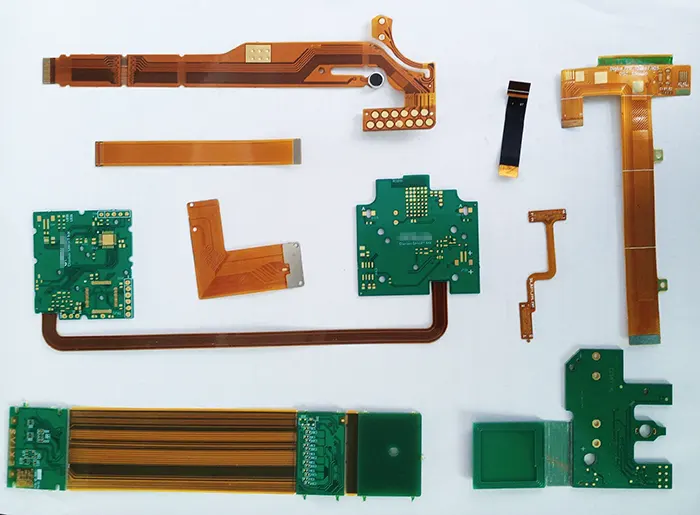
The PI protective film process for rigid-flex PCBs applies a polyimide (PI) protective film onto the cover film surface of the flexible area before or during lamination. Its primary purpose is to shield the flexible panel from prepreg (PP) powder, resin overflow, pitting, compression cracking, and contamination—defects that commonly occur during rigid-flex lamination and lead to high scrap rates. By isolating the flexible surface from process debris, resin migration, and uneven pressure, the PI protective film helps maintain surface aesthetics and improves manufacturing yield.
Resin overflow, compression cracking, and contamination are also commonly observed in the flexible area during rigid-flex lamination. These defects often appear at the transition zone between rigid and flexible layers, where resin flow, pressure distribution, and material interfaces are more difficult to control.
How the PI Protective Film Process Works
The PI protective film process is designed to protect the flexible area during R-FPCB manufacturing. In this process, a polyimide protective film is applied onto the cover film surface of the flexible area.
The PI protective film acts as a barrier or sacrificial layer. It prevents damage or contamination of the flexible area caused by prepreg (PP) powder, flowing resin, and direct contact with lamination tooling. Because PI film has high thermal stability and mechanical strength, it can withstand lamination conditions while isolating the cover film surface from process-related defects.
Key functions of the PI protective film include:
Blocking prepreg glass fiber dust from settling on the cover film
Reducing direct resin contact with the flexible surface
Minimizing pitting by buffering uneven pressure and resin flow
Preventing surface contamination during layup and pressing
After lamination, the protective film may be removed depending on the specific production flow and design requirements. The exact removal step should be validated for each rigid-flex stackup.
Root Causes of Flexible-Area Defects During Lamination

Figure 1. Fabrication of R-FPCB stack using PI protective film.
Understanding the root causes helps explain why a PI protective film is effective.
Pitting
Pitting in the flexible area is linked to several process and material factors:
Uneven resin flow during lamination
Resin starvation or micro-void formation
Moisture outgassing from PI or adhesive layers
Over-etching of thin copper
Lack of resin buffering capacity compared with FR-4
Thin copper exaggerating surface roughness
High lamination pressure squeezing resin away from flex zones
Because the flexible area does not have the same resin-rich buffering as rigid FR-4 layers, it is more sensitive to these conditions.
Prepreg Powder Residue
Prepreg powder originates from glass fiber dust released during prepreg cutting or handling. If this dust remains on the flexible surface before lamination, it can become embedded or visible on the finished board. A PI protective film covers the surface and prevents direct contact with this dust.
Process Design Considerations for PI Protective Film Application

Figure 2. Applying PI and opening the lid.
When implementing a PI protective film process for R-FPCBs, the following design and process considerations help
improve results:
Full coverage of the flexible area: The PI film should cover the entire cover film surface that is exposed to prepreg and lamination pressure.
Compatibility with cover film materials: The protective PI film must be compatible with the underlying cover film to avoid adhesion issues or residue after removal.
Layup cleanliness: Applying the protective film after prepreg cutting and before layup reduces exposure to glass fiber dust.
Pressure and resin flow control: The protective film alone may not fully eliminate defects caused by extreme pressure or uneven resin flow. Lamination parameters should still be optimized.
Removal or retention strategy: Define whether the protective film is removed after pressing or remains as part of the final construction, based on the specific R-FPCB design.
Frequently Asked Questions
What is a PI protective film in rigid-flex PCB manufacturing?
A PI protective film is a polyimide film applied onto the cover film surface of the flexible area during rigid-flex PCB production. It acts as a barrier that protects the flexible surface from prepreg powder, resin overflow, pitting, compression cracking, and contamination during lamination.
Which defects does the PI protective film process prevent?
The PI protective film process primarily helps prevent cosmetic defects in the flexible area, including pitting, prepreg powder residue, resin overflow, compression cracking, and contamination. It reduces direct contact between the flexible surface and process debris or uneven pressure during rigid-flex lamination.
When should the PI protective film be applied during R-FPCB production?
The protective film is typically applied to the cover film surface of the flexible area before lamination and pressing. This allows it to protect the flexible surface during the stages where prepreg powder, resin flow, and lamination pressure are most likely to cause defects.
How does the PI protective film reduce pitting?
The PI protective film reduces pitting by buffering the flexible surface from uneven resin flow and high lamination pressure. Since PI lacks the resin buffering capacity of FR-4, a protective layer helps compensate for this difference and minimizes surface roughness caused by thin copper or resin starvation.
Can the PI protective film remain on the finished rigid-flex board?
The protective film may be removed after lamination depending on the production flow and design requirements. Whether it remains in the final construction depends on the specific R-FPCB stackup and the intended function of the film.