
Explore the Cutting – Edge World of PCB Technology!
Advanced Manufacturing Technologies for High-Current, High-Shielding FPCB Solutions
Advanced Manufacturing Technologies for High-Current, High-Shielding FPCB Solutions A High-Shielding FPCB combines flexibility, thick copper traces, and shielding capability. Manufacturing such boards demands stepped copper from 245 μm to 105 μm, conductor thickness above 105 μm (3 oz), and integrated shielding layers that suppress radiation from parasitic inductance or stray capacitance. Why Demand for High-Shielding FPCB Is Rising With[...]
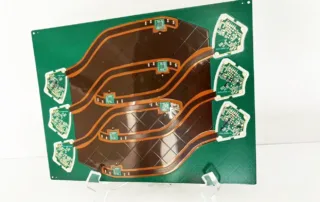
How to Achieve High Precision in Flexible Copper Clad Laminates Using Dual-Laser Etching?
Flexible copper-clad laminate (FCCL), serving as the substrate material for flexible printed circuits (FPC), offers distinct advantages such as lightweight, flexibility, compact size, and excellent heat resistance. Manufacturers widely adopt it in electronic products to achieve miniaturization and portability. This approach aligns with the development trends of high-precision electronics industries such as micro-robotics, new energy vehicles, 5G communication devices,[...]
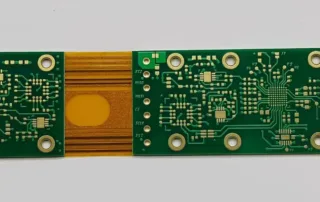
Flexible PCB Micro-Drilling: Optimizing Hole Quality and Drill Performance
Direct answer: Flexible PCB micro-drilling requires a stack-specific approach. The most effective way to improve hole quality and micro-drill performance is to stabilize the flexible stack with rigid entry and backer materials, select drill geometry suited to polyimide and adhesive layers, and carefully control feed, speed, chip load, peck depth, and hit count. This limits the main flex-circuit drilling[...]
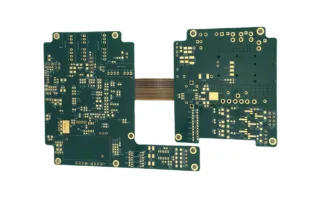
Research on the Manufacturing Process of Semi-Rigid Flex Printed Circuit Boards
Semi-rigid printed circuit boards form a type of rigid-flex printed circuit board (R-FPCB). The conventional rigid board manufacturing process produces them by milling or cutting out openings (windows) in areas requiring flexibility. They eliminate the need for expensive flexible materials like polyimide (PI), reducing costs while offering more stable electrical performance. These boards commonly serve in static or semi-dynamic[...]
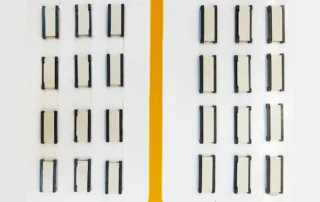
Experimental Study on Crimp Terminals for FPCB Connectors
With the continuous expansion of flexible printed circuit board (FPCB) applications, certain FPCBs now serve as connectors linking functional modules. Traditional FPCB plugs are prone to wear during connector interface insertion and removal, compromising electrical connection stability. Terminal crimping technology involves the sharp tip of the connector terminal piercing through the insulating material on both sides of the FPCB[...]
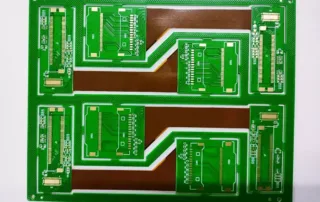
Boosting PCB and FPCB Heat Dissipation: Proven Engineering Methods
PCB and FPGA have two completely different performance characteristics in terms of heat dissipation. Rigid PCBs—typically built with FR-4, high-TG laminates, or metal-core substrates—offer relatively strong thermal performance due to their thicker copper layers, stable structure, and the ability to incorporate heat-spreading features such as thermal vias, copper planes, and dedicated cooling interfaces. Flexible PCBs (FPCBs), present a completely different[...]