What are the Differences Between FPC Rolled Copper and Electrolytic Copper?
In the manufacture of FPCs (flexible printed circuits), copper foil is a critical conductive material.

The most commonly used types of copper foil are rolled annealed copper (RA copper) and electrolytic copper (ED copper).

These two types of copper foil differ significantly in terms of manufacturing processes, physical properties, and applications. Below are their main differences:

Manufacturing Process

Rolled Anodized Copper (RA Copper): Rolled anodized copper is manufactured through a physical rolling process.

A copper ingot is heated and then repeatedly rolled until the desired thickness is achieved. Due to this rolling process, rolled anodized copper has a fibrous grain structure, providing high ductility and flexibility.

Electrolytic Copper (ED Copper): The electrochemical deposition process produces electrolytic copper.

An electric current deposits copper onto a substrate in an electrolyte solution, creating copper foil.

Electrolytic copper has a columnar grain structure, which is relatively regular but more brittle.

Physical Properties

Flexibility: Rolled copper is far more flexible than electrolytic copper.

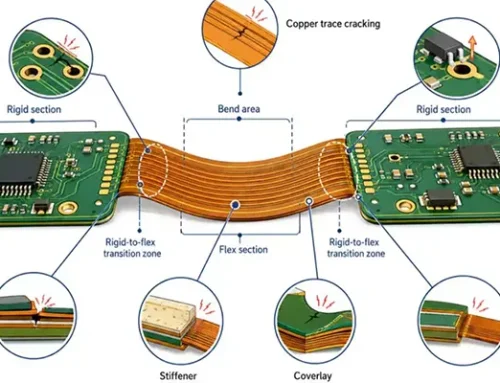
Due to its fibrous grain structure, rolled copper does not easily crack when bent or folded, making it highly suitable for flexible circuit board applications that require frequent bending.

The columnar grain structure of electrolytic copper makes it more prone to cracking and breaking when bent, resulting in poorer flexibility.

Ductility: Rolled copper has good ductility and can withstand greater tensile stress and deformation without breaking easily.

Electrolytic copper has poor ductility and is prone to fracturing during processing due to stretching.

Surface Finish: Rolled copper has a relatively smooth surface due to the mechanical compression it undergoes during the rolling process.

Electrolytic copper, on the other hand, has a rougher surface. While this roughness can enhance adhesion to other materials in certain applications, a smooth surface is often preferred for precision circuit board applications.

Electrical Properties

Conductivity: Rolled copper exhibits slightly better conductivity than electrolytic copper.

Only a minor difference exists in the conductivity of the two copper types.

Nevertheless, manufacturers frequently choose rolled copper for demanding electrical applications because its higher purity and refined grain structure enhance conductivity.

Applications

Applications of Rolled Copper:

Its excellent flexibility and fatigue resistance make rolled copper a popular choice for flexible circuit boards that undergo frequent bending, movement, or curling.

Examples include foldable phones, wearable devices, camera modules, and other applications with high requirements for bend resistance.

Applications of electrolytic copper:

Although electrolytic copper is less flexible than rolled copper, its lower manufacturing cost makes it suitable for applications that do not require frequent bending.

Cost-sensitive FPC applications, including simple display connectors and fixed sections of flexible circuits, commonly utilize electrolytic copper.

FPCB

FPCB

Cost

Rolled Copper: The manufacturing process for rolled copper is more complex and involves physical rolling, resulting in higher costs.

Rolled copper is the preferred choice, particularly for applications requiring high performance and durability.

Electrolytic Copper: The manufacturing process for electrolytic copper is relatively simple, resulting in lower costs.

This makes it suitable for applications that do not require high flexibility and where cost control is a priority.

Thickness Selection

Rolled Copper: The rolling process enables manufacturers to produce rolled copper in thinner gauges, making it ideal for ultra-thin FPC designs.

Electrolytic Copper: Manufacturers can produce electrolytic copper in thin foil form. However, rolled copper offers a wider range of thickness options, especially for ultra-thin copper foil applications.

Both rolled copper and electrolytic copper have their own advantages, and the choice should be based on the specific application scenario, performance requirements, and cost budget.

When an application requires a flexible circuit board to withstand frequent bending or operate in a high-performance environment, rolled copper offers the better choice.

However, if cost is the primary consideration and the application does not require high flexibility, electrolytic copper is a more cost-effective solution.

Conclusion

Selecting the appropriate copper foil is one of the most important decisions in FPC design and manufacturing.

Rolled annealed (RA) copper and electrolytic deposited (ED) copper each offer distinct advantages that make them suitable for different applications.

RA copper provides superior flexibility, ductility, fatigue resistance, and electrical performance due to its fibrous grain structure.

These characteristics make it the preferred choice for dynamic-flex applications that require repeated bending, such as foldable devices, wearable electronics, camera modules, and other high-reliability products.

ED copper, on the other hand, offers a more economical solution. The columnar grain structure of electrolytic copper reduces its flexibility and bend resistance; however, it still provides adequate performance for static-flex and cost-sensitive applications that do not require frequent movement.

When choosing between RA and ED copper, engineers should carefully evaluate the product’s bending requirements, reliability expectations, electrical performance targets, thickness constraints, and overall budget.

By matching the copper foil type to the specific application, manufacturers can achieve the optimal balance between performance, durability, and cost, ensuring the long-term success of the flexible circuit design.