
Explore the Cutting – Edge World of PCB Technology!
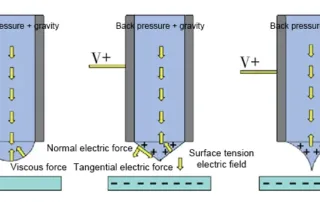
Liquid Metal Flexible Circuits: High-Reliability 3D Printed PI-Based Encapsulation Technology
Soft circuits have been a hot topic in health monitoring, biomedical, and rehabilitation diagnostics research in recent years. Traditional flexible conductors are fabricated by combining conductive fillers with stretchable elastomers. For instance, embedding nano-metal particles and ionic gels within elastomers yields conductive elastomers with excellent performance under complex strain conditions. However, the conductivity of these materials is significantly affected[...]
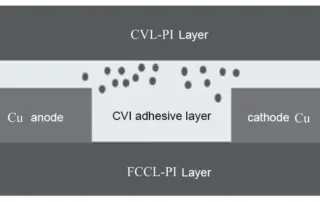
Understanding CAF Failure in Multilayer FPCBs: Mechanisms, Ion Migration, and Reliability Analysis
As printed circuit boards become increasingly multilayered and densely populated, demands for their reliability grow ever more stringent. Particularly with the multilayering of flexible printed circuits, engineers focus on product failures and malfunctions. Ion migration between different conductors causes these issues. Electrical failures resulting from ion migration exhibit highly unstable failure latency periods, posing significant challenges for managing the[...]
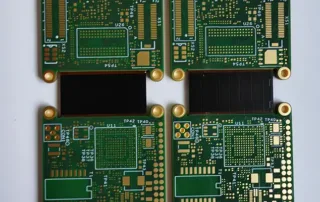
High-Frequency Rigid-Flex PCB Manufacturing: Key Process Technologies Using PTFE Materials
With the advancement of information technology, higher demands have been placed on the efficient and stable transmission of electrical signals, driving continuous upgrades in high-frequency materials. Influenced by market needs, the application and research of FPC in high-frequency fields lag behind that of PCB. Currently, the primary high-frequency materials used in FPCs are MPI, LCP, and PTFE. Among these,[...]
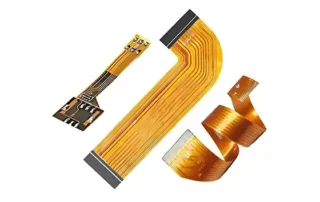
Carbon-Coated Film Evaluation for Reliable FCCL Copper Plating
Flexible printed circuits comprise one or more layers of etched conductive material on one or both sides of a dielectric film and are widely used in smartphones, laptops, wearable devices, automotive electronics, and other fields. Flexible Copper Clad Laminate (FCCL) serves as the substrate material for flexible printed circuit boards, comprising a flexible insulating base film (typically polyimide, PI)[...]
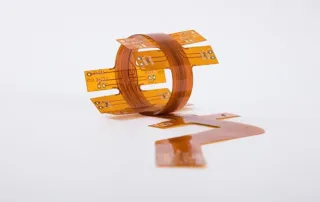
How can FPC be made to have good resistance to bending?
Flexible printed circuits (FPCs) are increasingly deployed in compact electronics, robotics, medical devices, and wearable systems. However, the mechanical performance requirements of a flex circuit depend fundamentally on whether the application involves static bending or dynamic bending. Understanding this distinction at the design stage determines material selection, laminate architecture, routing strategy, and mechanical constraints. “Static Bending” or “Dynamic Bending”?[...]
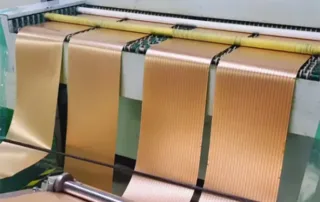
Enhancing FPC Insulation Performance in Ultra-Long Thick Copper Flexible Circuits
Flexible printed circuit boards (FPCs) have gained widespread adoption in consumer electronics, new energy vehicles, aerospace, and medical equipment due to their lightweight, bendable nature, and high integration capabilities. As electronic devices evolve toward higher power and density, demand for ultra-long, thick copper FPCs is growing to meet requirements for high current-carrying capacity and efficient heat dissipation. However, thick[...]