
Explore the Cutting – Edge World of PCB Technology!
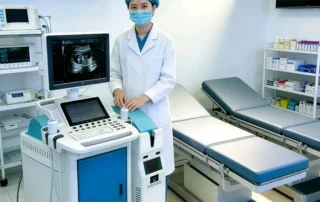
Medical Ultrasound FPCB Design: Optimization of 3L Stepped and Cutout Flexible Circuit Structures
Ultrasound probe products are widely used in medical diagnostic equipment. Some probes are designed for single use and are classified as medical consumables, resulting in strong market demand and broad growth prospects. Development Trends of FPC in Medical Ultrasound Devices The development of flexible printed circuit (FPC) boards for medical ultrasound products is mainly characterized by: Miniaturization High wiring[...]
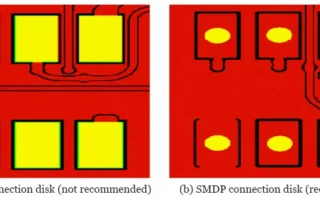
Preventing FPCB Pad Cracking: Bump Design, Material Selection & Stamping Guide
Direct answer: FPCB pad bump cracking is most effectively prevented by combining three controls: Design— lower bump height, rounded transition profiles, and fillets at pad-to-trace junctions. Material — high-ductility copper foil, typically rolled annealed copper, with well-adhered plating. Stamping process — progressive forming, proper die clearance, controlled speed/pressure, and adequate pad support. Avoiding sharp geometric transitions and excessive single-step[...]
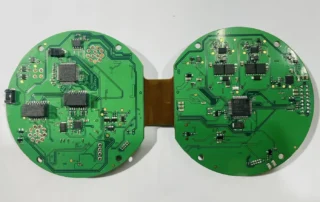
Rigid-Flex PCB Manufacturing: Process Optimization for Outer-Layer Flexible Structures
Rigid-flex printed circuit boards (R-FPCBs) combine the advantages of both rigid and flexible boards. As printed circuit boards (PCBs) continue to evolve toward being lighter, thinner, and smaller, the demand for these products is growing steadily. While the design of R-FPCBs offers significant convenience, it also presents greater challenges than the manufacturing processes for conventional rigid PCBs (rigid boards).[...]
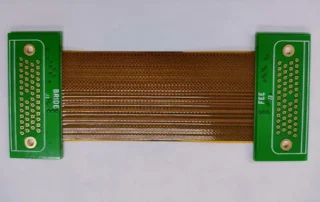
Pattern-Based FPC Routing Algorithm for Optimized Flexible PCB Design(Part II)
Continued part I... › Cost-Based Allocation of Routing Layers In practice, routing often involves multiple layers. Using only a single layer would result in a severe shortage of routing resources and overlook the fact that via placement is permitted in fan-out regions. Multi-Layer Routing Considerations Considering that routing paths on different layers have varying routing parameters and different impacts[...]
Pattern-Based FPC Routing Algorithm for Optimized Flexible PCB Design(Part I)
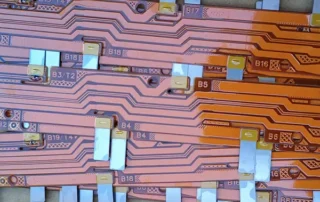
Flexible printed circuits (FPCs) are a specialized type of printed circuit board increasingly used in miniaturized and diversified electronic products. As applications expand, FPC designs have become more complex. Unlike conventional PCB routing, FPC routing faces stricter constraints and highly irregular routing spaces. FPC Routing Challenges In FPC layouts, components are densely concentrated within fan-out regions, resulting in uneven[...]
Innovative Flexible Circuit Manufacturing Using UV-Assisted Electroless Plating
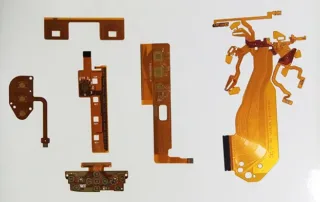
The current manufacturing of flexible circuits primarily relies on traditional etching methods, conductive ink printing, and electroless copper plating technologies. While traditional etching is suitable for mass-customized circuit production, it suffers from issues such as pronounced side etching effects, complex process flows, lengthy production cycles, and environmental pollution from acid cleaning. These drawbacks make it difficult to meet the[...]
AI-Driven Optimization of Flexible Circuit Boards Production
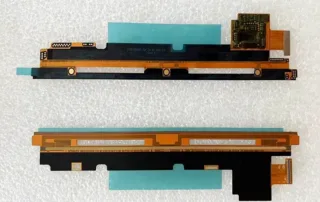
Flexible circuit boards are optimized through AI-driven FPCB production by combining real-time sensor monitoring with closed-loop adaptive control. The system detects deformation risks, narrow process windows, and environmental interference, then adjusts parameters to support high-precision manufacturing and more stable quality and efficiency. Flexible Circuit Board Production Processes: Key Manufacturing Challenges Flexible circuit boards offer lightweight, bendable, and three-dimensional spatial layout[...]
PCB Assembly Process: A Step-by-Step Guide
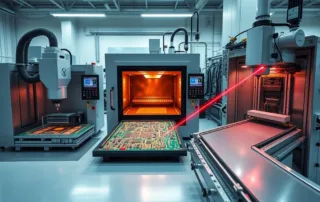
The PCB assembly process (often called PCBA) is the heartbeat of modern electronics manufacturing. Transforming a bare printed circuit board (PCB) into a functional electronic assembly requires precision, expertise, and rigorous quality control. To understand this process, you need to know more than just the steps. You must also see the key differences between assembling rigid boards and the special challenges of flex PCB[...]

Mastering SMT Assembly: Advantages and Future Trends
SMT assembly, or Surface Mount Technology (SMT) assembly, is now a key component of the rapidly evolving electronics industry. It has grown with the rise of modern circuit boards. Mobile phones and factory automation equipment use SMT technology. It offers high-density assembly and other benefits for PCB production. In this guide, we will explore the basics of SMT PCB[...]

FFC vs FPC: Which One Fits Your Design Best?
1. Introduction Flexible electronics have revolutionized the design of modern devices. They are instrumental in batteries. These electronics save space and provide high-performance electrical connections. FFC (Flexible Flat Cable) and FPC (Flexible Printed Circuit) are among the most commonly used flexible interconnects. Although they appear to be quite similar at a glance, their structures, functions, and uses vary greatly. Here, we outline[...]