
Explore the Cutting – Edge World of PCB Technology!
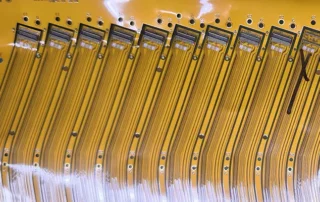
High-Frequency High-Speed FPC Materials for 6G (Part I)
A high-frequency high-speed FPC is a flexible printed circuit built to carry fast signals with low loss. For 6G, designers pair low-Dk and low-Df dielectrics with microstrip or stripline stack-ups. This guide explains the material choices behind 6G FPC materials and how MPI and LCP for high-speed FPC fit the picture. 6G FPC Materials: Why Dielectric Loss Now Matters[...]
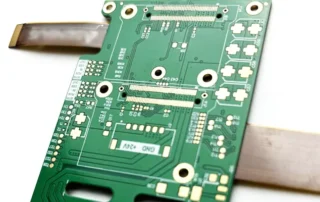
Rigid-Flex PCB Air-Gap Process Optimization for High-Yield Flexible Circuit Manufacturing(Part II)
Back to Part 1 « Evaluation by replacing dry film with a wet film with better flow properties Liquid ink shows good filling and flow properties. It is expected to effectively fill the pits at the bottom of the copper surface in the air gap. However, the ink requires high exposure energy. The process cannot remove residual ink during[...]
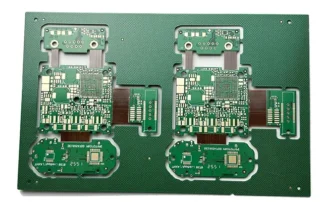

Rigid-Flex PCB Air-Gap Process Optimization for High-Yield Flexible Circuit Manufacturing(Part I)
With the development of rigid-flex boards and multi-layer high-density interconnect (HDI) flexible printed circuits, manufacturers have widely adopted multi-dimensional bending in rigid-flex boards and multi-layer flexible printed circuits. These technologies are widely used in consumer electronics such as smartphones, tablets, and wearable devices. Flexible printed circuits offer high reliability and excellent flexibility, characterized by high wiring density, light weight,[...]
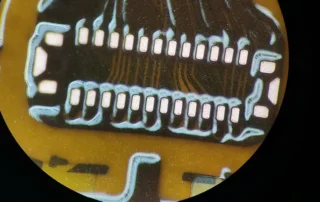
Inner-Layer Pad Protection Methods for FPC: Materials, Processes, and Comparative Analysis
With the rapid advancement of electronic technology, standard single- and double-sided flexible circuit boards can no longer meet customer needs, leading to a growing demand for highly integrated, multilayer flexible boards and rigid-flex boards. When designing multilayer flexible boards, inner-layer pads often need to remain exposed. Therefore, during fabrication, the copper in these areas must be protected to prevent[...]
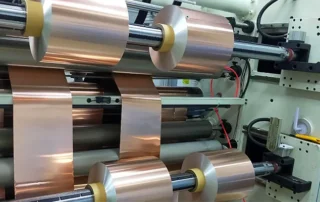
Rolled Copper Foil for FPC: Improving Fold Resistance, Flatness, and Etchability
In recent years, the production of high-qu ality flexible printed circuit boards has placed higher performance demands on its key conductive material— rolled copper foil. This is particularly evident in aspects such as the foil’s fold resistance, high elongation, etchability, and low surface roughness. At the same time, higher demands have been placed on its adaptability to FPC manufacturing[...]
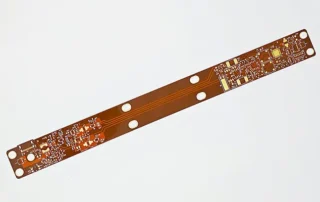
FPC Design: Materials, EDA Tools, and Signal Integrity Guide
Manufacturers create a Flexible Printed Circuit Board (FPC) as a high-performance electronic interconnect component using precision etching processes, with a flexible polymer material (such as polyimide or polyester film) serving as the dielectric layer. Compared to rigid circuit boards, designers can bend, fold, and twist FPCs, allowing them to adapt to complex three-dimensional layouts. They offer significant advantages in[...]
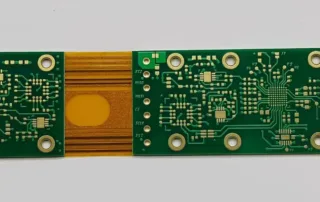
Flexible PCB Micro-Drilling: Optimizing Hole Quality and Drill Performance
Direct answer: Flexible PCB micro-drilling requires a stack-specific approach. The most effective way to improve hole quality and micro-drill performance is to stabilize the flexible stack with rigid entry and backer materials, select drill geometry suited to polyimide and adhesive layers, and carefully control feed, speed, chip load, peck depth, and hit count. This limits the main flex-circuit drilling[...]
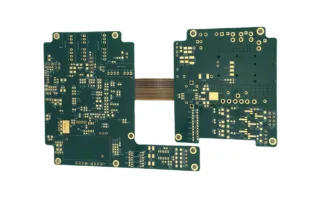
Research on the Manufacturing Process of Semi-Rigid Flex Printed Circuit Boards
Semi-rigid printed circuit boards form a type of rigid-flex printed circuit board (R-FPCB). The conventional rigid board manufacturing process produces them by milling or cutting out openings (windows) in areas requiring flexibility. They eliminate the need for expensive flexible materials like polyimide (PI), reducing costs while offering more stable electrical performance. These boards commonly serve in static or semi-dynamic[...]
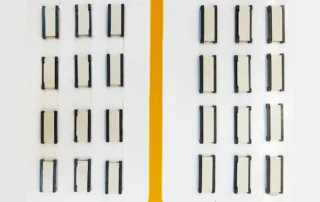
Experimental Study on Crimp Terminals for FPCB Connectors
With the continuous expansion of flexible printed circuit board (FPCB) applications, certain FPCBs now serve as connectors linking functional modules. Traditional FPCB plugs are prone to wear during connector interface insertion and removal, compromising electrical connection stability. Terminal crimping technology involves the sharp tip of the connector terminal piercing through the insulating material on both sides of the FPCB[...]
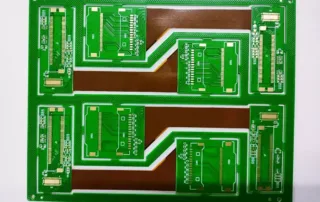
Boosting PCB and FPCB Heat Dissipation: Proven Engineering Methods
PCB and FPGA have two completely different performance characteristics in terms of heat dissipation. Rigid PCBs—typically built with FR-4, high-TG laminates, or metal-core substrates—offer relatively strong thermal performance due to their thicker copper layers, stable structure, and the ability to incorporate heat-spreading features such as thermal vias, copper planes, and dedicated cooling interfaces. Flexible PCBs (FPCBs), present a completely different[...]
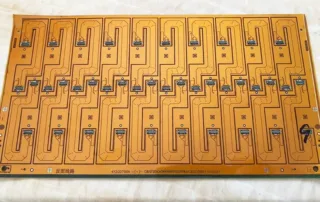
Why Components Fail on Nickel-Gold Plated FPC Boards: Causes and Insights
Before mounting components via SMT, manufacturers must treat the FPC surface and solderable component ends. This ensures solderability, connection reliability, and contact reliability. The surface treatment process significantly impacts SMT placement results and may lead to issues such as soldering defects and assembly failures. Nickel-gold plating serves as an effective surface treatment method. The gold layer prevents oxidation of[...]
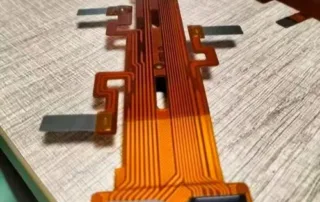
Cutting-Edge 3D Steel Sheet Assembly Technology for Flexible PCB Applications
With the rapid advancement of technology, flexible printed circuit boards (FPCBs) have gained widespread adoption in electronic devices due to their high flexibility, bendability, and lightweight yet durable characteristics. FPCBs play a pivotal role in automotive electronics, smart wearables, smartphones, aerospace, and other fields. However, as product designs grow increasingly complex and performance demands continue to rise, 3D steel[...]